
What is the best S500MC tensile test quality
Discover the technical nuances of S500MC tensile test quality. This guide covers mechanical properties, chemical composition, and industrial applications for high-strength low-alloy steel.
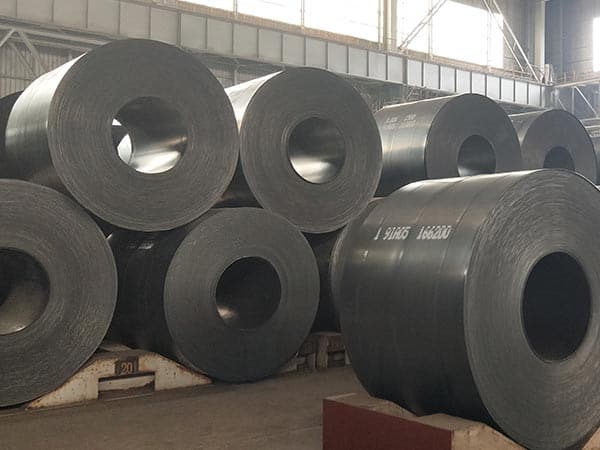
Understanding S500MC Tensile Test Quality and Material Integrity
S500MC is a high-strength low-alloy (HSLA) steel grade designed for cold forming, primarily governed by the EN 10149-2 standard. When discussing the best tensile test quality for this material, it is not merely about hitting a specific number on a gauge; it involves the synergy between yield strength, ultimate tensile strength, and the elongation percentage. This material is produced using a thermomechanically rolled (TMCP) process, which refines the grain structure to achieve a superior strength-to-weight ratio compared to traditional structural steels like S355.
The best quality in a tensile test for S500MC is characterized by a high degree of consistency across the coil and between different production batches. Engineers look for a stable yield point and a predictable work-hardening behavior. Because S500MC is frequently used in safety-critical automotive components and heavy machinery, any deviation in tensile properties can lead to failure during the stamping or bending process, or worse, structural fatigue in the final application.
Mechanical Property Benchmarks for S500MC
To evaluate the tensile quality of S500MC, we must look at the specific ranges defined by international standards. The "500" in S500MC refers to the minimum yield strength of 500 MPa. However, the "best" quality often resides in a narrow band of performance that exceeds these minimums without reaching the brittleness associated with higher grades.
| Property | Requirement (Thickness < 3mm) | Requirement (Thickness > 3mm) | Optimal Quality Range |
|---|---|---|---|
| Yield Strength (ReH MPa) | Min 500 | Min 500 | 520 - 580 MPa |
| Tensile Strength (Rm MPa) | 550 - 700 | 550 - 700 | 580 - 660 MPa |
| Elongation (A80mm %) | Min 12 | - | 14 - 18% |
| Elongation (A5 %) | - | Min 14 | 16 - 20% |
The relationship between yield strength and tensile strength, known as the yield-to-tensile ratio, is a critical indicator of the material's ductility. A lower ratio typically indicates better formability, allowing the steel to distribute stress more effectively during complex shaping operations.
The Role of Chemical Composition in Tensile Performance
The superior tensile test quality of S500MC is rooted in its precise chemical makeup. Unlike carbon steels that rely on high carbon content for strength, S500MC utilizes micro-alloying elements. These elements facilitate grain refinement during the thermomechanical rolling process.
- Niobium (Nb): Increases yield strength by forming fine carbides and preventing grain growth during rolling.
- Vanadium (V): Provides precipitation hardening, contributing to the overall tensile strength without significantly reducing ductility.
- Titanium (Ti): Acts as a deoxidizer and helps in stabilizing nitrogen, which prevents aging and maintains the quality of the tensile test over time.
- Low Carbon Content: Typically kept below 0.12%, which ensures excellent weldability and prevents the formation of brittle martensite in the heat-affected zone.
A "clean" steel with low sulfur (S < 0.015%) and phosphorus (P < 0.025%) is essential for high-quality tensile results. High sulfur content can lead to elongated manganese sulfide inclusions, which create anisotropy—meaning the tensile properties would differ significantly depending on whether the test is conducted longitudinal or transverse to the rolling direction.
Anisotropy and Specimen Orientation in Tensile Testing
For S500MC, the best tensile test quality must account for the direction of rolling. In high-strength steels, the material often exhibits different mechanical properties when tested parallel to the rolling direction versus perpendicular to it. According to EN 10149-2, tensile tests for S500MC are usually performed on transverse specimens.
Quality control experts focus on minimizing the difference between longitudinal and transverse elongation. If the material shows high anisotropy, it may crack when bent along a specific axis. Therefore, a high-quality S500MC batch will demonstrate isotropic-like behavior, ensuring that the yield strength remains consistent regardless of the part's orientation on the sheet.
Influence of Thermomechanical Rolling (TMCP)
The tensile quality of S500MC is a direct product of the TMCP process. This involves controlled rolling at specific temperatures followed by accelerated cooling. This process creates a fine-grained ferritic-pearlitic microstructure. The smaller the grain size, the higher the yield strength (following the Hall-Petch relationship) and the better the low-temperature toughness.
When analyzing a tensile test curve for S500MC, a smooth transition from the elastic to the plastic region is preferred. This indicates a uniform microstructure. Any "steps" or irregularities in the curve could suggest inconsistent cooling rates during production or the presence of internal micro-cracks.
Practical Applications and Processing Performance
The real-world value of S500MC tensile quality is proven during secondary processing. Because of its high yield strength, S500MC allows for thinner gauges to be used in structural designs, significantly reducing the weight of vehicles and machinery.
Cold Forming and Bending: High-quality S500MC can be bent to very tight radii. For a thickness (t), a typical minimum bending radius for S500MC is 0.5t to 1.0t, depending on the bending angle and direction. If the tensile test shows high elongation and a stable yield point, the risk of "springback" is more predictable, allowing for higher precision in manufacturing.
Welding Compatibility: Since the strength of S500MC is derived from TMCP rather than high carbon or alloy content, it maintains its tensile integrity after welding. However, excessive heat input can cause grain coarsening in the heat-affected zone (HAZ), leading to a localized drop in tensile strength. Best practices involve using low-heat input welding techniques to preserve the material's original properties.
Environmental Adaptability and Fatigue Resistance
While tensile tests measure static strength, the quality of S500MC also extends to its performance under dynamic loads. High-strength steels are often prone to fatigue. However, the fine grain structure of S500MC provides excellent resistance to crack initiation. In environments with fluctuating temperatures, S500MC retains its ductility better than standard carbon steels, making it suitable for chassis components in both arctic and tropical climates.
The surface quality also impacts tensile test results. Scale or surface pits can act as stress concentrators. Therefore, S500MC is often supplied in a pickled and oiled condition to ensure that the tensile test reflects the true properties of the steel matrix rather than surface imperfections.
Critical Factors for Optimizing S500MC Selection
When sourcing S500MC, the "best" quality is often determined by the specific requirements of the end-use. For the automotive industry, the focus might be on the n-value (work hardening exponent) and r-value (plastic strain ratio), which are derived from advanced tensile testing. These values indicate how well the material will thin out during deep drawing.
For heavy equipment manufacturers, the focus might be on the impact energy at low temperatures (Charpy V-notch test) in addition to the tensile strength. While EN 10149-2 does not always mandate impact testing for S500MC, high-quality producers will often provide these values to guarantee the material's toughness in harsh environments.
The pursuit of the best S500MC tensile test quality is a balance of metallurgical precision, controlled manufacturing, and rigorous testing protocols. By ensuring the material stays within the optimal ranges of yield and tensile strength while maintaining high elongation, manufacturers can achieve the lightweight, high-performance designs that modern industry demands.
Leave a message