
Which elements in S315MC steel for cold forming parts
A comprehensive guide to S315MC steel, exploring its chemical elements, mechanical properties, and processing advantages for cold forming applications.
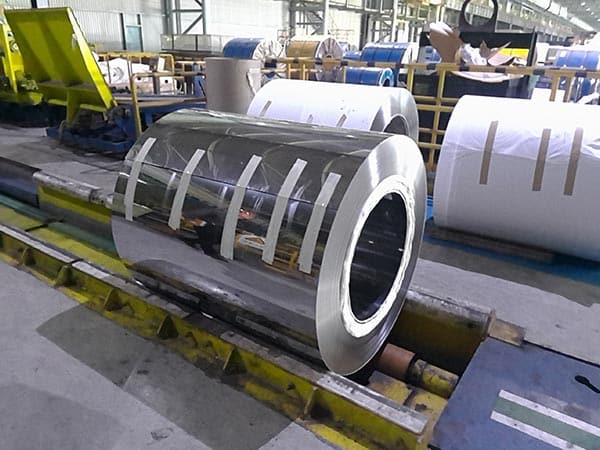
Understanding the Core Chemistry of S315MC Steel
When engineers and procurement specialists select materials for complex structural components, S315MC steel frequently emerges as a primary candidate. This high-yield-strength steel, governed by the European standard EN 10149-2, is specifically designed for cold forming processes. The 'S' denotes structural steel, '315' represents the minimum yield strength of 315 MPa, and 'M' indicates it is thermomechanically rolled. The 'C' suffix confirms its suitability for cold forming. But what exactly makes this steel so versatile? The answer lies in its precise chemical composition.
The performance of S315MC is not accidental; it is the result of a carefully balanced 'cocktail' of elements. Unlike traditional carbon steels, S315MC utilizes micro-alloying technology to achieve high strength without sacrificing ductility. This balance is critical for parts that must undergo significant deformation during manufacturing without cracking or failing.
The Elemental Breakdown: What’s Inside?
The chemical composition of S315MC is characterized by low carbon content and the addition of grain-refining elements. Below is a detailed look at the typical chemical requirements according to EN 10149-2:
| Element | Maximum Percentage (%) | Primary Function |
|---|---|---|
| Carbon (C) | 0.12 | Ensures weldability and prevents brittleness. |
| Manganese (Mn) | 1.30 | Increases strength and improves hardenability. |
| Silicon (Si) | 0.50 | Acts as a deoxidizer and enhances yield strength. |
| Phosphorus (P) | 0.025 | Controlled to maintain toughness and prevent cracking. |
| Sulfur (S) | 0.020 | Kept low to improve surface quality and ductility. |
| Aluminum (Al) | 0.015 (min) | Refines grain structure and acts as a deoxidizer. |
| Niobium (Nb) | 0.09 | Micro-alloying element for grain refinement. |
| Vanadium (V) | 0.20 | Increases strength through precipitation hardening. |
| Titanium (Ti) | 0.15 | Stabilizes the structure and prevents grain growth. |
The synergy between Niobium (Nb), Vanadium (V), and Titanium (Ti) is the secret behind the 'M' (thermomechanical rolling) designation. These elements facilitate the formation of fine-grained structures during the rolling process, which is the most effective way to increase both strength and toughness simultaneously.
Mechanical Properties and Cold Forming Capabilities
The primary reason for choosing S315MC is its mechanical profile. For cold forming parts, the relationship between yield strength and elongation is paramount. If the yield strength is too high and elongation too low, the material will snap during bending. S315MC hits the 'sweet spot' for many industrial applications.
- Yield Strength: Minimum 315 MPa. This ensures the structural integrity of the final part under load.
- Tensile Strength: Ranges between 390 and 510 MPa, providing a safe margin before ultimate failure.
- Elongation: Typically 20-24% depending on thickness. High elongation is vital for deep drawing and tight-radius bending.
- Impact Toughness: Excellent performance even at low temperatures, making it suitable for outdoor or mobile equipment.
Because of its fine grain structure, S315MC exhibits much better cold bending performance than standard structural steels like S235JR. It allows for smaller bending radii without the risk of surface 'orange peel' effects or micro-cracking at the bend apex.
Processing Performance: Welding and Cutting
Fabricators value S315MC not just for its strength, but for its ease of processing. The low carbon equivalent (CEV) value makes it exceptionally easy to weld using standard methods such as MIG, TIG, or submerged arc welding. Unlike high-carbon steels, S315MC does not require extensive pre-heating or post-weld heat treatment in most standard thicknesses.
Furthermore, the cleanliness of the steel—achieved through low sulfur and phosphorus levels—makes it an ideal candidate for laser cutting. High-precision laser systems can cut through S315MC with minimal dross and a very small heat-affected zone (HAZ), ensuring that the edges remain ductile for subsequent forming operations.
Environmental Adaptability and Longevity
While S315MC is not a 'weathering steel' like Corten, its refined chemistry provides a stable base for various protective coatings. Whether it is hot-dip galvanizing, powder coating, or sophisticated E-coating used in the automotive industry, the surface of S315MC bonds well with these treatments. This adaptability ensures that components made from S315MC can withstand corrosive environments, from salted winter roads to industrial atmospheres.
The consistency of the thermomechanical rolling process also means that internal stresses are minimized. This leads to better dimensional stability after cutting and forming, reducing the need for costly straightening operations and improving the overall lifespan of the assembly.
Expanding Industry Applications
The unique properties of S315MC have led to its widespread adoption across various sectors. Its ability to reduce weight while maintaining strength is a key driver for modern engineering.
- Automotive Manufacturing: Used for chassis frames, longitudinal beams, and cross members where weight reduction is critical for fuel efficiency.
- Heavy Machinery: Ideal for crane arms, excavator components, and agricultural equipment that must endure high stress and vibration.
- Transportation Infrastructure: Utilized in the construction of trailers, truck bodies, and shipping containers.
- Storage Solutions: High-strength racking systems and silos benefit from the material's ability to support heavy loads with thinner profiles.
Optimizing Production with S315MC
Selecting S315MC is often a strategic decision to optimize production costs. By using a higher strength material, manufacturers can often reduce the thickness of the steel sheets required for a part. This 'down-gauging' leads to several economic benefits: lower raw material costs, reduced shipping weights, and faster welding times.
However, it is essential to work with suppliers who provide full traceability and MTC (Mill Test Certificates). Since the properties of S315MC rely heavily on the thermomechanical rolling process, any deviation in the cooling rates or rolling temperatures at the mill can affect the final grain size and, consequently, the forming performance.
When designing parts for S315MC, engineers should consider the grain direction. Like most rolled products, the ductility is slightly higher in the direction of rolling. For extremely tight bends, orienting the bend line perpendicular to the rolling direction can further enhance the success rate of the forming operation.
The Future of High-Strength Structural Steels
As industries move toward more sustainable and efficient manufacturing, the role of micro-alloyed steels like S315MC continues to grow. The demand for materials that offer 'more with less'—more strength with less weight—is higher than ever. S315MC represents a mature, reliable technology that bridges the gap between basic carbon steels and ultra-high-strength quenched and tempered grades.
By understanding the elemental composition and the metallurgical logic behind S315MC, manufacturers can better leverage its properties to create safer, lighter, and more durable products. Whether it is the Niobium-driven grain refinement or the Manganese-enhanced yield, every element in S315MC serves a purpose in the pursuit of engineering excellence.
Leave a message