
What is the BBNSteel EN 10346 HX180BD + ZF grade inventory
Explore the comprehensive guide to EN 10346 HX180BD + ZF steel. Learn about its bake hardening effect, galvannealed coating advantages, mechanical properties, and BBNSteel's inventory capabilities.
Understanding the Technical Core of EN 10346 HX180BD + ZF
In the evolving landscape of high-strength steel, the EN 10346 HX180BD + ZF grade represents a pinnacle of metallurgical engineering designed specifically for the automotive and precision manufacturing sectors. This material is a bake-hardening steel that combines excellent formability in its as-delivered state with a significant increase in yield strength after the paint-baking process. The "HX" prefix denotes a high-strength steel for cold forming, while "180" indicates a minimum yield strength of 180 MPa. The "B" signifies its bake-hardening capabilities, and "D" confirms it is intended for hot-dip coating. The "+ZF" suffix is critical, indicating a zinc-iron alloy coating, commonly referred to as Galvannealed.
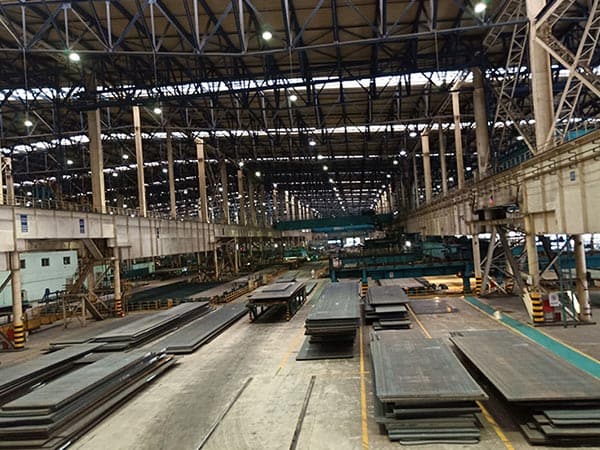
BBNSteel maintains a robust inventory of this grade because it solves a specific engineering dilemma: the need for a material that is soft enough to be stamped into complex geometries but strong enough to provide crash resistance and weight reduction in the final assembly. The bake-hardening effect is achieved through the controlled presence of dissolved carbon or nitrogen atoms in the ferrite matrix, which migrate to dislocations during the thermal cycle of painting, effectively "pinning" them and raising the material's resistance to permanent deformation.
Chemical Composition and Metallurgical Precision
The performance of HX180BD + ZF is rooted in its precise chemical balance. Unlike standard mild steels, this grade requires strict control over interstitial elements to ensure the bake-hardening (BH) effect is consistent across different batches. BBNSteel ensures that all inventory meets or exceeds the EN 10346 requirements.
| Element | C (%) | Si (%) | Mn (%) | P (%) | S (%) | Al (%) | Ti (%) |
|---|---|---|---|---|---|---|---|
| HX180BD Max | 0.10 | 0.50 | 0.70 | 0.06 | 0.025 | 0.015 | 0.12 |
Carbon (C) is kept low to maintain ductility, while Manganese (Mn) and Phosphorus (P) are used as solid-solution strengtheners. The inclusion of Titanium (Ti) or Niobium (Nb) is often employed to stabilize the grain structure, though in bake-hardening steels, a specific amount of carbon must remain "free" to allow for the BH effect to occur during the 170°C to 200°C baking cycle.
Mechanical Properties and the Bake-Hardening Effect
The defining characteristic of HX180BD + ZF is its mechanical transition. Engineers value this grade for its predictable behavior during the stamping phase. The initial low yield strength ensures minimal springback and high precision in complex dies. However, once the part is formed and goes through the automotive paint shop, the yield strength increases by at least 35 MPa (the BH2 value).
| Property | Yield Strength (MPa) | Tensile Strength (MPa) | Elongation A80 (%) | r90 Value | n90 Value |
|---|---|---|---|---|---|
| Requirement | 180 - 240 | 300 - 360 | Min 34 | Min 1.2 | Min 0.17 |
The r-value (plastic strain ratio) and n-value (strain hardening exponent) are particularly high for this grade, which indicates superior deep-drawing properties. BBNSteel's inventory is tested to ensure that these values remain stable over time, preventing "aging" issues that can sometimes plague lower-quality bake-hardening steels stored for extended periods.
The +ZF Galvannealed Coating Advantage
The "+ZF" coating is what sets this material apart from standard galvanized (+Z) products. In the galvannealing process, the steel strip is passed through a molten zinc bath and then immediately heat-treated in an annealing furnace. This causes iron from the steel substrate to diffuse into the zinc coating, creating a zinc-iron alloy layer (typically 8-12% iron).
- Superior Weldability: The iron content in the coating increases its electrical resistance and melting point, making it significantly easier to spot-weld than pure zinc coatings.
- Excellent Paint Adhesion: The matte, micro-porous surface of the ZF coating provides an ideal mechanical bond for primers and paints, ensuring long-term aesthetic and protective performance.
- Corrosion Resistance: While the coating is thinner than some +Z variants, the alloy layer is exceptionally hard and provides excellent sacrificial protection in automotive environments.
- Powder-Free Forming: ZF coatings are less prone to "flaking" or "powdering" during heavy stamping operations compared to standard galvanized coatings, keeping dies clean and reducing maintenance.
Industrial Applications and Strategic Utility
Automotive manufacturers are the primary consumers of HX180BD + ZF. It is frequently utilized for outer body panels such as doors, hoods, and trunk lids. These components require a high-quality surface finish (Interface Class A) and must resist denting. The bake-hardening property allows these panels to be thinner and lighter while maintaining the dent resistance of a much thicker, heavier conventional steel sheet.
Beyond the automotive sector, this grade is increasingly found in the production of high-end household appliances and precision electronic enclosures. Any application where a combination of complex forming, high surface quality, and post-processing strength is required can benefit from HX180BD + ZF. BBNSteel provides these materials in various formats, including wide coils, slit strips, and precision-cut sheets to meet diverse manufacturing scales.
Processing Performance and Environmental Adaptability
When processing HX180BD + ZF, it is essential to understand its interaction with lubricants and tooling. The ZF coating is harder than a standard Z coating, which can lead to increased tool wear if not managed correctly. However, the matte surface holds lubricants more effectively, which can actually improve flow in the die. BBNSteel recommends using synthetic lubricants designed for galvannealed surfaces to maximize tool life.
From an environmental perspective, HX180BD + ZF contributes to sustainability through "lightweighting." By allowing for thinner gauges without sacrificing structural integrity, it reduces the overall carbon footprint of vehicles. Furthermore, the galvannealed coating is fully recyclable, and the steel itself can be recovered and reused indefinitely without loss of properties, aligning with modern circular economy goals.
BBNSteel Inventory and Value-Added Services
BBNSteel's inventory of EN 10346 HX180BD + ZF is managed with a focus on traceability and quality assurance. Every coil is accompanied by a Mill Test Certificate (MTC) according to EN 10204 3.1, detailing the chemical analysis and mechanical testing results, including the specific BH2 value.
- Custom Slitting: We can slit coils to narrow widths with extremely tight tolerances for automated stamping lines.
- Surface Protection: Options for oiling or chemical passivation are available to prevent storage stain and ensure the material arrives in pristine condition.
- Global Logistics: Our supply chain is optimized for international shipping, ensuring that the material is packed securely to prevent moisture ingress during sea transit.
- Technical Support: Our team of metallurgists can assist in optimizing your stamping parameters to take full advantage of the bake-hardening effect.
Selecting the right material involves more than just looking at a datasheet; it requires a partner who understands the nuances of the production cycle. Whether you are looking to reduce the weight of a component or improve the weldability of your assembly line, the HX180BD + ZF grade from BBNSteel offers a balanced, high-performance solution. By maintaining a deep stock of various thicknesses and widths, we ensure that your production schedules remain uninterrupted, providing the reliability that modern industry demands.
Leave a message