
What is the effect of s460 steel equivalent astm surface treatment on its properties
Detailed analysis of how surface treatments affect S460 steel and its ASTM equivalents like A572 Grade 65, covering mechanical performance, fatigue life, and environmental durability.
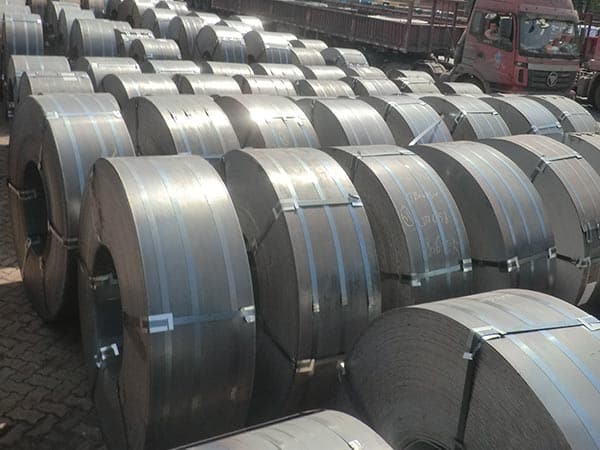
Understanding S460 steel and its ASTM Equivalents
S460 steel is a high-strength structural steel grade governed by the EN 10025-3 and EN 10025-4 standards. It is characterized by a minimum yield strength of 460 MPa. In the North American market, the closest ASTM equivalents are ASTM A572 Grade 65 or ASTM A913 Grade 65. These materials are engineered for heavy-load applications where weight reduction is critical without sacrificing structural integrity. However, the raw state of these steels is susceptible to atmospheric corrosion and surface degradation, necessitating specialized surface treatments. The interaction between these treatments and the substrate's high-strength microstructure is a critical factor for engineers and project managers.
Mechanical Property Alterations Post-Surface Treatment
Surface treatments are not merely aesthetic; they significantly influence the mechanical behavior of S460 and ASTM A572 Grade 65. Mechanical cleaning methods, such as shot blasting to SA 2.5 or SA 3.0 standards, introduce beneficial compressive residual stresses into the surface layer. These stresses act as a barrier against crack initiation, effectively enhancing the fatigue life of the steel components. This is particularly vital in bridge engineering and offshore wind foundations where cyclic loading is constant.
Conversely, chemical treatments like acid pickling, used before hot-dip galvanizing, carry the risk of hydrogen embrittlement. High-strength steels like S460 are more sensitive to hydrogen diffusion into the grain boundaries. If not managed through proper baking or controlled pickling times, the ductility of the ASTM A572 equivalent can be compromised, leading to sudden, brittle failures under stress.
| Property | S460 (EN Standard) | ASTM A572 Grade 65 | Impact of Shot Blasting |
|---|---|---|---|
| Yield Strength (min) | 460 MPa | 450 MPa (65 ksi) | Negligible change |
| Tensile Strength | 520-670 MPa | 550 MPa (min) | Negligible change |
| Fatigue Resistance | High | High | Improved (15-20%) |
| Surface Hardness | ~170 HBW | ~165 HBW | Increased (Work hardening) |
The Role of Hot-Dip Galvanizing on S460 Steel
Hot-dip galvanizing (HDG) is a common surface treatment for S460 steel to provide long-term corrosion protection. When S460 or its ASTM A913 counterpart is immersed in molten zinc (approx. 450°C), a metallurgical reaction occurs, forming several zinc-iron alloy layers. For high-strength steels, the silicon and phosphorus content (Sandelin effect) must be strictly controlled to prevent excessively thick and brittle coatings.
One major effect of HDG on S460 properties is the potential for liquid metal embrittlement (LME). Due to the high yield strength and internal stresses from welding or cold forming, the molten zinc can penetrate grain boundaries during the dipping process. Engineers must ensure that the design of ASTM A572 Gr 65 components includes proper venting and drainage to minimize thermal gradients and stress concentrations during the galvanizing bath.
Technological Properties and Weldability Considerations
The weldability of S460 steel is generally excellent due to its low carbon equivalent (CEV). However, surface treatments can complicate the welding process. For instance, pre-applied shop primers must be compatible with welding or be removed at the joint interface. Welding over zinc-rich primers or galvanized surfaces can lead to zinc-induced cracking or porosity in the weld bead, significantly reducing the joint's load-bearing capacity.
- Thermal Spraying (TSA/TSZ): Unlike galvanizing, thermal sprayed aluminum or zinc does not involve heating the entire bulk of the S460 steel. This preserves the TMCP (Thermo-Mechanical Control Process) microstructure of S460ML/ASTM A913 steels.
- Epoxy Coating Systems: High-build epoxy systems provide excellent barrier protection without altering the steel's metallurgy. The key is surface profile; S460 requires a roughness (Rz) of 60-100 microns for optimal adhesion.
- Nitriding: While less common for structural beams, nitriding S460 components can vastly increase surface hardness and wear resistance for moving parts in machinery.
Environmental Adaptability and Corrosion Kinetics
The primary goal of surface treatment is to extend the service life of S460 steel in aggressive environments. In C5-M (Marine) or C5-I (Industrial) environments, untreated S460 steel would experience rapid thickness loss. Applying a duplex system (galvanizing plus powder coating or liquid paint) can increase the maintenance-free interval to over 25 years. This is essential for the equivalent ASTM materials used in coastal infrastructure, where salt spray accelerates the oxidation of high-strength alloys.
The environmental adaptability of S460 is also linked to its surface energy. A smooth, treated surface prevents the accumulation of hygroscopic salts and pollutants. By modifying the surface topography through polishing or high-performance fluorocarbon coatings, the steel becomes "self-cleaning" to an extent, reducing the risk of localized pitting corrosion which is a common precursor to fatigue failure in high-stress structural members.
Industry-Specific Applications and Standards
In the offshore oil and gas industry, S460G1+Q or S460ML steels are often treated with Thermal Sprayed Aluminum (TSA) followed by a silicone sealer. This combination is preferred over standard painting because it offers sacrificial protection even if the coating is physically damaged during installation. For ASTM A572 Grade 65 used in telecommunication towers, hot-dip galvanizing remains the industry standard due to its cost-effectiveness and robust coverage of hollow sections.
In high-rise building construction, where ASTM A913 Grade 65 is frequently used for heavy columns, surface treatments often focus on fire protection (intumescent coatings) combined with anti-corrosion primers. The interaction here is crucial: the primer must provide a stable base for the intumescent layer to expand correctly during a fire event, ensuring the S460 substrate does not reach its critical temperature prematurely.
Optimizing Surface Profiles for ASTM Equivalents
To maximize the performance of S460 and its ASTM equivalents, the surface preparation must be precisely calibrated. For high-strength structural steels, over-blasting can lead to surface slivers or deep gouges that act as stress raisers. Using a mix of steel shot and grit ensures a dense, uniform profile that enhances the mechanical bond of subsequent coatings without damaging the fine-grain structure of the steel. This technical nuance is what separates standard structural work from high-performance engineering in demanding sectors like renewable energy and heavy infrastructure.
Advanced surface treatments like PVD (Physical Vapor Deposition) or specialized chemical conversion coatings are emerging for S460 components in specialized mechanical assemblies. These treatments offer nanometer-scale protection, maintaining the tight tolerances required for high-strength fasteners and connectors while providing superior resistance to environmental stressors. Understanding these effects allows for the full exploitation of S460's high yield strength while ensuring long-term durability and safety.
Leave a message