
What is the grade 460 steel equivalent price export to Australia
An exhaustive guide on Grade 460 steel equivalents for the Australian market, covering mechanical properties, welding specifications, and factors influencing export pricing for S460, Q460, and AS/NZS 450 grades.
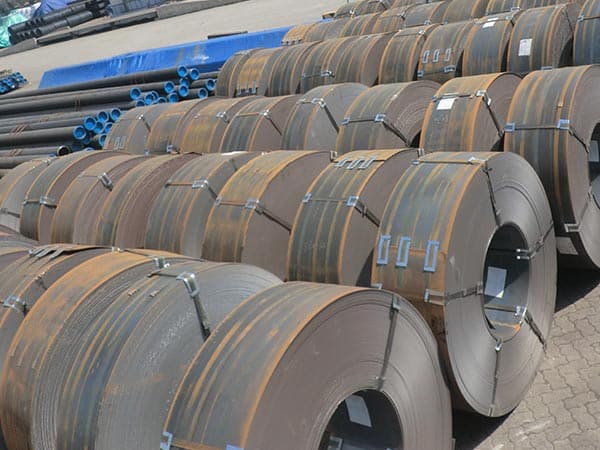
Understanding Grade 460 Steel and Its Global Equivalents
Grade 460 steel represents a class of high-strength structural steel defined by its minimum yield strength of 460 MPa. In the context of international trade and Australian infrastructure requirements, identifying the correct equivalent is paramount for structural integrity and compliance. The Australian market primarily operates under AS/NZS 3678, where the closest counterpart is Grade 450. However, European standards (EN 10025) and Chinese standards (GB/T 1591) are frequently referenced during the procurement of imported materials like S460 and Q460.
For Australian engineers, selecting an equivalent involves more than just matching yield strength. It requires a deep dive into toughness, weldability, and chemical composition to ensure the material performs under the unique environmental conditions of the Southern Hemisphere. The transition from standard 250 or 350 MPa steels to 460 MPa allows for significant weight reduction in steel structures, which is a critical factor in reducing shipping costs and improving the efficiency of large-scale mining and civil projects.
Comprehensive Technical Specifications and Comparison
To facilitate a clear understanding of how Grade 460 variants compare, the following table outlines the mechanical and chemical parameters of the most common equivalents exported to Australia:
| Standard | Grade | Yield Strength (min MPa) | Tensile Strength (MPa) | Elongation (%) | Impact Energy (J) |
|---|---|---|---|---|---|
| AS/NZS 3678 | Grade 450 | 450 | 520-700 | 15 | -20°C (L0) |
| EN 10025-3 | S460N / NL | 460 | 540-720 | 17 | -20°C / -50°C |
| GB/T 1591 | Q460D / E | 460 | 550-720 | 17 | -20°C / -40°C |
| ASTM A572 | Grade 65 | 450 | 550 | 15 | Optional |
The distinction between S460M (Thermomechanically Rolled) and S460N (Normalized) is particularly relevant for the Australian market. S460M steel generally offers better weldability due to a lower Carbon Equivalent Value (CEV), making it the preferred choice for complex offshore structures and high-rise building frames. Conversely, normalized steel (S460N) is often favored for components that might undergo subsequent heat treatment or hot forming during fabrication.
Micro-alloying and Chemical Integrity
The superior performance of Grade 460 steel is achieved through precise micro-alloying techniques. Elements such as Niobium (Nb), Vanadium (V), and Titanium (Ti) are added in minute quantities to refine the grain structure. This refinement is what allows the steel to maintain high strength without becoming brittle. For Australian compliance, the Carbon Equivalent (CEV) is a critical metric. A lower CEV reduces the risk of cold cracking during welding, which is essential for projects adhering to AS/NZS 1554.1 standards.
- Niobium (Nb): Increases yield strength and improves grain refinement.
- Vanadium (V): Enhances precipitation hardening during the cooling process.
- Titanium (Ti): Protects the grain boundaries from coarsening in the heat-affected zone (HAZ) during welding.
- Manganese (Mn): Improves hardenability and overall tensile properties.
Strict control of impurities like Phosphorus (P) and Sulfur (S) is also mandatory. For Australian exports, sourcing mills that utilize vacuum degassing and ladle refining ensures that the Grade 460 steel meets the cleanliness standards required for high-fatigue applications in the mining sector.
Processing Performance: Welding and Fabrication
Fabricating Grade 460 steel requires a nuanced approach compared to mild steel. Due to its higher strength, the material exhibits greater springback during cold forming. Fabricators in Australia must adjust their bending radii to prevent cracking. Generally, a minimum internal bending radius of 2 to 3 times the plate thickness is recommended for Grade 460, depending on the rolling direction.
Welding is where Grade 460 truly showcases its technical requirements. Using low-hydrogen consumables (such as E8018-G electrodes or specialized flux-cored wires) is non-negotiable to prevent hydrogen-induced cracking. Preheating requirements are typically lower for TMCP-processed S460M compared to normalized variants, which can lead to significant labor cost savings on-site. When exporting to Australia, providing detailed Welding Procedure Specifications (WPS) that align with AS/NZS 1554.1 is a value-added service that differentiates premium suppliers from commodity traders.
Environmental Adaptation in the Australian Context
Australia’s geography presents diverse environmental challenges, from the corrosive coastal atmospheres of Port Hedland to the extreme thermal cycles of the Pilbara desert. Grade 460 steel must often be paired with advanced coating systems or specified with copper-bearing properties (weathering steel variants) to ensure longevity.
Low-temperature toughness is another vital factor. While Australia is known for heat, mining equipment operating at depth or structural components in the Snowy Mountains require steel that maintains ductility at sub-zero temperatures. Grades such as Q460E or S460NL are tested at -40°C or -50°C respectively, providing an extra safety margin against brittle fracture in critical load-bearing joints.
Export Pricing Dynamics to Australia
The price of Grade 460 steel for export to Australia is influenced by a complex interplay of raw material costs, logistics, and regulatory compliance. Unlike standard Grade 250, Grade 460 carries a technical premium due to the alloying elements and specialized rolling processes required.
- Raw Material Indices: The price is heavily pegged to iron ore fines and coking coal prices, which are volatile. As Australia is a major iron ore exporter, the domestic steel price paradoxically follows global trends influenced by Chinese demand.
- Freight and Logistics: Shipping costs from Asian ports (Shanghai, Tianjin, or Busan) to major Australian hubs like Brisbane, Sydney, or Perth fluctuate based on fuel surcharges and container availability. Bulk break shipping is common for large plate orders to minimize costs.
- Certification Costs: To be used in Australian government or major infrastructure projects, steel often requires ACRS (Australasian Certification Authority for Reinforcing and Structural Steels) accreditation or independent testing by NATA-accredited laboratories. These certification steps add to the final landed cost.
- Currency Fluctuations: The AUD/USD exchange rate plays a pivotal role in the affordability of imported Grade 460. A weaker Australian dollar increases the cost of imported steel, even if the base mill price remains stable.
Currently, export prices for Q460/S460 plates typically range from USD 750 to USD 950 per tonne FOB, depending on thickness, width, and specific testing requirements (such as Z-direction testing for lamellar tearing resistance). Including shipping and local port charges, the CIF (Cost, Insurance, and Freight) price to Australia will vary significantly based on order volume.
Strategic Procurement and Application Scenarios
Grade 460 steel finds its primary application in environments where the strength-to-weight ratio is a decisive factor. In the Australian mining industry, it is used for the fabrication of heavy-duty excavators, truck bodies, and vibrating screens. By utilizing 460 MPa steel, manufacturers can increase the payload capacity of mining vehicles while maintaining the same structural weight.
In urban infrastructure, Grade 460 is increasingly used in the construction of bridge girders and high-rise transfer beams. The ability to use thinner plates to support the same loads leads to smaller weld volumes, faster construction times, and reduced foundation requirements. For developers and contractors, the slightly higher material cost per tonne is often offset by the total project savings in labor and structural efficiency.
When sourcing Grade 460 for the Australian market, it is essential to verify the Mill Test Certificate (MTC) against the requirements of AS/NZS 3678. Ensuring that the steel has been tested for the correct impact grade (e.g., L0, L15, or L40) ensures that the material is fit for purpose and compliant with local building codes. Partnering with suppliers who understand the rigorous Australian compliance landscape is the most effective way to mitigate risk and ensure a successful project outcome.
Leave a message