
What is the scope of appearance inspection of S355MC steel strip
A comprehensive guide to the appearance inspection scope of S355MC steel strip, covering surface defects, dimensional accuracy, edge conditions, and shape tolerances according to EN 10149-2 standards.
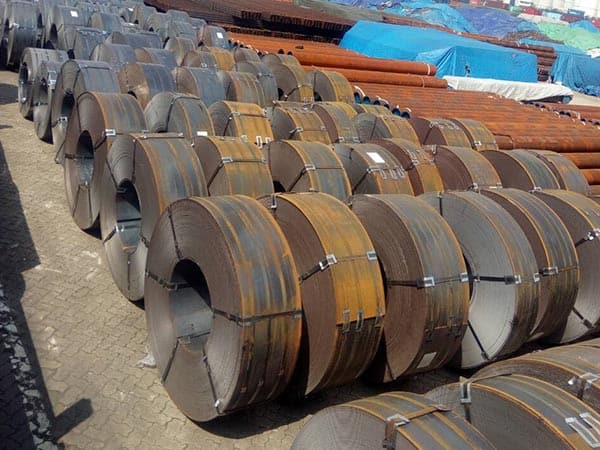
Defining the Standard for S355MC Surface Integrity
S355MC steel strip, a high-yield strength cold-forming steel produced through thermomechanical rolling, occupies a critical position in modern engineering. As specified under the EN 10149-2 standard, the appearance inspection of this material is not merely a cosmetic check but a fundamental quality assurance process that dictates the mechanical reliability and processing efficiency of the final components. The scope of appearance inspection encompasses several layers of evaluation, ranging from macroscopic surface defects to micro-level consistency in the oxide layer. Because S355MC is designed for complex cold-forming, bending, and folding, any surface irregularity can act as a stress concentrator, leading to premature failure during fabrication or service. Understanding the breadth of this inspection is essential for manufacturers in the automotive, crane, and structural steel sectors who rely on the material's 355 MPa minimum yield strength and excellent ductility.
Surface Defect Classification and Acceptance Criteria
The primary focus of appearance inspection for S355MC steel strip is the identification and categorization of surface defects. These defects are generally classified into two categories: those resulting from the steelmaking and casting process, and those occurring during the thermomechanical rolling or subsequent handling. Scabs and Slivers: These are among the most severe defects. Scabs are caused by splashes of molten steel during casting that become rolled into the surface. Slivers are thin, overlapping layers of steel. During inspection, these must be strictly limited as they can peel off during stamping, damaging expensive dies or creating sharp edges that compromise safety. Pitting and Rolled-in Scale: Since S355MC is hot-rolled, the presence of iron oxide scale is inevitable. However, 'rolled-in scale'—where the oxide is pressed into the steel matrix—is a major concern. It creates localized depressions (pitting) after pickling, which can interfere with the adhesion of protective coatings or paints. Scratches and Mechanical Damage: These often occur during the coiling or slitting process. Inspection protocols require that the depth of such scratches does not exceed half of the thickness tolerance, ensuring that the structural cross-section remains within design limits.
Dimensional Accuracy and Geometric Tolerances
Appearance inspection extends beyond the 'texture' of the steel to its physical dimensions. S355MC must adhere to strict tolerances, typically governed by EN 10051 for hot-rolled wide strip. Thickness Consistency: The thickness is measured at various points across the width and along the length of the strip. For S355MC, which is often used in weight-sensitive automotive frames, even a minor deviation can lead to significant variations in the final product's weight and strength. Width and Edge Camber: The width must be within the specified range, but equally important is the 'camber' or lateral bow. A strip that is not straight (showing excessive camber) will not feed correctly into automated laser cutting machines or progressive stamping presses, leading to production downtime and material waste.
| Inspection Parameter | Requirement/Standard | Impact on Processing |
|---|---|---|
| Surface Quality | EN 10163-2 Class B | Ensures coating adhesion and fatigue resistance |
| Thickness Tolerance | EN 10051 (Category A/B) | Critical for precision stamping and weight control |
| Flatness | Max 3mm - 6mm per meter | Essential for automated laser and plasma cutting |
| Edge Condition | Mill edge or Slit edge | Prevents cracking during 90-degree cold bending |
Edge Quality and Its Role in Cold Forming
For a steel grade like S355MC, which is celebrated for its cold-forming capabilities, the condition of the edges is a vital component of the appearance inspection scope. The inspection distinguishes between 'mill edges' (as-rolled) and 'slit edges' (trimmed). Edge Cracks: During the thermomechanical rolling process, if the temperature control at the strip edges is inconsistent, 'tongue' or 'fish-tail' defects can occur. In the inspection phase, any visible longitudinal or transverse cracks at the edges are grounds for rejection. These cracks would propagate rapidly when the strip is subjected to the high-strain environments of cold flanging or deep drawing. Burr Height: If the strip has been slit, the height of the burr must be monitored. Excessive burrs can cause scratching on adjacent layers of the coil and can lead to localized stress points during subsequent welding operations.
Shape Deviations: Flatness and Wave Phenomena
Flatness is perhaps the most challenging aspect of S355MC appearance inspection. Because the material is high-strength, it retains significant internal stresses from the rolling process. Inspection involves checking for 'center buckles' (oil canning) and 'edge waves.' Edge Waves: These occur when the edges of the strip are longer than the center. In a production environment, an wavy-edged S355MC strip will result in inaccurate parts when cut. Flatness Measurement: This is typically performed by laying a section of the strip on a flat inspection table and measuring the maximum deviation from the surface using a feeler gauge. For S355MC, achieving 'special flatness' (often half of the standard EN 10051 tolerance) is a common requirement for high-end structural applications where precision fit-up is required for robotic welding.
Influence of Appearance on Downstream Industrial Applications
The rigorous scope of appearance inspection for S355MC is driven by the demands of its end-use industries. In the Automotive Industry, S355MC is used for chassis components and suspension arms. Here, surface integrity is directly linked to fatigue life. A single surface pit can become the nucleation point for a fatigue crack under the constant vibration and stress of vehicle operation. In the Construction Machinery sector, such as for crane booms and telescopic arms, the flatness and surface cleanliness are paramount. These components are often long and require perfect alignment; any deviation in the strip's shape would be magnified over the length of the boom. Furthermore, since these parts are typically painted or powder-coated, the absence of rolled-in scale and rust is essential for long-term corrosion resistance in harsh outdoor environments. Laser Cutting Efficiency: Modern manufacturing relies on high-speed fiber lasers. A strip with inconsistent surface oxidation or poor flatness will cause the laser head to crash or result in poor cut quality, increasing the cost per part. Therefore, the appearance inspection acts as the first line of defense in maintaining the economic viability of the manufacturing chain.
Technical Summary of Inspection Methodology
To ensure the scope of inspection is fully covered, several methodologies are employed. Visual Inspection: Still the most common method, performed under high-intensity lighting to catch shadows cast by surface irregularities. Automated Surface Inspection Systems (ASIS): High-speed cameras and laser scanners are increasingly used on the production line to detect and log defects in real-time, providing a digital map of the entire coil. Ultrasonic Testing: While primarily for internal defects, it is often used in conjunction with appearance inspection to ensure that surface cracks do not extend deep into the material matrix. By strictly adhering to these inspection protocols, suppliers of S355MC steel strip ensure that the material not only meets the chemical and mechanical requirements of the EN 10149-2 standard but also provides the reliability and consistency needed for advanced engineering projects.
Leave a message