
What is the s420mc en 10149-2 application
Explore the comprehensive applications of S420MC steel under EN 10149-2. Learn about its mechanical properties, cold forming advantages, and why it is essential for lightweight engineering in automotive and heavy machinery.
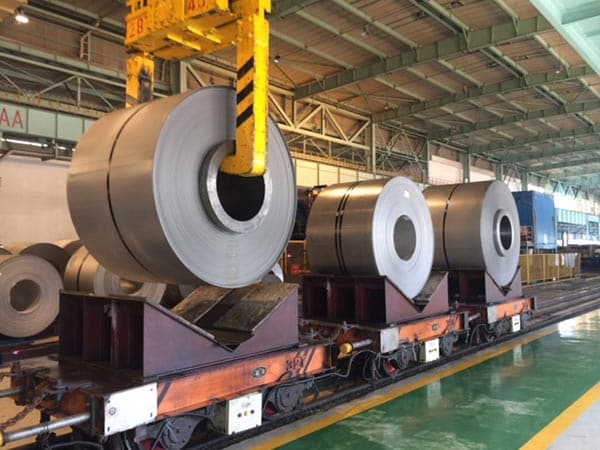
Understanding S420MC and the EN 10149-2 Standard
S420MC is a high-strength, low-alloy (HSLA) steel grade specifically designed for cold forming. The designation follows the European standard EN 10149-2, where 'S' stands for structural steel, '420' represents the minimum yield strength of 420 MPa, 'M' indicates it is thermomechanically rolled, and 'C' signifies its suitability for cold forming. This material represents a pinnacle of metallurgical engineering, balancing extreme strength with the ductility required for complex shaping. Unlike traditional structural steels, S420MC achieves its properties through a precise combination of chemical composition and controlled rolling processes, rather than through high carbon content or expensive alloying elements.
The EN 10149-2 standard governs hot-rolled flat products made of high yield strength steels for cold forming. It ensures that the material maintains a fine-grained microstructure, which is the secret behind its superior toughness and fatigue resistance. For engineers and manufacturers, understanding the S420MC EN 10149-2 application is not just about knowing where it is used, but understanding how its unique metallurgical profile allows for significant weight reduction without compromising structural integrity.
Chemical Composition and Microstructural Integrity
The performance of S420MC is rooted in its chemical makeup. To maintain excellent weldability and cold formability, the carbon content is kept very low. Strength is instead derived from micro-alloying elements such as Niobium (Nb), Vanadium (V), and Titanium (Ti). These elements facilitate grain refinement during the thermomechanical rolling process.
| Element | Maximum Percentage (%) |
|---|---|
| Carbon (C) | 0.12 |
| Manganese (Mn) | 1.60 | Silicon (Si) | 0.50 |
| Phosphorus (P) | 0.025 |
| Sulphur (S) | 0.015 |
| Aluminium (Al) | 0.015 (min) |
| Nb + V + Ti | 0.22 |
The low carbon equivalent (CEV) value is a critical factor for the S420MC EN 10149-2 application in modern manufacturing. It ensures that the steel can be welded using standard methods without the need for preheating, which significantly reduces production time and costs in assembly lines. The fine-grained structure also provides a cleaner surface finish, which is ideal for subsequent coating or painting processes.
Mechanical Performance and Lightweighting Potential
The primary driver for choosing S420MC over conventional S355 grades is the potential for lightweighting. By utilizing a material with a higher yield strength, designers can reduce the thickness of structural components while maintaining the same load-bearing capacity. This is particularly vital in industries where energy efficiency and payload capacity are prioritized.
| Property | Value (Thickness ≤ 16mm) |
|---|---|
| Minimum Yield Strength (ReH) | 420 MPa |
| Tensile Strength (Rm) | 480 - 620 MPa |
| Minimum Elongation (A80mm) | 16% - 19% (depending on thickness) |
Impact of Thermomechanical Rolling: The 'M' in S420MC refers to the Thermomechanical Controlled Process (TMCP). This involves rolling at specific temperature ranges followed by controlled cooling. This process creates a refined ferrite-pearlite or bainitic structure that offers high strength and high fracture toughness. In practical S420MC EN 10149-2 applications, this means the steel is less prone to brittle failure, even at low temperatures, making it suitable for equipment operating in harsh environments.
Cold Forming and Processing Advantages
The 'C' designation highlights the steel's exceptional cold forming properties. S420MC can be bent, flanged, and cold-pressed into intricate shapes without cracking. This is a significant advantage for the automotive industry, where complex chassis components and cross-members are common. The minimum bending radius for S420MC is remarkably tight for a steel of this strength level, typically ranging from 0.5t to 1.5t depending on the orientation relative to the rolling direction.
- Bending and Folding: Excellent resistance to edge cracking during tight radius bends.
- Laser and Plasma Cutting: The low alloy content and clean microstructure allow for high-precision thermal cutting with minimal heat-affected zones (HAZ).
- Punching and Shearing: High dimensional stability ensures that components remain within tight tolerances after mechanical cutting.
- Springback Management: While S420MC has higher springback than mild steel due to its strength, its consistent mechanical properties make it highly predictable for CNC bending operations.
Core Applications in the Automotive Industry
The most prominent S420MC EN 10149-2 application is found in the commercial vehicle sector. Truck manufacturers utilize this grade to build chassis frames, longitudinal beams, and cross-members. By replacing S355 with S420MC, a truck frame can be made significantly lighter, which directly translates to higher fuel efficiency and increased cargo capacity. In the competitive world of logistics, these incremental gains provide a substantial economic advantage.
In passenger vehicles, S420MC is used for structural reinforcements, seat frames, and bumper brackets. These components must absorb significant energy during a collision. The high yield strength ensures structural integrity, while the material's elongation properties allow it to deform and dissipate energy effectively, enhancing passenger safety.
Heavy Machinery and Lifting Equipment
Beyond the road, S420MC is a staple in the production of heavy machinery. For mobile cranes, aerial work platforms, and agricultural machinery, the strength-to-weight ratio is the most critical design metric. Telescopic boom sections made from S420MC allow cranes to reach higher and lift heavier loads without increasing the overall weight of the machine, which would otherwise complicate transport and stability.
- Crane Booms: High yield strength supports massive vertical loads while remaining light enough for mobile transport.
- Agricultural Implements: Ploughs and trailers benefit from the wear resistance and toughness of HSLA steel in rugged soil conditions.
- Earthmoving Equipment: Frames for excavators and loaders utilize S420MC to withstand the cyclic loading and vibrations inherent in construction work.
Environmental Adaptability and Durability
Modern engineering demands materials that can survive diverse climatic conditions. S420MC exhibits excellent atmospheric corrosion resistance compared to standard carbon steels, though it is often galvanized or painted for long-term protection. Its fine-grained structure also provides superior fatigue life. In applications like trailer side-walls or shipping containers, where the material is subjected to constant vibration and fluctuating loads, S420MC resists the initiation and propagation of fatigue cracks better than lower-grade alternatives.
Furthermore, the ability of S420MC to maintain its ductility at sub-zero temperatures makes it a preferred choice for infrastructure and machinery used in arctic or high-altitude environments. This "low-temperature toughness" is a byproduct of the TMCP process, ensuring that structural components do not become brittle and fail suddenly when the mercury drops.
Economic and Sustainable Manufacturing
While the per-ton cost of S420MC may be higher than basic structural steel, the total cost of ownership is often lower. The reduction in material volume (due to thinner sections) leads to lower shipping costs, reduced welding consumables, and faster assembly times. From a sustainability perspective, using less steel to achieve the same structural goal reduces the overall carbon footprint of the final product. As global industries move toward "Green Steel" and stricter emissions regulations, the S420MC EN 10149-2 application becomes a strategic choice for eco-conscious engineering.
The recyclability of S420MC is also a key factor. Like all steel, it is 100% recyclable. Because it contains minimal amounts of alloying elements, it can be easily integrated back into the steelmaking process without the need for complex separation, supporting a circular economy in the manufacturing sector.
Technical Optimization for Fabrication
To maximize the benefits of S420MC, fabricators should adhere to specific guidelines. When welding, low-hydrogen consumables are recommended to prevent any risk of cold cracking, although the steel's low CEV makes it very forgiving. For cold forming, it is essential to account for the material's directionality; bending perpendicular to the rolling direction typically yields the best results for tight radii. Surface preparation is also simplified, as the hot-rolled surface under EN 10149-2 is generally smoother and has less scale than standard hot-rolled products, facilitating better adhesion for modern powder coatings and high-performance paints.
The versatility of S420MC ensures its continued dominance in structural engineering. Whether it is a lightweight truck chassis, a high-reach crane boom, or a complex automotive bracket, this steel grade provides the perfect balance of strength, formability, and weldability required for the next generation of industrial innovation.
Leave a message