
What is the s550mc equivalent element chemical composition?
A comprehensive technical analysis of S550MC steel, exploring its chemical composition, global equivalents (ASTM, GB, JIS), mechanical properties, and industrial processing advantages.
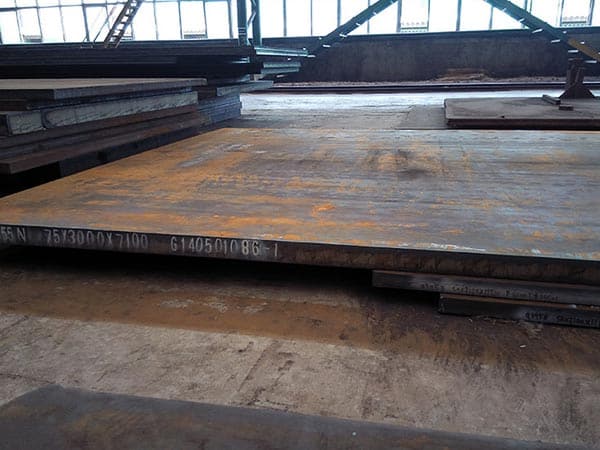
Understanding S550MC: The Benchmark for High-Strength Cold-Forming Steel
S550MC is a high-yield-strength steel produced through thermomechanical rolling, specifically designed for cold-forming applications. Governed by the European standard EN 10149-2, this grade represents a sophisticated balance between extreme strength and excellent ductility. Unlike traditional structural steels, S550MC achieves its properties not through heavy alloying or heat treatment, but through a precise combination of micro-alloying and controlled rolling temperatures. This process results in a fine-grained microstructure that offers superior performance in weight-sensitive structural components.
What is the S550MC Equivalent Element Chemical Composition?
The chemical architecture of S550MC is meticulously engineered to ensure weldability and formability while maintaining a minimum yield strength of 550 MPa. The carbon content is kept exceptionally low to prevent brittleness and enhance weldability. The primary strengthening mechanism relies on micro-alloying elements such as Niobium (Nb), Vanadium (V), and Titanium (Ti).
| Element | Maximum Content (%) | Metallurgical Role |
|---|---|---|
| Carbon (C) | 0.12 | Ensures weldability and prevents hardening in the heat-affected zone. |
| Manganese (Mn) | 1.80 | Increases strength and hardness through solid solution strengthening. |
| Silicon (Si) | 0.50 | Acts as a deoxidizer and contributes to tensile strength. |
| Phosphorus (P) | 0.025 | Controlled to maintain toughness and prevent cold shortness. |
| Sulphur (S) | 0.015 | Minimized to improve lamellar tearing resistance and surface quality. |
The total sum of Nb, V, and Ti is typically restricted to 0.22% to ensure the material retains its characteristic toughness. This specific chemistry allows S550MC to outperform traditional S355 grades by offering a 50% increase in yield strength with only a marginal loss in elongation.
Global Equivalents: Comparing S550MC Across Standards
Identifying the correct equivalent for S550MC is critical for global manufacturing and procurement. While different standards have varying testing protocols, several grades align closely with the performance metrics of EN 10149-2 S550MC.
- ASTM A1011/A1018 HSLAS-F Grade 80: This is the closest North American equivalent. The 'F' denotes improved formability, mirroring the 'MC' (Thermomechanically rolled, Cold forming) designation.
- GB/T 1591 Q550D: The Chinese standard equivalent. While Q550D offers similar yield strength, the impact testing requirements and chemical tolerances may vary slightly.
- JIS G3135 SPFC 590: A Japanese automotive standard. Although the tensile strength targets are similar, S550MC generally offers higher yield-to-tensile ratios.
- ISO 6930-2 PW550: The international standard for high-yield-strength steels for cold forming.
Mechanical Properties and Structural Integrity
The mechanical profile of S550MC is defined by its ability to withstand high loads while being light enough to reduce the overall weight of the structure. This makes it a preferred choice for the transport industry, where payload maximization is essential.
| Property | Value | Technical Significance |
|---|---|---|
| Yield Strength (ReH) | Min 550 MPa | The stress level at which permanent deformation begins. |
| Tensile Strength (Rm) | 600 - 760 MPa | The maximum stress the material can withstand before necking. |
| Elongation (A80mm) | Min 12% | Indicates the material's capacity for stretching during forming. |
| Bending Radius (90°) | 1.0 - 1.5t | Allows for tight bends without cracking, crucial for complex parts. |
The impact energy of S550MC is also a vital factor. Typically, these steels are tested at -20°C or -40°C to ensure they do not exhibit brittle failure in cold climates. The fine-grained structure ensures that even at high strength levels, the material remains ductile and resistant to fatigue.
Advanced Processing: Welding, Cutting, and Forming
S550MC is engineered for ease of processing. Its low carbon equivalent (CEV) value makes it exceptionally easy to weld using standard methods such as MAG (Metal Active Gas), TIG (Tungsten Inert Gas), and Laser welding. Unlike high-carbon steels, S550MC does not require extensive preheating, which significantly reduces production costs and cycle times.
Laser and Plasma Cutting: The consistent chemical composition and clean surface finish of S550MC make it ideal for automated laser cutting. The low internal stress resulting from the thermomechanical rolling process ensures that parts remain flat after cutting, minimizing the need for secondary leveling operations.
Cold Forming: Despite its high strength, S550MC behaves predictably during bending and folding. Manufacturers must account for slightly higher springback compared to mild steel, but the material's high ductility allows for complex geometries that would be impossible with standard high-strength structural steels. Using a larger die opening and ensuring smooth tool surfaces can further enhance the quality of the formed parts.
Industry Applications and Weight Reduction Strategies
The primary driver for using S550MC is "lightweighting." By substituting S355 with S550MC, engineers can reduce the thickness of structural components by up to 30% without sacrificing load-bearing capacity. This is particularly transformative in the following sectors:
- Automotive and Trucking: Chassis frames, cross members, and suspension components. Reducing the tare weight of a truck directly increases its fuel efficiency and payload capacity.
- Lifting and Handling: Crane booms, telescopic arms, and forklift frames. High strength-to-weight ratios allow for longer reach and higher lift capacities.
- Agricultural Machinery: Plow frames, seeders, and trailer bodies that must withstand harsh environments and high mechanical stress.
- Construction and Infrastructure: Cold-pressed profiles, racking systems, and specialized structural supports where space and weight are at a premium.
Environmental Adaptability and Longevity
While S550MC is not a weathering steel like Corten, its refined microstructure provides a degree of atmospheric corrosion resistance superior to that of hot-rolled commercial quality steels. For long-term durability in corrosive environments, S550MC is highly compatible with modern coating systems, including hot-dip galvanizing, powder coating, and cathodic dip painting (KTL). The low silicon content (often controlled below 0.03% for specific galvanizing requirements) ensures a uniform and aesthetic zinc coating, preventing the thick, brittle layers often seen in reactive steels.
Furthermore, the fatigue resistance of S550MC is a critical attribute for components subjected to cyclic loading. The absence of large inclusions and the uniformity of the grain structure prevent the initiation of micro-cracks, extending the service life of mobile equipment and heavy machinery operating under dynamic conditions.
Technical Selection: Factors for Engineers to Consider
When specifying S550MC or its equivalents, engineers must look beyond just yield strength. The orientation of the test pieces (longitudinal vs. transverse) and the impact energy requirements are crucial. For applications involving extreme cold, specifying a grade with guaranteed impact properties at -40°C is essential. Additionally, the surface finish—whether 'as rolled' or 'pickled and oiled'—can affect both the aesthetic outcome and the wear on forming tools. S550MC provides a versatile platform for innovation, allowing for the design of leaner, stronger, and more efficient mechanical systems.
Leave a message