
What is chemical composition and mechanical properties of s500mc steel equivalent astm
Discover the detailed chemical composition, mechanical properties, and ASTM equivalents for S500MC steel. This expert guide covers processing, weldability, and industrial applications.
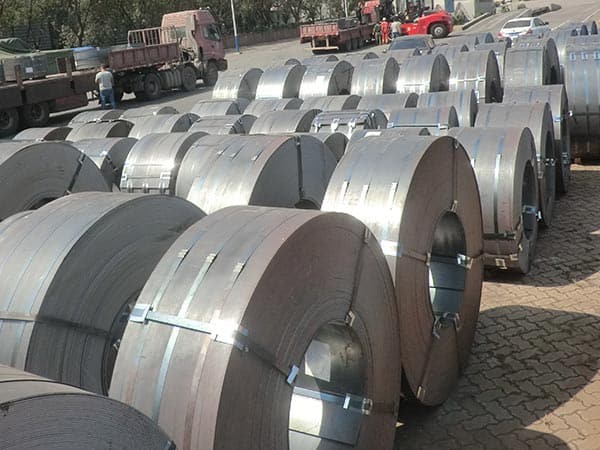
Understanding S500MC High-Strength Steel and Its Global Standards
S500MC is a high-yield-strength steel designed for cold forming, governed by the European standard EN 10149-2. The 'S' denotes structural steel, '500' refers to the minimum yield strength of 500 MPa, and 'MC' indicates that the material is thermomechanically rolled (M) and intended for cold forming (C). In the global steel market, engineers often seek the ASTM equivalent to ensure material consistency across international projects. While there is no exact 1:1 match in the ASTM system, ASTM A1011 HSLAS-F Grade 70 and ASTM A656 Grade 70 are the most recognized counterparts.
The demand for S500MC has surged due to the industry's shift toward lightweighting. By utilizing higher strength levels, manufacturers can reduce section thickness without compromising structural integrity, leading to significant fuel savings in transport and lower material costs in construction. This article provides a deep dive into the metallurgical DNA of S500MC and how it compares to its North American equivalents.
Chemical Composition: The Science of Micro-Alloying
The superior properties of S500MC are not achieved through high carbon content, which would impair weldability, but through precise thermomechanical rolling and micro-alloying. Elements like Niobium (Nb), Vanadium (V), and Titanium (Ti) are added in minute quantities to refine the grain structure.
| Element | S500MC (EN 10149-2) Max % | ASTM A1011 HSLAS-F Gr 70 Max % | ASTM A656 Grade 70 Max % |
|---|---|---|---|
| Carbon (C) | 0.12 | 0.15 | 0.18 |
| Manganese (Mn) | 1.60 | 1.65 | 1.65 |
| Silicon (Si) | 0.50 | 0.60 | 0.60 |
| Phosphorus (P) | 0.025 | 0.020 | 0.025 |
| Sulfur (S) | 0.015 | 0.020 | 0.015 |
| Aluminium (Al) | 0.015 (min) | - | - |
| Nb/V/Ti (Total) | 0.22 | Added | Added |
Niobium (Nb) plays a critical role in increasing the recrystallization temperature, allowing the steel to be rolled at lower temperatures to achieve an ultra-fine ferrite grain size. This fine grain is the primary reason S500MC maintains high toughness despite its high strength. Titanium (Ti) is often used to stabilize nitrogen and prevent grain growth in the heat-affected zone (HAZ) during welding.
Mechanical Properties: Strength Meets Ductility
The defining characteristic of S500MC is its balance between high yield strength and excellent cold-forming capacity. Unlike traditional structural steels, S500MC offers a high yield-to-tensile ratio, which is vital for energy absorption in automotive safety components.
| Property | S500MC Value | ASTM A1011 Gr 70 (Approx) |
|---|---|---|
| Yield Strength (MPa) | Min 500 | Min 480 |
| Tensile Strength (MPa) | 550 - 700 | Min 550 |
| Elongation (A5, %) | Min 12 - 14 (t < 3mm) | Min 12 |
| Bending Radius (180°) | 0.5t to 1.0t | 1.5t |
It is important to note that the elongation values for S500MC depend heavily on the thickness of the material and the direction of the test (longitudinal vs. transverse). For thicknesses less than 3mm, the minimum elongation is typically 12%, while thicker plates may reach 14%. The ASTM A656 Grade 70 typically offers a minimum yield of 485 MPa, making it a very close functional match for heavy plate applications.
Thermomechanical Rolling (TMCP) Explained
The 'M' in S500MC stands for thermomechanically rolled. This process involves strictly controlled temperature and deformation schedules during the rolling mill process. Unlike traditional normalized steel, TMCP steel achieves its strength through a combination of grain refinement and precipitation hardening during cooling. This allows for a lower Carbon Equivalent (CEV), which drastically improves the material's weldability and prevents cold cracking without the need for extensive preheating.
Processing Performance and Fabrication
Fabricators choose S500MC because it behaves predictably during manufacturing. Its low impurity content (low Sulfur and Phosphorus) ensures that the steel remains clean, reducing the risk of lamellar tearing.
- Cold Bending: S500MC is specifically designed for complex bending. For a thickness (t) under 3mm, a bending radius of 0.5t is often achievable, though 1.0t is recommended for safety margins.
- Welding: Due to the low carbon content (max 0.12%), S500MC can be welded using all standard methods, including MAG, TIG, and Laser welding. The low CEV means that even in thick sections, the risk of hardening in the HAZ is minimal.
- Laser Cutting: The consistent surface quality and internal stress distribution make S500MC an ideal candidate for high-speed laser cutting. It produces clean edges with minimal dross.
Environmental Adaptability and Durability
While S500MC is not a weathering steel (like Corten), its fine-grained structure provides a slightly better resistance to atmospheric corrosion compared to standard S235JR carbon steel. However, for long-term outdoor exposure, S500MC components are typically hot-dip galvanized or powder-coated. The low Silicon content (often controlled to specific ranges) ensures that the steel is suitable for galvanizing, avoiding the 'Sandelin effect' which can cause brittle, thick zinc coatings.
Industry Applications: Where S500MC Excels
The versatility of S500MC makes it a staple in sectors where weight reduction is a priority. By replacing S355MC with S500MC, engineers can often reduce the weight of a component by 20-30% while maintaining the same load-bearing capacity.
- Automotive Industry: Used for chassis parts, longitudinal beams, and cross members where high strength and crash performance are required.
- Lifting and Transport: Crane booms, trailer frames, and telescopic arms benefit from the high strength-to-weight ratio, allowing for higher payloads.
- Agricultural Machinery: Plow frames and harvester components utilize S500MC for its ability to withstand high cyclic loads and impact.
- Cold-Formed Sections: S500MC is the preferred material for high-strength C and Z purlins used in modern steel buildings.
Comparative Analysis: S500MC vs. ASTM Equivalents
When substituting S500MC with an ASTM grade, one must consider the HSLAS-F designation in ASTM A1011. The 'F' stands for 'Improved Formability,' which aligns with the 'C' in S500MC. Standard HSLAS (without the F) may not have the same inclusion shape control (sulfide treatment), leading to cracking during tight-radius bending. Therefore, if a project specifies S500MC, the ASTM A1011 HSLAS-F Grade 70 is the safest bet for sheet products, while ASTM A656 Grade 70 is the standard for plate products over 6mm thickness.
Selecting the right grade involves more than just matching yield strength. One must evaluate the impact toughness requirements (often specified as S500MC at -20°C or -40°C) and ensure the chosen ASTM grade meets these specific energy absorption criteria. S500MC typically offers excellent longitudinal and transverse toughness, making it a robust choice for dynamic environments.
Leave a message