
What is the S460MC cold rolled steel for construction machinery raw material
A comprehensive guide to S460MC steel, detailing its chemical composition, mechanical properties, and its critical role as a high-strength raw material in the construction machinery industry.
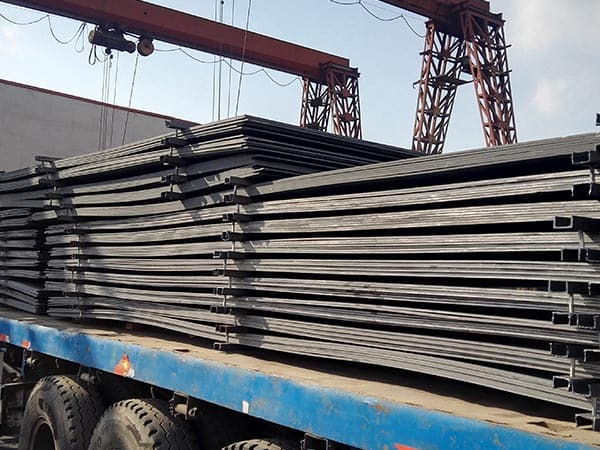
The Technical Foundation of S460MC in Heavy Engineering
S460MC is a high-yield strength, thermomechanically rolled steel specifically designed for cold forming processes, governed by the European standard EN 10149-2. In the context of construction machinery, where the demand for higher payloads and reduced fuel consumption is ever-increasing, S460MC serves as a critical raw material. Although often discussed alongside cold-rolled products due to its exceptional surface finish and cold-forming capabilities, it is technically a hot-rolled product that undergoes a sophisticated Thermomechanical Controlled Processing (TMCP) route. This process ensures a fine-grained microstructure that balances extreme strength with remarkable ductility, making it indispensable for structural components that must withstand immense stress without failure.
Thermomechanical Controlled Processing (TMCP): The Secret to Performance
The superior properties of S460MC are not merely a result of its chemical recipe but are deeply rooted in its manufacturing history. TMCP involves a combination of controlled rolling and controlled cooling. By precisely managing the temperature during the rolling stages—specifically in the non-recrystallization zone—the austenite grains are flattened and elongated. This creates a high density of nucleation sites for the subsequent transformation into ferrite. The result is an ultra-fine grain structure, often much finer than what can be achieved through traditional normalizing. This grain refinement is the only strengthening mechanism that simultaneously improves both yield strength and toughness, a vital requirement for machinery operating in varying climates.
Chemical Composition and Micro-Alloying Precision
The chemical design of S460MC is focused on low carbon content to ensure excellent weldability, while utilizing micro-alloying elements like Niobium (Nb), Vanadium (V), and Titanium (Ti) to achieve high strength. These elements form fine carbides and nitrides that pin grain boundaries and provide precipitation hardening.
| Element | Carbon (C) | Manganese (Mn) | Silicon (Si) | Phosphorus (P) | Sulfur (S) | Aluminium (Al) | Nb + V + Ti |
|---|---|---|---|---|---|---|---|
| Max % | 0.12 | 1.60 | 0.50 | 0.025 | 0.015 | 0.015 | 0.22 |
The low sulfur content, often further refined through calcium treatment for sulfide shape control, ensures that the steel exhibits isotropic properties. This means the material performs consistently whether it is stressed longitudinal or transverse to the rolling direction, which is a critical factor when designing complex three-dimensional components for crane jibs or excavator frames.
Mechanical Properties: Strength Meets Flexibility
S460MC is defined by its minimum yield strength of 460 MPa. This high threshold allows engineers to use thinner plates compared to traditional S355 grades, leading to significant weight reductions in the final machinery. However, strength is only half the story; the material must also maintain sufficient elongation to allow for safe deformation during service and manufacturing.
| Property | Yield Strength (ReH MPa) | Tensile Strength (Rm MPa) | Elongation (A5 %) | Min. Bending Radius (90°) |
|---|---|---|---|---|
| Value | ≥ 460 | 520 - 670 | ≥ 14 (t < 3mm) / ≥ 17 (t ≥ 3mm) | 0.8t to 1.0t |
The narrow range between yield and tensile strength is carefully calibrated to provide a predictable response during cold forming, minimizing springback and ensuring dimensional accuracy in mass-produced parts.
Cold Forming Excellence and Manufacturing Efficiency
One of the primary reasons S460MC is favored as a raw material for construction machinery is its exceptional cold-forming behavior. It can be bent, flanged, and cold-pressed into complex shapes without cracking. This capability allows for the integration of multiple structural functions into a single pressed part, reducing the number of welds required. A reduction in welding not only lowers production costs but also eliminates potential points of fatigue failure. When performing cold bending, the fine-grained structure prevents the "orange peel" effect, maintaining a smooth surface that is ideal for subsequent painting or powder coating, which are standard in the aesthetics-driven construction equipment market.
Weldability and Structural Integrity
Despite its high strength, S460MC maintains a low Carbon Equivalent Value (CEV), making it highly compatible with all standard welding processes, including MAG, MIG, and submerged arc welding. The TMCP process ensures that the Heat Affected Zone (HAZ) remains tough, though care must be taken with heat input to avoid excessive grain growth which could lead to localized softening. Because the steel is so clean, it is less susceptible to hydrogen-induced cracking, providing a wider safety margin during heavy-duty fabrication. For construction machinery like telescopic booms, where welds are subjected to high dynamic loads, the reliability of the S460MC weldment is a decisive advantage.
Fatigue Resistance and Environmental Adaptation
Construction machinery operates in some of the harshest environments on Earth, from sub-zero arctic mines to scorching desert construction sites. S460MC exhibits excellent impact toughness at low temperatures, ensuring that components do not undergo brittle fracture when subjected to sudden shocks in cold weather. Furthermore, its high fatigue limit is essential for components like truck chassis and mounting brackets that experience millions of load cycles. The consistency of the microstructure prevents the early initiation of fatigue cracks, extending the service life of the equipment and reducing the total cost of ownership for the end-user.
Strategic Applications in the Construction Machinery Industry
- Mobile Cranes: Used in the fabrication of telescopic boom sections where high strength-to-weight ratios are paramount for reaching greater heights and lifting heavier loads.
- Excavator Components: Applied in the construction of arms and buckets that require a balance of high yield strength and impact resistance against abrasive materials.
- Truck Chassis and Frames: S460MC allows for the design of lightweight yet rigid frames for dump trucks and concrete mixers, improving fuel efficiency and payload capacity.
- Agricultural Equipment: Used in large-scale harvesters and plows where durability and the ability to form complex structural shapes are required.
- Support Structures: Essential for the manufacturing of outriggers and stabilizers that ensure the safety and stability of heavy lifting equipment.
By adopting S460MC, manufacturers can achieve a "virtuous cycle" of design: lighter components lead to smaller engines, lower fuel consumption, and reduced emissions, all while maintaining or increasing the machine's work capacity. This alignment with global sustainability trends makes S460MC more than just a raw material; it is a strategic asset for modern industrial engineering.
Surface Quality and Corrosion Protection
The surface of S460MC is typically free from heavy scale due to the controlled cooling environment of the TMCP process. This high-quality surface is conducive to efficient pickling and provides an excellent substrate for modern corrosion protection systems. Whether the machinery is destined for a coastal environment or a high-salinity winter road, the adhesion of protective coatings to S460MC ensures long-term resistance to rust and environmental degradation, preserving the structural integrity of the machine throughout its lifecycle.
Conclusion on Material Selection
Choosing S460MC as a raw material is a decision that impacts every stage of a machine's life, from the ease of fabrication in the factory to the reliability and efficiency of the unit in the field. Its unique combination of high yield strength, superior cold formability, and robust weldability positions it as a premier choice for engineers looking to push the boundaries of what construction machinery can achieve. As the industry continues to evolve toward smarter, lighter, and more durable designs, the role of high-strength steels like S460MC will only become more central to the global infrastructure landscape.
Leave a message