
What is the s355mc vs s355j2 steel measurement
A detailed technical comparison between S355MC and S355J2 steel grades. Learn about their chemical composition, mechanical measurements, impact toughness, and application differences in engineering and manufacturing.
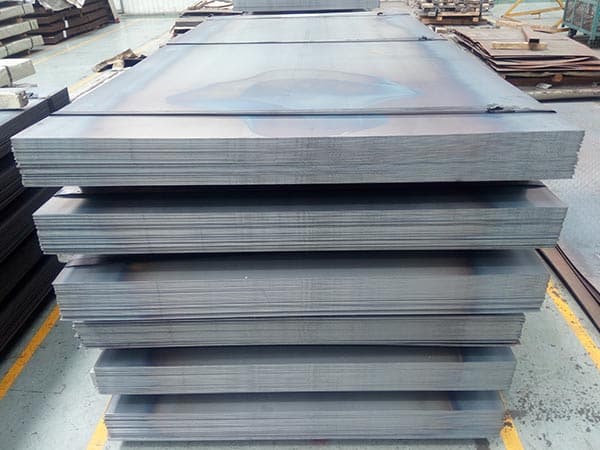
Decoding the S355 Structural Steel Variants: MC vs J2
In the global steel market, the designation S355 is ubiquitous, representing a structural steel with a minimum yield strength of 355 MPa. However, the suffixes MC and J2 signify vastly different metallurgical paths, production standards, and performance measurements. Understanding the nuances between S355MC (EN 10149-2) and S355J2 (EN 10025-2) is critical for engineers and procurement specialists who must balance weight reduction, structural integrity, and cost-efficiency.
The Measurement of Standards: EN 10149-2 vs EN 10025-2
The primary difference begins with the governing European standards. S355MC is governed by EN 10149-2, which specifies hot-rolled flat products made of high yield strength steels for cold forming. The 'MC' indicates a thermomechanically rolled (M) steel with high cold-formability (C).
On the other hand, S355J2 falls under EN 10025-2, the standard for hot-rolled products of structural steels. The 'J2' measurement refers specifically to the impact energy requirements—requiring a minimum of 27 Joules at a temperature of -20°C. While both share a similar yield strength 'measurement', their internal structures are engineered for different stress environments.
Chemical Composition and Metallurgical Measurement
The chemical makeup of these two steels determines their weldability and formability. S355MC is a micro-alloyed steel, utilizing elements like Niobium (Nb), Titanium (Ti), and Vanadium (V) to achieve grain refinement. This allows for a lower Carbon (C) content compared to S355J2, enhancing its weldability and reducing the risk of cold cracking.
| Element (Max %) | S355MC (EN 10149-2) | S355J2 (EN 10025-2) |
|---|---|---|
| Carbon (C) | 0.12 | 0.20 - 0.22 |
| Manganese (Mn) | 1.50 | 1.60 |
| Silicon (Si) | 0.50 | 0.55 |
| Phosphorus (P) | 0.025 | 0.025 |
| Sulfur (S) | 0.020 | 0.025 |
| Alloying (Nb/Ti/V) | Present (Micro-alloyed) | Optional/Minimal |
Mechanical Properties and Yield Strength Measurements
While both steels are rated at 355 MPa yield strength, the measurement of their ductility and tensile strength varies with thickness and processing. S355MC is specifically designed for cold forming (bending, pressing, and folding). Its elongation values are typically higher than those of S355J2 for the same thickness, allowing for complex geometries without material failure.
- S355MC Yield Strength: Minimum 355 MPa (constant across thicknesses up to 20mm).
- S355J2 Yield Strength: Minimum 355 MPa (decreases as plate thickness increases beyond 16mm).
- Tensile Strength: S355MC typically ranges from 430-550 MPa, whereas S355J2 ranges from 470-630 MPa.
Impact Toughness: The J2 Advantage
A critical measurement where S355J2 excels is low-temperature impact toughness. The 'J2' designation is a guarantee that the steel will not become brittle in cold environments. This makes S355J2 the preferred choice for outdoor structural applications in northern climates, offshore platforms, and heavy bridge components.
S355MC, while possessing excellent strength-to-weight ratios, does not always have a mandatory low-temperature impact test requirement in its base standard, though many modern mills produce it with excellent toughness properties. If your application involves dynamic loading at sub-zero temperatures, the J2 measurement is a safer technical specification.
Processing Performance: Bending and Welding
Cold Forming: S355MC is the undisputed leader in cold forming. Because of its fine-grained structure and low carbon equivalent (CEV), it can be bent to much tighter radii than S355J2. This is vital for the automotive industry where chassis components require intricate shapes and high strength.
Welding: Both steels are highly weldable. However, the low carbon content of S355MC makes it less susceptible to the Heat Affected Zone (HAZ) hardening. When welding S355J2, especially in thicker sections, preheating might be necessary to ensure structural integrity, whereas S355MC often requires less stringent thermal management during the welding process.
Surface Quality and Aesthetic Measurements
Because S355MC is often produced via thermomechanical rolling, it usually features a thinner, tighter mill scale compared to the heavier scale found on S355J2 structural plates. This results in a better surface finish after pickling and oiling (P&O), making S355MC more suitable for parts that will be powder-coated or painted for aesthetic purposes.
Industry Applications: Choosing the Right Grade
The choice between these two grades depends on the final function of the component. Below is a breakdown of typical use cases:
- S355MC Applications: Automotive frames, truck chassis, crane arms, cold-pressed sections, and lightweight structural components where weight reduction is a priority.
- S355J2 Applications: Civil engineering, skyscrapers, bridge construction, heavy machinery base plates, wind turbine towers, and shipbuilding.
Weight Reduction and Environmental Impact
In modern manufacturing, the measurement of a material's success is often tied to its sustainability. S355MC allows designers to use thinner gauges of steel to achieve the same strength as thicker, lower-grade carbon steels. This reduction in material volume leads to lighter vehicles and structures, which in turn reduces fuel consumption and CO2 emissions during the product's lifecycle. While S355J2 provides the "muscle" for heavy infrastructure, S355MC provides the "efficiency" for mobile machinery.
Technical Summary of Measurements
When comparing S355MC vs S355J2, do not look only at the yield strength. Measure the requirements of your project against ductility, impact toughness, and thickness. S355MC is your choice for high-precision, cold-formed, and lightweight parts. S355J2 is your choice for heavy-duty, weld-intensive, and cold-weather structural reliability. By selecting the correct grade based on these specific measurements, manufacturers can optimize both the safety and the cost-effectiveness of their engineering projects.
Leave a message