
What are the main characteristics of en 10149-2 s355mc pdf
Discover the technical characteristics of EN 10149-2 S355MC steel. This comprehensive guide covers mechanical properties, chemical composition, processing advantages, and industrial applications for high-strength cold-forming projects.
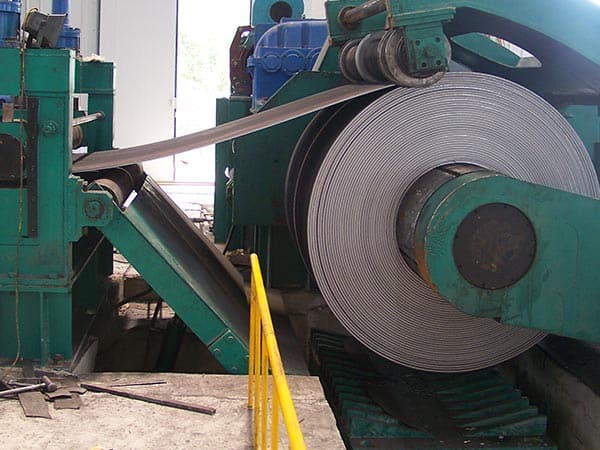
The Metallurgical Foundation of EN 10149-2 S355MC
EN 10149-2 S355MC is a high-yield strength steel produced through a specialized process known as thermomechanical rolling. The 'S' denotes structural steel, '355' represents the minimum yield strength of 355 MPa, and 'MC' signifies its suitability for cold forming (C) and its thermomechanically rolled (M) state. This material is engineered to bridge the gap between traditional carbon steels and high-performance alloys, offering a unique combination of strength, ductility, and weldability. Unlike conventional hot-rolled steels, the thermomechanical process involves precise temperature control and deformation during rolling, which refines the grain size to a microscopic level. This fine-grained structure is the primary reason why S355MC exhibits superior toughness and resistance to cracking during intensive forming operations.
Chemical Composition and Micro-Alloying Excellence
The performance of S355MC is rooted in its low carbon content and the strategic addition of micro-alloying elements. By keeping the carbon levels significantly lower than standard structural grades like s355jr, the steel achieves exceptional weldability and cold-forming properties. Elements such as Niobium (Nb), Vanadium (V), and Titanium (Ti) are introduced in minute quantities to facilitate grain refinement and precipitation hardening. These elements form stable carbides and nitrides that pin grain boundaries during the rolling process, preventing grain growth even at elevated temperatures. The resulting chemical balance ensures that the steel maintains high strength without becoming brittle, a critical factor for components subject to dynamic loads.
| Element | Maximum Content (%) |
|---|---|
| Carbon (C) | 0.12 |
| Manganese (Mn) | 1.50 |
| Silicon (Si) | 0.50 |
| Phosphorus (P) | 0.025 |
| Sulfur (S) | 0.020 |
| Aluminum (Al) | 0.015 |
| Niobium (Nb) | 0.09 |
| Titanium (Ti) | 0.15 |
The low sulfur and phosphorus content are particularly noteworthy. These impurities are minimized to enhance the internal cleanliness of the steel, which directly translates to improved impact energy absorption and reduced risk of lamellar tearing. This chemical purity makes S355MC an ideal candidate for precision laser cutting and intricate bending, as the material reacts predictably to mechanical stress.
Mechanical Properties and Structural Integrity
The defining characteristic of EN 10149-2 S355MC is its mechanical robustness. While the yield strength is pegged at a minimum of 355 MPa for thicknesses up to 16mm, the actual performance often exceeds these values due to advanced manufacturing techniques. The tensile strength ranges between 430 and 550 MPa, providing a safe margin for structural applications. One of the most critical metrics for this grade is its elongation capacity. With a minimum elongation of 19% to 23% (depending on thickness), S355MC can undergo significant deformation without structural failure. This allows for the creation of complex geometries in chassis components and support structures where weight reduction is prioritized without sacrificing safety.
- Yield Strength: Min 355 MPa (for t ≤ 16mm)
- Tensile Strength: 430 - 550 MPa
- Minimum Elongation: 19% - 23%
- Bending Radius: Can be bent 180 degrees with a radius as small as 0.5 to 1.5 times the thickness.
Exceptional Cold Forming and Processing Advantages
Manufacturers favor S355MC primarily for its ease of processing. The thermomechanical rolling process ensures that the steel has a consistent internal structure, which is vital for automated production lines. When it comes to cold bending, S355MC outperforms standard hot-rolled grades by a wide margin. It allows for tighter bend radii without the risk of surface cracking or 'orange peel' effects. This capability is essential for the automotive industry, where complex frames and cross-members are stamped or bent from flat sheets. Furthermore, the material exhibits excellent spring-back predictability, allowing engineers to design tooling with high precision.
Welding S355MC is remarkably efficient. Due to its low carbon equivalent (CEV), the steel can be welded using all standard methods, including MIG, TIG, and submerged arc welding, without the need for extensive pre-heating. The heat-affected zone (HAZ) remains stable, maintaining much of the parent metal's strength and toughness. For businesses focused on high-volume production, the compatibility of S355MC with automated welding robots reduces cycle times and improves overall throughput.
Weight Reduction and Environmental Sustainability
In the modern engineering landscape, reducing the carbon footprint of machinery and vehicles is a top priority. EN 10149-2 S355MC plays a pivotal role in 'lightweighting' strategies. By utilizing a higher strength steel, engineers can specify thinner gauges than would be required with standard S235 or S275 grades. This reduction in material thickness leads to a direct decrease in the overall weight of the structure. For transportation equipment, such as trailers and heavy-duty trucks, this weight saving translates into higher payloads and improved fuel efficiency. Moreover, using less steel per unit reduces the energy consumption associated with raw material extraction and transportation, aligning industrial goals with environmental sustainability targets.
Surface Quality and Dimensional Tolerances
S355MC is typically supplied in a pickled and oiled condition or as-rolled. The surface quality is strictly governed by standards such as EN 10163-2, ensuring that the material is free from significant defects like scales, slivers, or heavy pitting. This high surface integrity is not just aesthetic; it is functional. A smooth surface reduces the concentration of stresses and serves as an excellent substrate for subsequent coating processes, such as galvanizing, powder coating, or painting. Dimensional tolerances for S355MC are usually held to EN 10051 standards, providing tight control over thickness, width, and flatness. These precise tolerances are vital for modern laser cutting and CNC machining operations, where consistency is the key to minimizing scrap and maximizing efficiency.
Diverse Industrial Applications
The versatility of S355MC makes it a staple across numerous sectors. In the heavy machinery industry, it is used for crane arms, boom sections, and excavator buckets where high stress and impact are common. The material's ability to withstand cold climates without becoming brittle also makes it suitable for outdoor structural components in northern latitudes. Within the logistics sector, S355MC is the go-to choice for container frames, racking systems, and cold-formed sections. Its unique blend of high strength and workability ensures that even under the most demanding conditions, the structural integrity of the equipment remains uncompromised. As manufacturing technology evolves, S355MC continues to find new roles in renewable energy structures, such as wind turbine internal components and solar tracking systems, where durability and precision are paramount.
By selecting EN 10149-2 S355MC, designers and manufacturers gain access to a material that is not only cost-effective but also technologically advanced. Its characteristics provide a competitive edge in product development, ensuring that the final output is robust, efficient, and ready for the challenges of modern industrial use. The shift toward higher-strength cold-forming steels is a clear trend, and S355MC remains at the forefront of this transition, offering reliable performance across a myriad of demanding environments.
Leave a message