
What is the process principle of S700MC cold rolled coil
Discover the metallurgical and manufacturing principles of S700MC high-strength steel. This guide covers TMCP technology, micro-alloying strategies, and processing advantages for automotive and industrial applications.
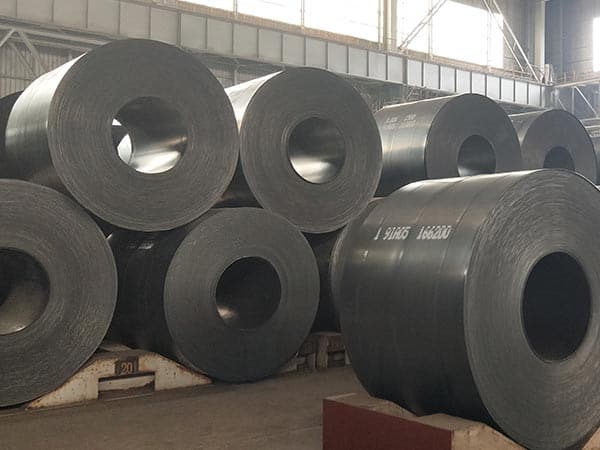
Understanding the Core Identity of S700MC High-Strength Steel
S700MC is a high-strength low-alloy (HSLA) structural steel that represents the pinnacle of modern metallurgical engineering. The designation itself reveals its fundamental characteristics: "S" stands for structural steel, "700" denotes a minimum yield strength of 700 MPa, and "MC" indicates that the material is thermomechanically rolled (M) and possesses high cold-forming suitability (C). While S700MC is primarily produced as a hot-rolled product under standards like EN 10149-2, its "cold-rolled" counterparts or its behavior during subsequent cold processing stages are critical for high-end manufacturing. The process principle behind S700MC is not merely about achieving high hardness; it is about the delicate balance between extreme strength, excellent toughness, and superior formability.
The Metallurgical Foundation: Micro-Alloying Strategy
The primary principle that allows S700MC to achieve such high performance without the excessive use of expensive alloying elements is micro-alloying. Unlike traditional high-strength steels that might rely on high carbon content, S700MC maintains a very low carbon equivalent. This is achieved by adding minute amounts of grain-refining elements such as Niobium (Nb), Vanadium (V), and Titanium (Ti). Niobium plays a crucial role in increasing the recrystallization temperature of austenite, which is vital during the rolling process. Titanium forms stable nitrides that prevent grain growth at high temperatures, ensuring a fine-grained structure from the very beginning of the heating process. Vanadium contributes through precipitation hardening, where fine carbides and nitrides precipitate within the ferrite matrix, creating barriers to dislocation movement and significantly boosting yield strength.
Thermomechanical Controlled Processing (TMCP)
The "MC" in S700MC refers to the Thermomechanical Controlled Process (TMCP), which is the heart of its manufacturing principle. This process involves a strictly controlled temperature-deformation schedule that differs significantly from conventional normalized rolling. The process is divided into several critical stages:
- Reheating: The slabs are heated to a specific temperature to ensure all micro-alloying elements are in solid solution while preventing excessive austenite grain growth.
- Rough Rolling: Initial deformation occurs at high temperatures to break down the as-cast structure and refine the austenite grains through repeated recrystallization.
- Finish Rolling in the Non-Recrystallization Zone: This is the most critical phase. Rolling occurs at temperatures below the austenite recrystallization temperature. The grains are flattened or "pancaked," creating a high density of deformation bands and nucleation sites for the subsequent phase transformation.
- Accelerated Cooling: Immediately after the final pass, the steel is subjected to controlled cooling. This rapid temperature drop bypasses the formation of coarse pearlite and promotes the formation of an ultra-fine-grained ferrite and bainite microstructure.
Mechanical Performance and the Hall-Petch Relationship
The relationship between grain size and yield strength is governed by the Hall-Petch equation. By refining the grain size through the TMCP process, S700MC increases its strength without the loss of toughness typically associated with hardening. This makes the material exceptionally resistant to brittle fracture, even at low temperatures. The typical mechanical properties of S700MC are optimized for weight reduction in structural components. By replacing standard S355 steel with S700MC, engineers can often reduce the thickness of parts by 30% to 40% without compromising structural integrity. This weight reduction is a key driver in the automotive and heavy machinery industries, leading to lower fuel consumption and higher payload capacities.
Cold Forming and Processing Adaptability
Despite its high strength, S700MC is designed for excellent cold forming. The process principle ensures that the material has a high "hole expansion ratio" and can withstand tight bending radii. This is particularly important for the production of complex longitudinal beams, cross members, and chassis components. When processing S700MC cold rolled coil or sheets, it is essential to account for springback. Because the yield strength is so high, the elastic recovery after bending is greater than that of conventional steels. Advanced CNC bending machines and precise die designs are utilized to compensate for this effect, ensuring high dimensional accuracy in the final parts.
Comparative Analysis: S700MC vs. Traditional Structural Steel
| Property | s355jr (Conventional) | S700MC (High Strength) | Advantage of S700MC |
|---|---|---|---|
| Yield Strength (MPa) | Min 355 | Min 700 | ~100% Increase in Load Capacity |
| Tensile Strength (MPa) | 470 - 630 | 750 - 950 | Superior Ultimate Strength |
| Elongation (%) | Min 20 | Min 12 | Maintains Sufficient Formability |
| Microstructure | Ferrite-Pearlite | Ultra-fine Ferrite/Bainite | Better Toughness and Fatigue Life |
| Weight Saving Potential | Baseline | 30% - 50% | Significant Energy/Fuel Savings |
Welding Dynamics and Heat Affected Zone (HAZ) Integrity
A common concern with high-strength steels is the potential softening of the Heat Affected Zone (HAZ) during welding. However, the low carbon equivalent (CEV) of S700MC makes it highly weldable using standard methods such as MAG, MIG, and laser welding. The process principle here involves minimizing the heat input. Because the strength is derived from grain refinement and fine precipitates rather than a martensitic quench-and-temper cycle, the material is less prone to cold cracking. Using low heat input prevents excessive grain growth in the HAZ, which helps maintain the mechanical properties of the joint. It is recommended to use matching or slightly over-alloyed filler materials depending on the specific structural requirements of the application.
Environmental Adaptation and Industry Extension
The application of S700MC extends far beyond simple structural frames. In the renewable energy sector, it is used for wind turbine components where high strength-to-weight ratios are essential. In the crane and lifting industry, the use of S700MC allows for longer boom reaches and higher lifting capacities. Furthermore, the environmental impact of using S700MC is profound. By reducing the mass of steel required for a project, the total CO2 footprint associated with steel production, transportation, and end-use operation is significantly lowered. This aligns with global sustainability goals and the push for "green steel" applications in modern infrastructure.
Advanced Surface Quality and Laser Cutting Precision
For many manufacturers, the surface quality of S700MC is as important as its strength. The controlled rolling process results in a thin, tightly adherent scale that is easily removed through pickling, or in the case of cold-rolled variants, a smooth, bright finish. This surface integrity is vital for subsequent coating processes like powder coating or galvanizing. Additionally, S700MC is an ideal candidate for laser cutting. Its homogeneous microstructure and low internal stress levels ensure that parts remain flat after cutting, reducing the need for secondary leveling operations and increasing the efficiency of automated assembly lines.
Future Outlook on High-Strength Micro-Alloyed Steels
The evolution of S700MC continues with the development of even higher grades like S900MC and S960MC. However, S700MC remains the "sweet spot" for many industrial applications due to its cost-effectiveness and balanced property profile. As manufacturing technologies like 3D roll forming and hydroforming become more prevalent, the unique process principles of S700MC—specifically its ability to maintain ductility at high stress levels—will become even more valuable. Engineers are increasingly looking at the life-cycle assessment of materials, where the durability and recyclability of HSLA steels like S700MC offer a compelling case for long-term industrial use.
Leave a message