
What is the ZQS700L 1.2mm coil machining
Explore the technical specifications and machining processes of ZQS700L 1.2mm steel coils. Learn about its chemical composition, mechanical properties, and industrial applications.
Understanding the Essence of ZQS700L 1.2mm Steel Coils
ZQS700L is a high-strength low-alloy (HSLA) structural steel specifically designed for applications demanding high load-bearing capacity and weight reduction. When we discuss ZQS700L 1.2mm coil machining, we are referring to the complex set of processes used to transform this high-performance material into precise components. The '700' in its name signifies a minimum yield strength of 700 MPa, while the 'L' typically denotes its suitability for cold forming and low-temperature toughness. At a thickness of 1.2mm, this material offers an exceptional strength-to-weight ratio, making it a favorite in modern engineering where efficiency is paramount.
The machining of 1.2mm ZQS700L coils involves more than just simple cutting. It encompasses slitting, leveling, laser cutting, cold bending, and welding. Because the material is relatively thin yet incredibly strong, it presents unique challenges such as springback during forming and the need for precise heat control during welding to maintain its microstructural integrity. Understanding these nuances is critical for manufacturers looking to leverage the full potential of this steel grade.
Chemical Composition and Its Impact on Machinability
The superior performance of ZQS700L is rooted in its precise chemical makeup. Unlike standard carbon steels, ZQS700L utilizes micro-alloying elements like Niobium (Nb), Vanadium (V), and Titanium (Ti). These elements refine the grain structure, which is essential for achieving high strength without sacrificing ductility. For 1.2mm coils, a fine grain structure ensures that the material remains stable during high-speed machining and precision stamping.
Key alloying elements include:
- Carbon (C): Kept at a low level to ensure excellent weldability and toughness.
- Manganese (Mn): Enhances hardenability and strength.
- Silicon (Si): Acts as a deoxidizer and contributes to solid solution strengthening.
- Micro-alloys (Nb, V, Ti): These are crucial for grain refinement, which prevents crack propagation during intensive machining processes.
| Element | C (max) | Mn (max) | Si (max) | P (max) | S (max) | Al (min) |
|---|---|---|---|---|---|---|
| ZQS700L Content (%) | 0.12 | 2.10 | 0.50 | 0.025 | 0.015 | 0.015 |
Mechanical Properties: The Foundation of Performance
The mechanical properties of ZQS700L are what set it apart from conventional structural steels. For a 1.2mm coil, the yield strength is the most critical metric, as it determines the point at which the material will permanently deform. However, for machining purposes, the tensile strength and elongation are equally important. High elongation ensures that the 1.2mm sheet can be bent or drawn into complex shapes without fracturing.
When machining ZQS700L, engineers must account for the yield-to-tensile ratio. A lower ratio generally indicates better formability. For ZQS700L, the balance is finely tuned to allow for aggressive weight-saving designs in automotive frames and crane booms. The impact energy at low temperatures is also a vital consideration, ensuring that the machined parts do not become brittle in cold environments.
| Property | Yield Strength (MPa) | Tensile Strength (MPa) | Elongation A80mm (%) | 180° Cold Bend (d=a) |
|---|---|---|---|---|
| ZQS700L Typical Values | ≥ 700 | 750 - 950 | ≥ 12 | Qualified |
Core Machining Processes for 1.2mm ZQS700L Coils
Machining 1.2mm ZQS700L requires specialized equipment and techniques. Due to its high strength, the forces required for cutting and forming are significantly higher than those for standard DC01 or S235 grades. Laser cutting is the preferred method for 1.2mm thickness, as it provides high precision and a narrow heat-affected zone (HAZ). Maintaining a small HAZ is vital because excessive heat can soften the micro-alloyed structure, leading to localized weak spots.
Cold Forming and Bending: When bending 1.2mm ZQS700L, the springback effect is pronounced. Machinists must use over-bending techniques or CNC-controlled press brakes with real-time angle measurement. The minimum bend radius must be strictly adhered to; for 700MPa steel, a radius of at least 1.5 to 2 times the thickness (1.8mm to 2.4mm) is typically recommended to avoid surface cracking.
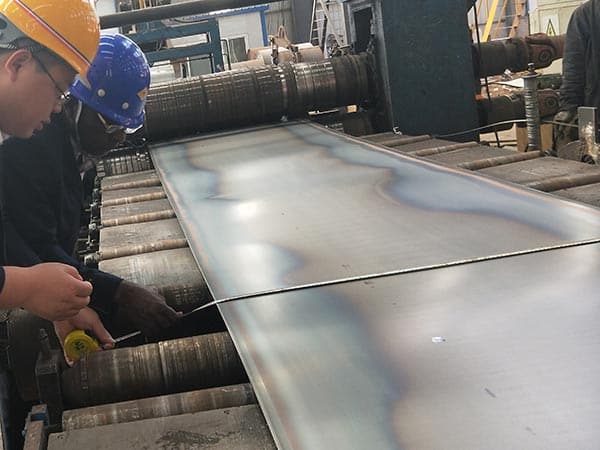
Slitting and Leveling: Since the material is supplied in coils, the first step in machining is often slitting to the required width and leveling to remove coil set. High-precision levelers with multiple work rolls are necessary to ensure the 1.2mm sheet is perfectly flat for subsequent automated processing. Any residual stress in the coil can lead to warping after laser cutting, so stress-relief leveling is often employed.
Welding and Joining Challenges
Joining ZQS700L components is a critical part of the machining workflow. Because of its low carbon equivalent, ZQS700L exhibits good weldability. However, the high-strength properties are achieved through specific thermomechanical rolling processes at the mill. Welding introduces heat that can potentially undo these effects. Gas Metal Arc Welding (GMAW) and Laser Welding are commonly used for 1.2mm gauges.
To maintain the 700MPa strength in the welded joint, it is necessary to use compatible filler metals and control the heat input. Low heat input prevents excessive grain growth in the heat-affected zone. For 1.2mm thin-gauge material, burn-through is a risk, requiring precise control of the welding speed and current. Pulse welding techniques are often utilized to manage the thermal cycle effectively.
Environmental Adaptability and Surface Protection
ZQS700L is often used in outdoor or harsh industrial environments. While its chemical composition provides some inherent resistance to atmospheric corrosion compared to plain carbon steel, surface treatment is usually required for long-term durability. During the machining of 1.2mm coils, the surface must be kept clean of oils and contaminants to ensure proper adhesion of coatings.
Common surface treatments include hot-dip galvanizing, electro-galvanizing, or KTL (Cathodic Epoxy Electrocoating). For 1.2mm parts, KTL is particularly effective as it provides a uniform thin layer that does not interfere with the tight tolerances required in precision assemblies. The high strength of ZQS700L also means that components can be made thinner, which reduces the total surface area requiring protection, further contributing to cost savings.
Industrial Applications: Where ZQS700L 1.2mm Excels
The primary driver for using ZQS700L 1.2mm coil is weight reduction without compromising safety. In the automotive industry, it is used for structural reinforcements, cross members, and seat frames. By replacing 2.0mm standard steel with 1.2mm ZQS700L, manufacturers can achieve a weight reduction of nearly 40% while maintaining the same structural rigidity.
In the logistics and transportation sector, ZQS700L is used to manufacture lightweight trailer components and shipping containers. The ability to withstand high stress while remaining light allows for higher payloads and reduced fuel consumption. Additionally, the renewable energy sector utilizes this grade for solar tracking brackets and wind turbine internal structures, where the high strength-to-weight ratio simplifies installation and reduces foundation costs.
Technical Considerations for Procurement and Quality Control
When sourcing ZQS700L 1.2mm coils, quality control is paramount. Thickness tolerances must be strictly monitored, as a variation of even 0.05mm can affect the precision of high-speed stamping dies. Surface quality is another factor; the coils should be free of scale, pits, and scratches that could act as stress concentrators during forming. Suppliers should provide comprehensive mill test certificates (MTC) detailing the actual yield strength, tensile strength, and chemical analysis for each heat number.
Furthermore, the flatness of the coil is essential for automated machining lines. Edge wave or center buckle can cause jams in feeders or inaccuracies in laser cutting. Specifying "extra-high flatness" during procurement can save significant time and reduce scrap rates during the machining process. As the industry moves toward more sustainable manufacturing, the recyclability of ZQS700L also adds value, as it can be fully recovered and reused in the steel production cycle without loss of quality.
Leave a message