
en 10149-2 high yield strength alloy steel specification chemical and mechanical property
Comprehensive guide to EN 10149-2 high yield strength steels, covering chemical composition, mechanical properties, thermomechanical processing, and industrial applications.
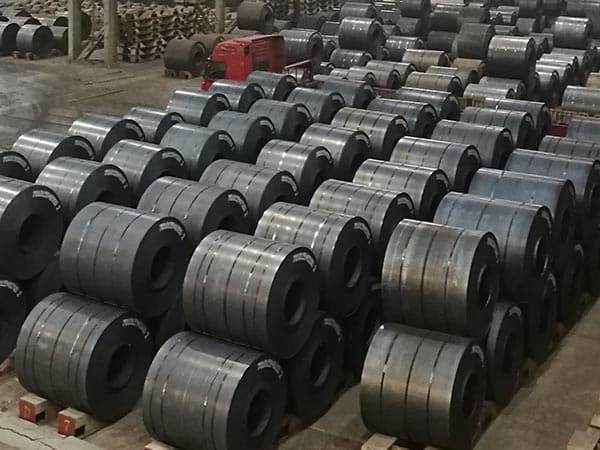
The Evolution of High Yield Strength Steel under EN 10149-2
Modern engineering demands materials that combine reduced weight with exceptional structural integrity. The EN 10149-2 standard specifies the technical delivery conditions for flat products made of high yield strength steels for cold forming. These steels are produced through a specialized process known as thermomechanical rolling (TMCP). Unlike traditional normalized rolling, thermomechanical rolling involves precise temperature control and deformation rates during the rolling process. This technique refines the grain structure to a degree that is impossible to achieve through heat treatment alone, resulting in a material that is both incredibly strong and remarkably ductile.
The "MC" designation in grades like S315MC to S700MC signifies that the steel is thermomechanically rolled (M) and intended for cold forming (C). This standard has become the backbone of industries where weight reduction directly translates to energy efficiency and payload capacity, such as the automotive and heavy machinery sectors. By utilizing the high yield strength offered by EN 10149-2, engineers can specify thinner gauges of steel without sacrificing safety or performance, leading to the development of leaner, more sustainable structures.
Micro-Alloying: The Chemistry Behind the Strength
The chemical composition of EN 10149-2 steels is a masterclass in metallurgical precision. To achieve high yield strengths while maintaining excellent weldability and formability, the carbon content is kept significantly lower than in conventional structural steels. High carbon levels typically increase hardness but compromise toughness and welding performance. Instead, EN 10149-2 relies on micro-alloying elements such as Niobium (Nb), Vanadium (V), and Titanium (Ti).
These elements, even in minute quantities (often less than 0.15% combined), play a critical role in grain refinement and precipitation hardening. Niobium, for instance, prevents grain growth during the rolling process, ensuring a fine-grained microstructure that enhances both strength and low-temperature toughness. Titanium serves to stabilize nitrogen and protect the boron (if added), while Vanadium contributes to secondary hardening. The result is a steel with a low Carbon Equivalent Value (CEV), which is essential for trouble-free welding in high-speed production environments.
| Grade | C (max %) | Mn (max %) | Si (max %) | P (max %) | S (max %) | Al (min %) |
|---|---|---|---|---|---|---|
| S315MC | 0.12 | 1.30 | 0.50 | 0.025 | 0.020 | 0.015 |
| S420MC | 0.12 | 1.50 | 0.50 | 0.025 | 0.015 | 0.015 |
| S500MC | 0.12 | 1.70 | 0.50 | 0.025 | 0.015 | 0.015 |
| S700MC | 0.12 | 2.10 | 0.60 | 0.025 | 0.015 | 0.015 |
Note: The sum of Nb, V, and Ti is strictly controlled to optimize the balance between strength and ductility. The low sulfur content is also vital, as it reduces the presence of non-metallic inclusions, thereby improving the steel's resistance to lamellar tearing and enhancing its surface quality for subsequent coating processes.
Mechanical Performance and Structural Integrity
The primary appeal of EN 10149-2 is its mechanical profile. The yield strength ranges from 315 MPa to a staggering 700 MPa. This wide spectrum allows designers to select the exact grade that meets their load-bearing requirements. However, strength is only half the story. The "C" in the designation emphasizes cold forming, meaning these steels must exhibit high elongation and bending capacity.
For instance, S700MC provides a minimum yield strength of 700 MPa, yet it retains enough ductility to be bent and shaped into complex profiles. This is achieved through the fine-grained ferritic-pearlitic or bainitic microstructure produced by TMCP. Unlike higher carbon steels that might crack during bending, EN 10149-2 grades distribute strain more evenly across the material, reducing the risk of localized failure during the manufacturing process.
| Grade | Yield Strength (min MPa) | Tensile Strength (MPa) | Elongation (min A80 %) | Bending Radius (180°) |
|---|---|---|---|---|
| S355MC | 355 | 430-550 | 19 | 0.5t |
| S460MC | 460 | 520-670 | 14 | 1.0t |
| S550MC | 550 | 600-760 | 12 | 1.5t |
| S700MC | 700 | 750-950 | 10 | 2.0t |
Impact Toughness: While EN 10149-2 primarily focuses on strength and formability, many of these grades also demonstrate excellent impact energy absorption at low temperatures. This is particularly important for mobile equipment operating in arctic or sub-zero environments, where brittle fracture could lead to catastrophic failure.
Processing Advantages: Welding and Cutting
From a manufacturing perspective, EN 10149-2 steels offer significant cost-saving advantages. Their low alloy content and refined grain structure make them exceptionally easy to weld using standard industrial methods, such as MAG (Metal Active Gas), MIG (Metal Inert Gas), and laser welding. Because the Carbon Equivalent is low, preheating is rarely required for thinner sections, which accelerates production cycles and reduces energy consumption.
However, it is crucial to manage the heat input during welding. Excessive heat can cause grain growth in the Heat Affected Zone (HAZ), which may locally reduce the yield strength and toughness. Best practices involve using low heat input techniques and ensuring rapid cooling to preserve the benefits of the original thermomechanical processing. When it comes to cutting, these steels respond well to laser, plasma, and waterjet cutting. The clean chemical composition ensures minimal dross and a smooth edge finish, which is vital for components that require high-precision fit-up.
Cold Forming and Bending Precision
The ability to cold form high-strength steel is a game-changer for the fabrication of chassis frames, crane booms, and structural sections. EN 10149-2 steels are designed to be bent with small radii relative to their thickness. This allows for the creation of compact, high-strength joints and complex geometries that would be impossible with standard structural steels.
When working with S700MC, for example, fabricators must account for "springback." Because the material is so strong, it has a tendency to return slightly to its original shape after the bending force is removed. Advanced CNC press brakes with springback compensation are typically used to achieve the required dimensional accuracy. The surface quality of these steels is also superior, providing an excellent substrate for painting, powder coating, or galvanizing, which is essential for long-term corrosion protection.
Industrial Applications: Driving Innovation
The versatility of EN 10149-2 high yield strength steel has led to its adoption across a diverse range of high-performance industries:
- Automotive Industry: Used extensively for chassis parts, cross members, and longitudinal beams. The high strength-to-weight ratio allows for lighter vehicles, improving fuel efficiency and reducing CO2 emissions without compromising crash safety.
- Lifting and Excavation: Crane booms, telescopic arms, and excavator buckets benefit from the extreme yield strength of S700MC. Thinner plates reduce the dead weight of the crane, allowing for greater lifting heights and longer reaches.
- Transportation: In the manufacturing of trailers and semi-trailers, using high-strength steel reduces the weight of the frame, directly increasing the legal payload capacity for the operator.
- Renewable Energy: Components for wind turbine transport systems and structural supports for solar arrays often utilize these grades to withstand high wind loads while remaining easy to transport and assemble.
- Agricultural Machinery: Plows, harvesters, and trailers require materials that can withstand abrasive wear and high structural loads while remaining light enough to prevent soil compaction.
Environmental Adaptation and Fatigue Resistance
In addition to static strength, EN 10149-2 steels are engineered for durability in dynamic environments. Fatigue resistance is a critical factor for components subject to cyclic loading, such as truck frames or moving machinery parts. The fine-grained structure of TMCP steel inhibits the initiation and propagation of fatigue cracks, extending the service life of the equipment.
Furthermore, the environmental adaptability of these steels is noteworthy. While they are not "weathering steels" in the traditional sense (like Corten), their clean chemistry and uniform surface allow for highly effective protective coatings. When properly galvanized or painted, components made from EN 10149-2 can operate in corrosive marine or industrial environments for decades. The consistency of the material properties across the entire plate ensures that there are no "weak spots" that could lead to premature localized corrosion or structural failure.
Strategic Selection for Engineering Optimization
Choosing the right grade within the EN 10149-2 family requires a balance between mechanical requirements and fabrication costs. While S700MC offers the highest strength, it also requires more sophisticated tooling and higher bending forces. For many applications, a mid-range grade like S420MC or S500MC provides the optimal balance of weight reduction and ease of processing.
Designers should also consider the orientation of the rolling direction. Although EN 10149-2 steels are designed to be relatively isotropic, bending transverse to the rolling direction often allows for even tighter radii. By understanding the nuances of the thermomechanical rolling process and the role of micro-alloying, engineers can fully leverage the potential of these advanced materials to create the next generation of efficient, high-performance structures. The shift toward EN 10149-2 is not just a trend; it is a fundamental move toward smarter material utilization in a world that demands more from less.
Leave a message