
What is medium thick S315MC automotive steel sheet yield
Comprehensive guide to S315MC automotive steel yield strength, chemical properties, processing advantages, and industrial applications for medium-thick plates.
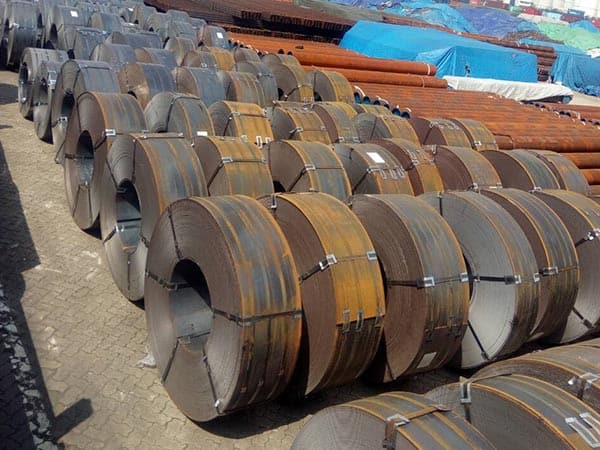
Understanding the Core of S315MC: Yield Strength and Material Identity
When discussing S315MC automotive steel, the primary focus often lands on its mechanical reliability. The "S" signifies structural steel, while "315" explicitly denotes the minimum yield strength of 315 MPa (megapascals). The "MC" suffix indicates that the material is thermomechanically rolled (M) and is suitable for cold forming (C). For medium-thick sheets, typically ranging from 3mm to 12mm or even up to 20mm in specific industrial contexts, this yield strength represents the threshold where the steel transitions from elastic deformation to plastic deformation.
In the automotive engineering sector, the yield strength of S315MC is not just a number; it is a safety and performance benchmark. Unlike standard carbon steels, S315MC achieves its strength through a combination of precise chemical composition and Thermomechanical Control Process (TMCP). This allows for a reduction in material thickness without sacrificing structural integrity, a critical factor for vehicle lightweighting and fuel efficiency.
Chemical Composition: The Foundation of Performance
The yield strength and ductility of S315MC are products of its micro-alloyed design. By keeping carbon content low and adding trace amounts of alloying elements, manufacturers can achieve a fine-grained microstructure that resists deformation while remaining highly weldable.
| Element | Maximum Percentage (%) |
|---|---|
| Carbon (C) | 0.12 |
| Manganese (Mn) | 1.30 |
| Silicon (Si) | 0.50 |
| Phosphorus (P) | 0.025 |
| Sulfur (S) | 0.020 |
| Aluminium (Al) | 0.015 |
| Niobium (Nb) / Titanium (Ti) | Sum ≤ 0.22 |
Niobium (Nb) and Titanium (Ti) play a pivotal role in the "yield" characteristics of S315MC. These elements form carbides and nitrides that pin grain boundaries during the rolling process, preventing grain growth. This grain refinement is the primary mechanism that allows medium-thick S315MC to maintain high yield strength even when subjected to the slower cooling rates inherent in thicker sections.
Mechanical Properties and Structural Reliability
While the yield strength is the headline figure, the relationship between yield and tensile strength (the yield ratio) is what defines the material's behavior under stress. For S315MC, the tensile strength typically ranges between 390 and 510 MPa.
| Property | Specification (Thickness ≤ 16mm) |
|---|---|
| Min. Yield Strength (ReH) | 315 MPa |
| Tensile Strength (Rm) | 390 - 510 MPa |
| Min. Elongation (A80mm) | 20% (for t < 3mm) |
| Min. Elongation (A5) | 24% (for t ≥ 3mm) |
The high elongation value (24% for medium-thick plates) indicates that S315MC possesses excellent ductility. This is essential for automotive components that must absorb energy during an impact, such as chassis members or reinforcement beams. The material yields predictably, allowing engineers to design crumple zones that manage kinetic energy effectively.
Cold Forming and Processing Performance
One of the standout features of S315MC is its exceptional cold-forming capability. Despite its high yield strength, the medium-thick sheet can be bent, flanged, and cold-pressed into complex shapes without cracking. This is largely due to the low carbon equivalent (Cev), which also enhances its weldability.
- Bending Radius: For a sheet thickness (t), S315MC typically allows for a very tight bending radius, often as low as 0.25t to 0.5t depending on the orientation (longitudinal vs. transverse).
- Weldability: Because it is a low-carbon, micro-alloyed steel, it can be welded using all standard methods (MIG, TIG, Laser, Resistance welding) without the need for pre-heating, which is a significant advantage in high-speed automotive assembly lines.
- Laser Cutting: The clean chemical composition and uniform microstructure ensure that S315MC performs exceptionally well under laser cutting, producing smooth edges with minimal heat-affected zones (HAZ).
Environmental Adaptability and Fatigue Resistance
Medium-thick S315MC is often used in the exterior structural components of heavy-duty vehicles, trailers, and buses. These parts are exposed to cyclic loading and harsh environmental conditions. The fine-grained structure of S315MC provides superior fatigue resistance compared to traditional hot-rolled structural steels like S235JR. It can withstand millions of stress cycles without initiating micro-cracks at the grain boundaries.
Regarding corrosion, while S315MC is not a "weathering steel" by definition, its surface quality (often supplied in pickled and oiled condition) provides an excellent substrate for modern coating systems. Whether it is E-coating (electrophoretic deposition), powder coating, or hot-dip galvanizing, the steel’s chemistry ensures strong adhesion and long-term protection against road salts and moisture.
Industrial Applications: Beyond the Passenger Car
The versatility of medium-thick S315MC extends far beyond the typical passenger vehicle. Its balance of yield strength and formability makes it a staple in several demanding industries:
- Commercial Vehicle Chassis: Longitudinal and transverse beams for trucks and trailers where weight reduction is vital for increasing payload capacity.
- Agricultural Machinery: Components for plows, harvesters, and tractors that require toughness and the ability to be repaired in the field via welding.
- Construction Equipment: Crane arms and support structures where high yield strength ensures safety under heavy loads.
- Storage Systems: High-load racking and shelving systems that benefit from the material's consistency and structural integrity.
Comparing S315MC with Alternative Grades
Engineers often weigh S315MC against other grades like S355MC or Q345B. While S355MC offers a higher yield (355 MPa), it comes with a slight reduction in ductility and a higher cost. S315MC is frequently chosen as the "sweet spot" for components where the extra 40 MPa of yield is not as critical as the superior formability and cost-effectiveness of the 315 grade.
Compared to traditional carbon steels like Q345B, S315MC offers much better consistency in mechanical properties and a significantly lower weight-to-strength ratio. The thermomechanical rolling process ensures that the properties are uniform across the entire width and length of the coil, which is vital for automated stamping and robotic welding processes where consistency is paramount.
Technical Compliance and Standards
S315MC is governed by the EN 10149-2 standard, which specifies the technical delivery conditions for high yield strength steels for cold forming. Compliance with this standard ensures that the material meets strict tolerances for thickness, flatness, and chemical purity. For procurement specialists, verifying the Mill Test Certificate (MTC) against EN 10149-2 is the definitive way to ensure the yield strength and processing characteristics meet the design requirements of the project.
As the automotive and transport industries continue to evolve toward more sustainable and efficient designs, the role of micro-alloyed steels like S315MC becomes even more prominent. Its ability to provide high yield strength in a medium-thick format, combined with ease of processing, makes it an indispensable material for modern engineering challenges.
Leave a message