
high yield strength alloy en 10149-2 s700mc ASTM equivalent
A technical guide to S700MC high yield strength steel, covering its ASTM equivalents (A1011, A656), mechanical properties, and industrial applications.
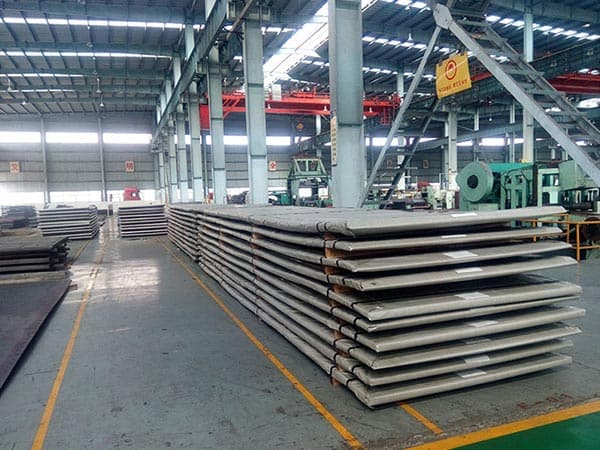
The Engineering Significance of EN 10149-2 S700MC Steel
In the modern landscape of structural engineering, the demand for materials that combine extreme strength with reduced mass has led to the prominence of EN 10149-2 S700MC. This grade is a thermomechanically rolled, high-yield-strength steel designed specifically for cold forming. The 'S' denotes structural steel, '700' indicates a minimum yield strength of 700 MPa, and 'MC' signifies its thermomechanically rolled condition (M) and its suitability for cold forming (C). This material is a cornerstone for industries aiming to optimize payload capacity and fuel efficiency by reducing the dead weight of machinery and vehicles.
ASTM Equivalents: Bridging European and American Standards
Identifying the precise ASTM equivalent for S700MC requires an understanding of both chemical composition and mechanical performance. While standards often overlap, there is rarely a 1:1 identical match across different regulatory bodies. However, several ASTM grades serve as functional equivalents depending on the thickness and application requirements.
- ASTM A1011 Grade 100: This is often cited as the closest equivalent for hot-rolled sheets and strips. It provides high yield strength and is designed for applications requiring excellent formability.
- ASTM A656 Grade 100: Typically used for structural plates in truck frames and cranes, this grade mirrors the high strength and weldability of S700MC.
- ASTM A1008: For cold-rolled applications, specific high-strength low-alloy (HSLA) variations of A1008 may be used, though it is less common for the 700 MPa threshold compared to hot-rolled counterparts.
| Standard | Grade | Yield Strength (min) | Tensile Strength | Elongation (min) |
|---|---|---|---|---|
| EN 10149-2 | S700MC | 700 MPa | 750-950 MPa | 12% (t < 3mm) |
| ASTM A1011 | Grade 100 (Type 1) | 690 MPa (100 ksi) | 760 MPa (110 ksi) | 12-15% |
| ASTM A656 | Grade 100 | 690 MPa (100 ksi) | 760 MPa (110 ksi) | 15% |
Chemical Architecture and Micro-Alloying
The superior performance of S700MC is not merely a result of heat treatment but stems from a sophisticated chemical balance. The steel utilizes micro-alloying elements such as Niobium (Nb), Vanadium (V), and Titanium (Ti). These elements facilitate grain refinement during the thermomechanical rolling process. By keeping the carbon content extremely low (typically below 0.12%), the steel achieves excellent weldability and toughness without the brittleness associated with high-carbon martensitic structures.
The low Carbon Equivalent (CEV) value is a critical metric for S700MC. It ensures that the heat-affected zone (HAZ) during welding does not undergo excessive hardening, which preserves the structural integrity of welded joints. This makes it a preferred choice over traditional quenched and tempered steels in high-volume manufacturing environments.
Mechanical Prowess and Stress-Strain Behavior
The defining characteristic of S700MC is its high yield-to-tensile ratio. With a minimum yield strength of 700 MPa, it allows engineers to design thinner sections that can withstand the same loads as thicker, lower-grade steels. This 'down-gauging' is the primary driver for its use in the transport sector.
The elongation properties, while lower than mild steel, remain impressive for a material of this strength. S700MC typically offers 10% to 12% elongation depending on the thickness and orientation (longitudinal vs. transverse). This ductility is essential for absorbing energy in crash-relevant components or during heavy-duty cycles in construction equipment.
Cold Forming and Fabrication Excellence
Unlike many high-strength steels that become brittle when bent, S700MC is engineered for cold forming. Its fine-grained microstructure allows for tight bending radii without the risk of cracking. When fabricating S700MC, it is vital to respect the minimum bending radius recommended by the manufacturer, which is usually expressed as a multiple of the plate thickness (t).
- Bending Radius: For thicknesses under 3mm, a bending radius of 1.0t to 1.5t is often achievable.
- Springback: Due to the high yield strength, S700MC exhibits significant springback compared to S355 or S235. Fabricators must compensate for this by over-bending.
- Edge Quality: To prevent edge cracking during forming, laser or plasma cutting is preferred over shearing, as it produces a cleaner edge with a smaller heat-affected zone.
Welding Strategies for High-Strength Alloys
Welding S700MC requires a controlled approach to maintain the properties achieved during thermomechanical rolling. Because the strength is derived from the grain structure and micro-alloying rather than bulk heat treatment, excessive heat input can lead to grain growth and a subsequent drop in strength in the HAZ.
Recommended practices include using low-hydrogen consumables to prevent cold cracking and maintaining a low interpass temperature. Preheating is generally not required for thinner sections due to the low carbon content, which simplifies the production workflow. Matching filler metals (e.g., ER110S-G or similar) are typically used to ensure the weld metal meets the strength requirements of the base material.
Environmental Adaptation and Durability
S700MC demonstrates excellent environmental adaptability, particularly in low-temperature environments. While standard S700MC focuses on strength, variants like S700MCK2 are tested for impact toughness at -40°C. This makes the material suitable for use in arctic conditions or high-altitude construction where brittle fracture is a significant concern.
The surface quality of S700MC is typically superior to traditional hot-rolled steels. The thermomechanical process results in a thin, tightly adherent scale that is easily removed via pickling, providing an ideal substrate for painting, galvanizing, or powder coating. This enhances the corrosion resistance of the final product in harsh industrial atmospheres.
Expanding Industry Applications
The versatility of S700MC has seen it move beyond simple structural plates into complex engineered components. In the automotive and heavy transport industry, it is the standard for truck chassis frames, cross members, and longitudinal beams. By switching from S355 to S700MC, manufacturers can reduce chassis weight by up to 30%, directly translating to higher payloads.
In the lifting and mobile crane sector, S700MC is used for telescopic booms and outriggers. The high strength-to-weight ratio allows for longer reach and higher lifting capacities without increasing the overall weight of the crane unit. Similarly, in agricultural machinery, it is used for plow frames and trailer bodies that must endure high stress while remaining light enough to minimize soil compaction.
The renewable energy sector also utilizes S700MC for mounting structures in solar farms and components in wind turbine transport systems. The ability to withstand high wind loads while using less material makes it an economically and ecologically sound choice.
Technical Comparison: S700MC vs. S690QL
A common point of confusion is the difference between S700MC and S690QL. While both offer similar yield strengths (~700 MPa), they are produced differently. S690QL is a quenched and tempered (Q+T) steel, usually available in thicker plates (up to 100mm+). S700MC is thermomechanically rolled and typically limited to thicknesses under 20mm. S700MC offers better cold-forming properties and weldability due to its lower carbon equivalent, whereas S690QL is preferred for very thick, heavy-duty structural members.
| Feature | S700MC (EN 10149-2) | S690QL (EN 10025-6) |
|---|---|---|
| Production Process | Thermomechanical Rolling (TMCP) | Quenched and Tempered (Q+T) | Thickness Range | Typically 2mm - 20mm | Typically 6mm - 150mm+ | Formability | Excellent Cold Forming | Limited Cold Forming | Weldability | Very High (Low CEV) | High (Requires Heat Control) |
Selecting S700MC over traditional grades involves a holistic view of the lifecycle costs. While the material price per ton may be higher than S355, the reduction in material volume, lower welding costs, and decreased shipping weights often result in a lower total cost of ownership. As global industries continue to push for sustainability and efficiency, S700MC remains a vital tool in the engineer's arsenal for high-performance design.
Leave a message