
What asdvantages does plate en 10149-2 s460mc hot rolled automotive steel have
Explore the comprehensive advantages of EN 10149-2 S460MC hot rolled automotive steel, including its mechanical properties, cold forming capabilities, and lightweighting benefits.
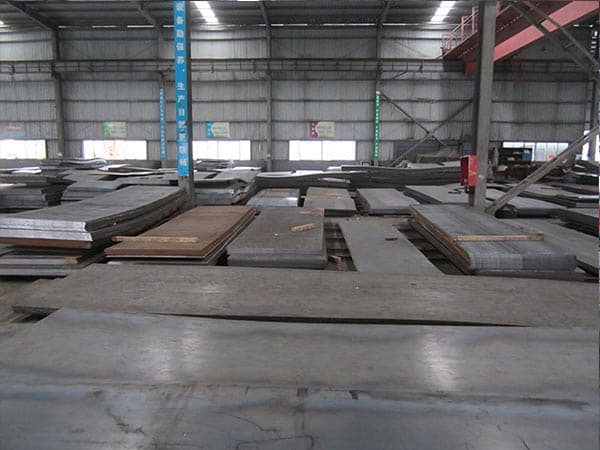
Defining the Excellence of EN 10149-2 S460MC Steel
In the evolving landscape of industrial manufacturing, the demand for materials that balance high strength with exceptional processability has never been higher. EN 10149-2 S460MC stands as a benchmark for thermomechanically rolled flat products. This grade is specifically designed for cold forming, offering a unique combination of high yield strength and ductility. The 'S' denotes structural steel, '460' represents the minimum yield strength of 460 MPa, 'M' indicates its thermomechanical rolling process, and 'C' signifies its suitability for cold forming operations. Unlike traditional carbon steels, S460MC utilizes micro-alloying techniques to achieve superior performance without the weight penalty.
Superior Mechanical Strength and Weight Reduction Potential
The primary advantage of S460MC lies in its impressive strength-to-weight ratio. By providing a minimum yield strength of 460 MPa, it allows engineers to design thinner components that maintain the same structural integrity as thicker, lower-grade steels like S355MC. This capability is the cornerstone of lightweighting strategies in the automotive and transportation sectors. Reducing the thickness of a chassis or structural frame directly translates to lower vehicle mass, which enhances fuel efficiency and increases payload capacity. The fine-grained microstructure achieved through thermomechanical rolling ensures that this strength is consistent throughout the plate, providing reliability in high-stress applications.
| Mechanical Property | Value (Thickness ≤ 16mm) |
|---|---|
| Minimum Yield Strength (ReH MPa) | 460 |
| Tensile Strength (Rm MPa) | 520 - 670 |
| Minimum Elongation (A80mm %) | 14 |
| Minimum Elongation (A5 %) | 17 |
Exceptional Cold Forming and Bending Performance
One of the most critical requirements for automotive steel is the ability to undergo complex shaping without cracking or failing. EN 10149-2 S460MC excels in cold forming environments. Thanks to its low carbon content and precise micro-alloying with elements like Niobium (Nb), Vanadium (V), and Titanium (Ti), the steel maintains high ductility even at high strength levels. Manufacturers can perform tight-radius bending, deep drawing, and complex stamping with confidence. This formability reduces the need for hot forming processes, which are energy-intensive and costly, thereby streamlining the production line and reducing the overall carbon footprint of the manufacturing process.
Advanced Chemical Composition and Micro-Alloying
The performance of S460MC is rooted in its chemical blueprint. The thermomechanical rolling process (TMCP) allows for a reduction in alloying elements compared to normalized steels of similar strength. This results in a lower carbon equivalent (CEV), which is fundamental to the material's versatility. The inclusion of micro-alloys creates a fine grain structure that inhibits grain growth during processing, ensuring that the material remains tough and resistant to brittle fracture.
| Element | Maximum Percentage (%) |
|---|---|
| Carbon (C) | 0.12 |
| Manganese (Mn) | 1.60 |
| Silicon (Si) | 0.50 |
| Phosphorus (P) | 0.025 |
| Sulfur (S) | 0.015 |
| Aluminium (Al) | 0.015 |
Optimized Weldability for Structural Integrity
Structural components in the automotive and heavy machinery industries are rarely monolithic; they require extensive welding. The low carbon equivalent of S460MC steel ensures excellent weldability across various methods, including MIG, TIG, and laser welding. Because the material is less prone to cold cracking in the heat-affected zone (HAZ), it eliminates the need for expensive pre-heating or post-weld heat treatments in most applications. This weldability ensures that the joints are as robust as the base metal, maintaining the safety standards required for crash-relevant automotive parts and heavy-duty load-bearing structures.
Environmental Adaptability and Fatigue Resistance
Beyond static strength, S460MC demonstrates remarkable resilience under dynamic loading conditions. Its fine-grained structure provides high fatigue resistance, making it ideal for parts subjected to constant vibration and cyclic stress, such as truck cross-members and crane arms. Furthermore, the material's surface quality, typical of modern hot rolling mills, offers a clean substrate for coating and galvanizing. This enhances the environmental adaptability of the finished product, protecting it against corrosion in harsh climates or exposure to road salts, thereby extending the service life of the equipment.
Expanding Industry Applications
While the 'automotive' label is prominent, the advantages of EN 10149-2 S460MC extend far beyond passenger cars. Its versatility makes it a preferred choice for a wide range of heavy-duty applications:
- Commercial Vehicles: Chassis frames, longitudinal beams, and reinforcement parts for trucks and trailers.
- Lifting Equipment: Mobile cranes, boom sections, and telescopic handlers where weight reduction is vital for stability.
- Agricultural Machinery: Plow frames, harvester components, and structural supports that require durability and impact resistance.
- Cold Pressed Parts: Brackets, hinges, and complex geometries in general engineering.
- Storage Systems: High-strength racking and shelving systems that demand high load-bearing capacity with minimal material usage.
Economic Efficiency and Sustainability
The transition to S460MC offers significant economic benefits. By utilizing higher strength steel, companies can reduce the total volume of steel purchased for a project. Thinner plates mean more linear meters per ton, reducing transportation costs and storage requirements. Additionally, the ease of processing—from laser cutting to bending—reduces tool wear and shortens cycle times. From a sustainability perspective, the reduction in material usage and the elimination of heat treatments contribute to a lower life-cycle assessment (LCA) for the end product, aligning with global initiatives for greener manufacturing and reduced CO2 emissions.
Technical Considerations for Implementation
When integrating S460MC into a production line, it is essential to consider the material's directional properties. Since it is a thermomechanically rolled product, the bending radius may vary slightly depending on whether the bend is transverse or longitudinal to the rolling direction. Engineers should consult the minimum bending radius charts provided in the EN 10149-2 standard to ensure optimal results. Furthermore, while S460MC is highly resistant to atmospheric corrosion compared to standard carbon steels, appropriate surface treatments should still be applied for long-term outdoor exposure. The material's compatibility with modern automated fabrication processes makes it a future-proof choice for smart manufacturing environments.
Leave a message