
What is chemical composition and mechanical properties of en 10149-2 s355mc technical data
Detailed technical analysis of EN 10149-2 S355MC steel, covering chemical composition, mechanical properties, thermomechanical rolling, and industrial applications for high-strength cold forming.
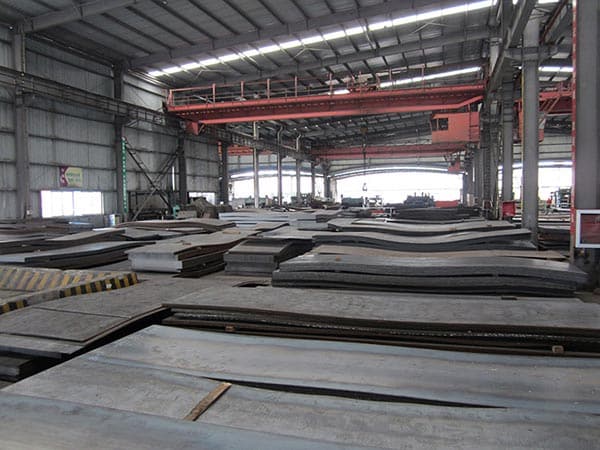
The Fundamentals of EN 10149-2 S355MC Specification
EN 10149-2 S355MC represents a high-yield strength steel specifically designed for cold forming processes. The designation itself provides a roadmap to its properties: 'S' stands for structural steel, '355' denotes the minimum yield strength of 355 MPa, 'M' indicates it is thermomechanically rolled, and 'C' signifies its suitability for cold forming. This material is a cornerstone in modern engineering where weight reduction and structural integrity must coexist. Unlike traditional hot-rolled structural steels, S355MC undergoes a specialized rolling process that refines its microstructure, allowing for thinner sections to carry higher loads without compromising safety.
Chemical Composition: The Science of Micro-Alloying
The performance of S355MC is rooted in its precise chemical balance. By maintaining a low carbon content, the steel achieves exceptional weldability and ductility. The inclusion of micro-alloying elements like Niobium (Nb), Vanadium (V), and Titanium (Ti) is what distinguishes this grade from standard carbon steels. These elements facilitate grain refinement during the thermomechanical rolling process, creating a fine-grained structure that resists crack propagation.
| Element | Maximum Percentage (%) |
|---|---|
| Carbon (C) | 0.12 |
| Manganese (Mn) | 1.50 |
| Silicon (Si) | 0.50 |
| Phosphorus (P) | 0.025 |
| Sulfur (S) | 0.020 |
| Aluminum (Al) | 0.015 (min) |
| Niobium (Nb) | 0.09 |
| Vanadium (V) | 0.20 |
| Titanium (Ti) | 0.15 |
The cumulative content of Nb, V, and Ti is strictly controlled, usually not exceeding 0.22%. This micro-alloying strategy ensures that the steel maintains high strength while remaining easy to shape and weld. The low sulfur and phosphorus levels are critical for preventing lamellar tearing and improving the steel's toughness at lower temperatures.
Mechanical Properties and Structural Integrity
The mechanical profile of S355MC is defined by its ability to withstand significant stress before permanent deformation occurs. Its high yield-to-tensile ratio is a key advantage for engineers looking to optimize material usage. The following table outlines the core mechanical requirements according to EN 10149-2.
| Property | Value Range |
|---|---|
| Minimum Yield Strength (ReH) | 355 MPa |
| Tensile Strength (Rm) | 430 - 550 MPa |
| Minimum Elongation (A80mm, t < 3mm) | 19% |
| Minimum Elongation (A5, t ≥ 3mm) | 23% |
It is important to note that these properties are measured longitudinal to the rolling direction. The thermomechanical rolling process (indicated by the 'M') ensures that the grain structure is elongated and refined, providing a consistent performance across the entire plate or coil. This consistency is vital for automated manufacturing lines where predictable material behavior is necessary for precision bending and punching.
Thermomechanical Rolling: The 'M' Suffix Explained
Thermomechanical rolling is a process where the final deformation is carried out in a specific temperature range that leads to material properties that cannot be achieved by heat treatment alone. This process involves high-reduction rolling at temperatures just above the recrystallization point, followed by controlled cooling. This technique results in a very fine ferrite-pearlite grain size, which is the primary reason for the steel's high strength and excellent low-temperature toughness. Unlike normalized steels, thermomechanically rolled steels like S355MC should not be subjected to high-temperature post-weld heat treatments or hot forming above 580°C, as this can degrade the specialized microstructure and reduce the yield strength.
Cold Forming and Bending Capabilities
The 'C' in S355MC highlights its superior cold-forming properties. This steel is designed to be bent, flanged, and cold-rolled into complex shapes without cracking. This makes it an ideal candidate for chassis components and structural profiles. When bending S355MC, the minimum recommended inside bend radius depends on the thickness (t) of the material.
- For thicknesses ≤ 3mm: Minimum bend radius is 0.25t
- For thicknesses between 3mm and 6mm: Minimum bend radius is 0.5t
- For thicknesses > 6mm: Minimum bend radius is 1.0t
These tight bending radii allow for compact designs and more efficient use of space in structural assemblies. The high ductility ensures that even under extreme deformation, the material retains its structural integrity, providing a safety margin in crash-relevant components.
Weldability and Fabrication Excellence
Due to its low carbon equivalent (CEV), S355MC offers outstanding weldability. It can be welded using all standard methods, including MIG/MAG, TIG, and submerged arc welding. Because the carbon content is so low, the risk of cold cracking in the heat-affected zone (HAZ) is significantly minimized, often eliminating the need for preheating, even in thicker sections. Using low-hydrogen consumables is recommended to maintain the toughness of the welded joint. During the welding process, it is crucial to manage the heat input to prevent excessive grain growth in the HAZ, which could lead to a localized drop in yield strength.
Industrial Applications and Weight Optimization
The adoption of S355MC has revolutionized sectors that prioritize strength-to-weight ratios. In the transportation industry, using S355MC instead of standard S235 or s355jr allows for thinner gauges, which translates directly to lighter vehicle frames, increased payload capacity, and improved fuel efficiency. Truck chassis, crane booms, and agricultural machinery are primary beneficiaries of this material. In the construction of heavy-duty trailers, S355MC provides the necessary stiffness to handle dynamic loads while keeping the tare weight low. Furthermore, the renewable energy sector utilizes this grade for solar tracking systems and wind turbine internal components, where durability and ease of fabrication are paramount.
Environmental Adaptability and Longevity
While S355MC is not a weathering steel, its fine-grained structure provides a consistent surface for protective coatings. Whether through hot-dip galvanizing or advanced painting systems, the steel bonds well with protective layers, ensuring long-term corrosion resistance in harsh environments. Its performance at low temperatures is also noteworthy; the micro-alloyed structure ensures that the material remains ductile even in cold climates, preventing brittle fractures that can occur in lower-grade steels. This makes it suitable for equipment operating in diverse geographical regions, from tropical humidity to sub-zero industrial sites.
Strategic Advantages in Material Selection
Choosing S355MC over traditional structural grades offers a competitive edge in manufacturing. The ability to use thinner material reduces raw material costs and lowers shipping expenses. Additionally, the excellent formability reduces scrap rates during production. For engineers, the predictable mechanical properties allow for more accurate FEA (Finite Element Analysis) modeling, leading to optimized designs that push the boundaries of modern engineering. The transition from S355JR to S355MC often results in a 15-25% weight reduction in structural frameworks, highlighting the economic and functional superiority of thermomechanically rolled high-strength steels.
Leave a message