
How about the inventory of S900MC in China at present
Explore the current state of S900MC inventory in China, along with a deep dive into its mechanical properties, welding techniques, and industrial applications for high-strength engineering.
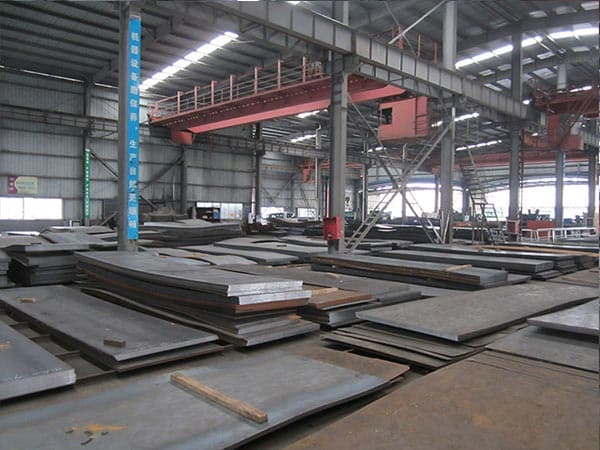
Understanding the Current Inventory Landscape of S900MC in China
The supply chain for high-strength, cold-forming steels has undergone significant shifts recently. When asking how about the inventory of S900MC in China at present, it is essential to look at the distribution hubs in Eastern and Northern China. Currently, S900MC is primarily stocked in major industrial clusters such as Shanghai, Wuxi, and Tianjin. Unlike standard carbon steel, S900MC is a specialized product, meaning inventory levels are closely tied to the production cycles of top-tier mills like Baosteel, Shougang, and HBIS.
Recent data indicates that while spot inventory for common thicknesses (typically 3mm to 10mm) remains relatively stable, ultra-thin or extra-thick plates often require custom orders with lead times ranging from 30 to 60 days. The inventory is largely driven by the demand from the heavy machinery and automotive sectors, where weight reduction is a critical design requirement. Large-scale distributors are maintaining moderate buffer stocks to hedge against price volatility in raw materials like vanadium and niobium, which are crucial for the micro-alloying process of S900MC.
Technical Specifications and Chemical Composition
S900MC is defined under the EN 10149-2 standard, representing a thermomechanically rolled (TMCP) steel with a minimum yield strength of 900 MPa. The "MC" suffix denotes its suitability for cold forming and its specific rolling process. Achieving such high strength while maintaining ductility requires a precise chemical balance.
| Element | Maximum Content (%) |
|---|---|
| Carbon (C) | 0.20 |
| Manganese (Mn) | 2.20 |
| Silicon (Si) | 0.60 |
| Phosphorus (P) | 0.025 |
| Sulfur (S) | 0.015 |
| Aluminium (Al) | 0.015 |
| Nb + V + Ti | 0.22 |
The use of micro-alloying elements such as Niobium (Nb), Vanadium (V), and Titanium (Ti) allows for grain refinement, which is the primary mechanism behind its exceptional strength-to-weight ratio. By refining the microstructure during the thermomechanical rolling process, manufacturers can produce a steel that is significantly stronger than traditional structural steels without the need for expensive heat treatments like quenching and tempering.
Mechanical Properties and Structural Advantages
The primary reason engineers seek out S900MC inventory is its mechanical prowess. With a yield strength nearly three times that of standard S355 steel, it allows for a massive reduction in section thickness without compromising structural integrity. This leads to lighter vehicles, higher payloads, and lower fuel consumption in transport applications.
- Yield Strength (ReH): Minimum 900 MPa.
- Tensile Strength (Rm): 930 to 1200 MPa.
- Elongation (A80mm): Minimum 7% (depending on thickness).
- Impact Toughness: Excellent performance at low temperatures, crucial for equipment operating in frigid environments.
These properties make S900MC an ideal candidate for crane booms, chassis components, and high-stress structural members. However, the high yield strength also means that the elastic springback during bending is more pronounced than with lower-grade steels. Tooling and processing parameters must be adjusted accordingly to account for this physical behavior.
Advanced Processing: Welding and Cold Forming
Working with S900MC requires a deep understanding of its metallurgical characteristics. Because it is a TMCP steel, excessive heat input during processing can lead to a softening of the Heat Affected Zone (HAZ). This is a critical consideration for manufacturers sourcing S900MC from Chinese inventory for immediate production.
Welding Recommendations: It is recommended to use low heat input welding techniques such as MAG (Metal Active Gas) welding. The cooling time (t8/5) should be strictly controlled to ensure the grain structure in the HAZ does not coarsen significantly. Generally, preheating is not required for S900MC unless the ambient temperature is very low or the plate thickness is substantial, as the carbon equivalent (CEV) is kept relatively low to enhance weldability.
Cold Forming: Despite its high strength, S900MC offers surprising formability. To avoid cracking, the minimum bending radius should be carefully followed. For a 90-degree bend, a radius of at least 3 to 4 times the plate thickness is typically recommended. Ensuring that the edges are smooth and free of burrs before bending will significantly reduce the risk of edge cracking during the forming process.
Environmental Adaptability and Longevity
S900MC exhibits remarkable environmental adaptability, particularly in its resistance to fatigue. In dynamic loading environments, such as the moving parts of a mobile crane or the suspension system of a heavy-duty truck, the fine-grained structure of S900MC prevents the rapid propagation of micro-cracks. This extends the service life of the machinery compared to using lower-grade steels that would require thicker sections and thus be more prone to fatigue failure over time.
Furthermore, the surface quality of S900MC provided by Chinese mills is generally excellent, often featuring a thin, tightly adherent scale that is suitable for direct painting or galvanizing after light pickling. This contributes to the overall corrosion resistance of the final product, especially when used in harsh outdoor or industrial environments.
Strategic Sourcing and Market Outlook
The availability of S900MC in China is currently influenced by the push for "green manufacturing" and energy efficiency. As industries strive to reduce carbon footprints, the demand for high-strength steel that enables lightweighting continues to grow. This has led to a more robust supply chain, with more stockholders specializing in high-yield grades.
Procurement teams should monitor the inventory levels at major ports and steel trading hubs. While the inventory of S900MC in China is generally healthy for standard specifications, the price is sensitive to the cost of alloying elements and the energy costs associated with the TMCP process. Establishing long-term relationships with reputable suppliers ensures a steady flow of material and access to technical support for processing these advanced grades.
The evolution of the Chinese steel market has moved beyond simple volume; the focus is now on high-performance materials like S900MC. By leveraging the superior mechanical properties and weight-saving potential of this grade, manufacturers can produce next-generation equipment that meets the stringent demands of modern engineering. Staying informed about current stock levels and technical requirements is the key to maintaining a competitive edge in any high-stakes manufacturing environment.
Leave a message