
What is chemical composition and mechanical properties of s700 mild steel
Explore the comprehensive guide to S700 high-strength steel, detailing its chemical composition, mechanical properties, and industrial applications. Learn how S700MC optimizes weight and durability in heavy engineering.
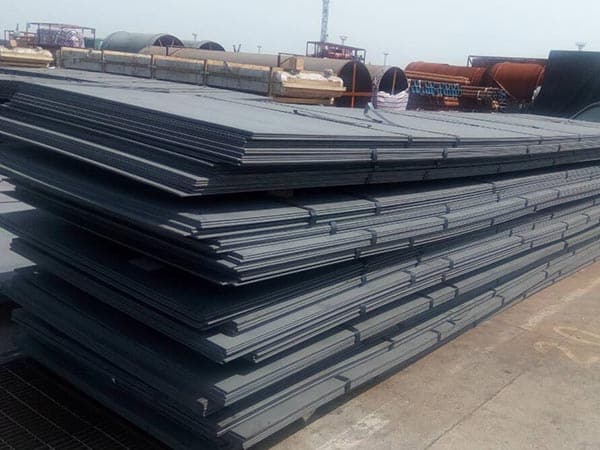
Understanding S700: The Evolution of High-Strength Steel
While often colloquially searched for as "S700 mild steel," S700 is technically categorized as a High Strength Low Alloy (HSLA) steel, specifically under the EN 10149-2 standard for thermomechanically rolled steels. Unlike traditional mild steel (such as S235 or S355), which prioritizes basic structural integrity and cost-efficiency, S700 is engineered to provide an extraordinary strength-to-weight ratio. This material represents a pinnacle in metallurgical engineering, where the grain structure is refined through precise thermal and mechanical control during the rolling process. The "700" in its name signifies a minimum yield strength of 700 MPa, which is nearly three times that of standard mild steel. This leap in performance allows engineers to design lighter, more efficient structures without compromising safety or durability. The term "mild" is only applicable in the context of its surprising ductility and ease of processing, which mimics the behavior of softer steels despite its high hardness and strength.
Chemical Composition: The Alchemy of Micro-Alloying
The performance of S700 steel is rooted in its sophisticated chemical makeup. To maintain excellent weldability and formability while achieving high strength, the carbon content is kept remarkably low. Instead of relying on carbon for hardness, S700 utilizes micro-alloying elements such as Niobium (Nb), Vanadium (V), and Titanium (Ti). These elements facilitate grain refinement and precipitation hardening during the Thermomechanically Controlled Processing (TMCP).
| Element | Maximum Content (%) | Role in the Alloy |
|---|---|---|
| Carbon (C) | 0.12 | Ensures excellent weldability and prevents brittleness. |
| Manganese (Mn) | 2.10 | Increases strength and improves hardenability. |
| Silicon (Si) | 0.50 | Acts as a deoxidizer and contributes to solid-solution strengthening. |
| Phosphorus (P) | 0.025 | Kept low to prevent cold shortness and maintain toughness. |
| Sulfur (S) | 0.015 | Minimized to improve ductility and surface quality. |
| Aluminium (Al) | 0.015 (min) | Used for deoxidation and grain size control. |
| Nb + V + Ti | 0.22 | Micro-alloying for grain refinement and precipitation hardening. |
The synergy between these elements is critical. Niobium increases the recrystallization temperature, allowing for a finer grain structure during rolling. Titanium prevents grain growth in the heat-affected zone (HAZ) during welding, ensuring that the joints remain as strong as the base metal. This precise balance is what distinguishes S700 from standard carbon steels.
Mechanical Properties: Strength Meets Flexibility
The mechanical profile of S700 is defined by its ability to withstand extreme loads while maintaining enough elasticity to be formed into complex shapes. For designers, the most critical value is the yield strength, which dictates the point at which the steel begins to deform permanently. In S700, this value is exceptionally high, allowing for significant weight reduction in structural components.
| Property | Value (Typical for S700MC) |
|---|---|
| Minimum Yield Strength (ReH) | 700 MPa |
| Tensile Strength (Rm) | 750 - 950 MPa |
| Minimum Elongation (A80mm) | 10% - 12% (depending on thickness) |
| Impact Energy (Charpy-V) | Typically 40J at -20°C or -40°C |
The elongation properties are particularly impressive for a steel of this strength level. While most high-strength materials become brittle, S700 retains sufficient ductility for cold forming. This means that components can be bent or folded without cracking, which is a vital requirement in the manufacturing of truck chassis and crane booms.
Processing Performance: Fabrication and Welding
One of the primary reasons S700 is favored in modern manufacturing is its exceptional processing performance. Despite its high strength, it behaves predictably during fabrication, provided the correct parameters are followed.
- Cold Forming: S700MC is designed for cold bending. Manufacturers must respect the minimum bending radius, which is typically 1.5 to 2 times the plate thickness. This ensures the integrity of the outer fibers of the bend.
- Welding: Due to its low Carbon Equivalent (CEV), S700 is highly weldable using standard methods like MIG/MAG, submerged arc welding, and laser welding. Preheating is often unnecessary for thinner sections, reducing production time and costs.
- Cutting: The material is well-suited for laser, plasma, and waterjet cutting. Its uniform microstructure ensures clean edges and minimal thermal distortion during the cutting process.
Environmental Adaptability and Fatigue Resistance
In demanding environments, S700 demonstrates superior fatigue resistance compared to traditional mild steels. This is largely due to its fine-grained structure, which inhibits the initiation and propagation of micro-cracks under cyclic loading. Furthermore, its ability to maintain toughness at low temperatures makes it an ideal candidate for equipment operating in arctic or offshore conditions. The weight reduction enabled by S700 also contributes to environmental sustainability; lighter vehicles consume less fuel and have a lower carbon footprint throughout their operational lifecycle.
Industrial Application Scenarios
The adoption of S700 has revolutionized several heavy industries. By replacing thicker S355 plates with thinner S700 sections, companies can reduce the dead weight of machinery by up to 30% or more.
1. Heavy Transport and AutomotiveIn the trailer and truck industry, S700 is the standard for longitudinal beams and chassis frames. Lighter frames allow for higher payloads, directly increasing the profitability of transport operations. The high yield strength also provides a higher safety margin against accidental overloading.
2. Lifting and Construction EquipmentMobile cranes and telescopic handlers rely on S700 for their booms. The material's high strength allows for longer reaches and higher lifting capacities without making the crane too heavy to travel on public roads. The consistency of S700 ensures that these critical components perform reliably under extreme stress.
3. Agricultural MachineryModern farming equipment, such as large plows and spreaders, uses S700 to withstand the abrasive and high-torque environments of modern industrial agriculture. The material's durability ensures a long service life even under constant vibration and impact.
Strategic Advantages in Engineering Design
Choosing S700 over traditional mild steel is a strategic decision that impacts the entire lifecycle of a product. From a manufacturing perspective, the reduction in material volume leads to lower welding consumable usage and shorter welding times. From an end-user perspective, the increased efficiency and durability of the final product provide a competitive edge in the market. As global standards shift towards higher efficiency and lower emissions, the role of high-strength steels like S700 will only continue to grow. The transition from "mild" to "high-strength" is not just a change in material; it is an upgrade in engineering philosophy that prioritizes performance, efficiency, and sustainability.
Leave a message