
What is the S960MC price export to Iran
Seeking the S960MC price for export to Iran? This expert guide analyzes S960MC steel's mechanical properties, chemical composition, processing advantages, and the economic factors influencing its export valuation.
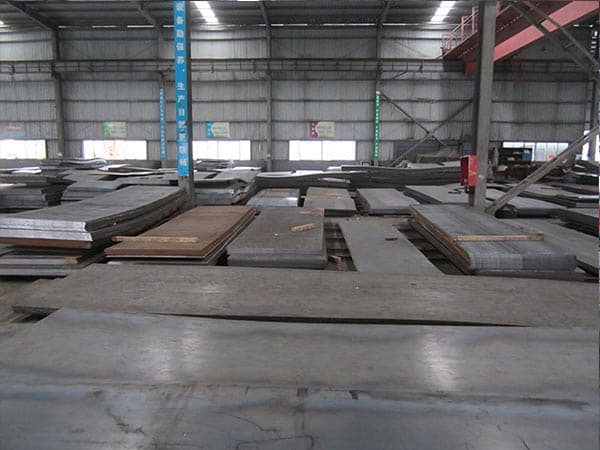
Understanding S960MC: The Pinnacle of High-Strength Thermomechanically Rolled Steel
Determining the S960MC price export to Iran requires a deep dive into the metallurgical sophistication of this grade. S960MC is a high-yield strength, thermomechanically rolled steel compliant with the EN 10149-2 standard. Its name reflects its primary characteristic: a minimum yield strength of 960 MPa. Unlike traditional high-strength steels that rely on heavy alloying, S960MC achieves its properties through a precise controlled rolling process and accelerated cooling. This results in a fine-grained microstructure that offers an exceptional strength-to-weight ratio, which is a critical factor for Iranian industries focused on heavy transport, crane manufacturing, and mining infrastructure.
The price of S960MC is not merely a reflection of raw material costs; it embodies the advanced engineering required to produce a material that can withstand extreme loads while remaining relatively thin. For exporters targeting the Iranian market, understanding these technical nuances is essential for justifying the premium over lower-grade structural steels like S355 or S700MC.
Mechanical Properties: Why S960MC Commands a Premium
The mechanical integrity of S960MC is the primary driver of its market value. When exporting to regions with demanding operational environments like Iran, the reliability of these specs is paramount. The material must provide high tensile strength without sacrificing ductility.
| Property | Value (Minimum/Range) |
|---|---|
| Yield Strength (ReH) | 960 MPa min. |
| Tensile Strength (Rm) | 980 - 1150 MPa |
| Elongation (A5) | 7% min. |
| Impact Strength (Charpy V-notch) | -20°C (standard) or -40°C (optional) |
These properties allow for the design of lighter components. For example, in the production of mobile cranes or trailer chassis for the Iranian logistics sector, using S960MC can reduce the weight of the structure by up to 30% compared to S700MC, directly translating into higher payloads and lower fuel consumption. This economic advantage is a key selling point when discussing the S960MC price with international buyers.
Chemical Composition and Weldability
One of the most significant advantages of S960MC is its low carbon equivalent (CEV). Traditional high-strength steels often require extensive preheating before welding to prevent cold cracking. However, the thermomechanical rolling process allows S960MC to maintain a lean alloy design.
- Carbon (C): Max 0.20%
- Silicon (Si): Max 0.60%
- Manganese (Mn): Max 2.20%
- Phosphorus (P) & Sulfur (S): Extremely low to ensure purity.
- Micro-alloying elements: Niobium (Nb), Vanadium (V), and Titanium (Ti) are used to refine the grain structure.
This chemical profile ensures that the S960MC price export to Iran includes the benefit of reduced fabrication costs. Iranian manufacturers can utilize standard welding techniques such as MAG (Metal Active Gas) or laser welding without the need for costly preheating equipment, provided the heat input is strictly controlled to avoid softening the heat-affected zone (HAZ).
Processing Performance: Bending, Cutting, and Shaping
S960MC is designed for cold forming. Despite its immense strength, it exhibits excellent bending properties, which is vital for creating complex sections in automotive and lifting equipment. The minimum bending radius is typically 3.0 to 4.0 times the thickness of the plate, depending on the orientation relative to the rolling direction.
When it comes to cutting, S960MC responds exceptionally well to laser and plasma cutting. The high purity of the steel ensures a clean edge with minimal slag, reducing the need for secondary grinding operations. For an Iranian workshop, this means faster throughput and lower tool wear, further justifying the initial investment in high-grade S960MC plates.
Environmental Adaptability in the Iranian Landscape
Iran’s geography presents diverse challenges, from the humid coastal regions of the Persian Gulf to the arid, high-altitude mining sites in the Zagros Mountains. S960MC’s fine-grained structure provides better resistance to atmospheric corrosion compared to standard carbon steels, although proper coating is still recommended for long-term exposure. Its performance at low temperatures (maintaining toughness at -20°C or -40°C) is particularly relevant for equipment operating in the northern provinces during winter.
Furthermore, the fatigue resistance of S960MC is superior. In the heavy-duty cycles typical of Iranian mining operations—where equipment is subjected to constant vibration and cyclic loading—S960MC extends the service life of components, reducing downtime and maintenance costs.
Factors Influencing the S960MC Price Export to Iran
Several variables dictate the final quote for S960MC when destined for the Iranian market. Understanding these helps in navigating the complexities of international steel trade:
- Global Raw Material Costs: The price of iron ore, coking coal, and scrap metal fluctuates based on global demand, directly impacting the base price of high-strength alloys.
- Energy Surcharges: Since thermomechanical rolling is an energy-intensive process, fluctuations in electricity and natural gas prices in the producing country (often in Europe or China) are passed down to the buyer.
- Logistics and Freight: Shipping to Iranian ports like Bandar Abbas involves specific maritime insurance and freight considerations. The weight of the order and the dimensions of the plates (standard vs. over-width) also play a role.
- Currency Exchange Rates: The volatility of the Rial against the Euro or USD significantly affects the purchasing power of Iranian importers.
- Trade Regulations and Compliance: Exporting to Iran requires strict adherence to international trade laws, which may involve additional administrative costs for documentation and verification.
Application Industries in Iran
The demand for S960MC in Iran is concentrated in sectors where weight reduction is a competitive necessity. The transportation industry utilizes S960MC for high-capacity trailers and tankers, allowing for thinner walls without compromising safety. In the construction and lifting sector, the boom sections of telescopic cranes rely on the 960 MPa yield strength to reach greater heights with heavier loads.
The mining industry also benefits from S960MC in the fabrication of dump truck bodies and conveyor systems. By replacing standard AR (Abrasion Resistant) steels with a combination of S960MC for structural support and thinner wear plates, manufacturers can create equipment that is both durable and efficient.
Quality Assurance and Certification
When procuring S960MC for export, it is vital to ensure the material comes with a 3.1 or 3.2 Mill Test Certificate (MTC) according to EN 10204. This document verifies the chemical analysis and mechanical testing results, ensuring the steel meets the stringent requirements of EN 10149-2. For the Iranian market, where safety standards are increasingly aligned with international norms, this certification is non-negotiable for high-stakes engineering projects.
Choosing a supplier who understands the specific logistics of the Iranian route—including packaging to prevent sea-salt corrosion during transit—is just as important as the steel's technical specifications. The S960MC price export to Iran is ultimately a package deal involving material quality, technical support, and logistical reliability.
Leave a message