
What is the alloy en 10149-2 equivalent indian standard
An expert analysis of EN 10149-2 equivalents in Indian Standards, focusing on mechanical properties, chemical composition, and industrial applications of high-yield strength steels like S355MC and S700MC compared to IS 2062 and IS 11513.
Decoding EN 10149-2: The Benchmark for High-Yield Cold Forming Steels
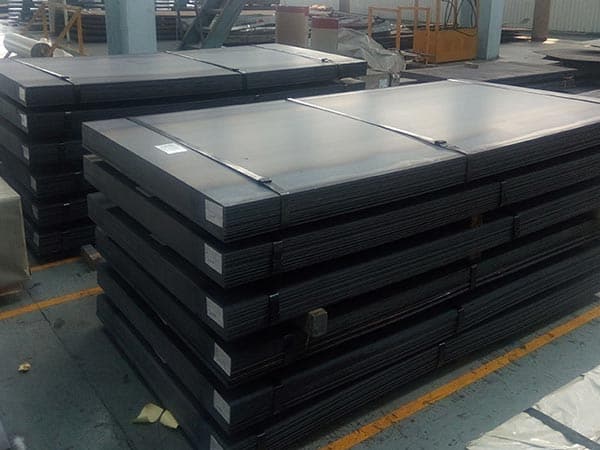
In the global steel trade, the European standard EN 10149-2 represents a critical category of hot-rolled flat products. These are high-yield strength steels specifically designed for cold forming, produced through thermomechanical rolling (TMCP). The 'MC' suffix in grades like S355MC or S700MC denotes that these materials achieve their superior mechanical properties through a precisely controlled rolling process rather than traditional heat treatment. This process results in a fine-grained microstructure that offers an exceptional balance of strength, toughness, and ductility.
For engineers and procurement specialists operating in the Indian market, identifying the exact EN 10149-2 equivalent Indian standard is paramount for ensuring structural integrity and cost-efficiency. While international standards often overlap, subtle differences in chemical tolerances and testing requirements can impact the final performance of the component.
Primary Equivalents: Mapping EN 10149-2 to IS 2062 and IS 11513
The most direct Indian equivalent for the EN 10149-2 series is found within IS 2062 (Hot Rolled Medium and High Tensile Structural Steel) and IS 11513 (Hot Rolled Carbon Steel Strip for Cold Rolling). However, because EN 10149-2 focuses heavily on thermomechanical processing for cold forming, the comparison is often based on yield strength levels.
| EN 10149-2 Grade | Yield Strength (min MPa) | Closest Indian Standard (IS) Equivalent | Common Applications |
|---|---|---|---|
| S315MC | 315 | IS 2062 E300 (Grade B/C) / IS 11513 HR3 | Chassis components, pressed parts |
| S355MC | 355 | IS 2062 E350 (Grade BR/B0/C) | Truck frames, structural tubing |
| S420MC | 420 | IS 2062 E410 (Grade BR/B0/C) | Heavy machinery, crane arms |
| S460MC | 460 | IS 2062 E450 (Grade BR/B0/C) | Automotive cross members |
| S500MC | 500 | IS 2062 E550 (Limited overlap) | High-load structural supports |
| S700MC | 700 | IS 2062 E650/E700 (Special orders) | Ultra-lightweight transport frames |
It is important to note that while IS 2062 is a structural standard, the EN 10149-2 grades are optimized for bending and folding. If the application requires significant cold deformation, IS 11513 or specific proprietary micro-alloyed grades from Indian mills like JSW or TATA (e.g., Galvano or high-strength automotive grades) might be more appropriate than generic structural steel.
Mechanical Performance and Micro-Alloying Advantages
The technical superiority of EN 10149-2 lies in its chemistry. These steels are typically low-carbon and micro-alloyed with elements such as Niobium (Nb), Titanium (Ti), and Vanadium (V). These elements facilitate grain refinement during the TMCP process, which allows the steel to remain highly weldable while achieving yield strengths up to 700 MPa.
- Superior Ductility: Unlike standard carbon steels that become brittle as strength increases, S420MC and S500MC maintain high elongation values, making them ideal for complex geometric shapes.
- Tight Bending Radii: The fine-grained structure permits much tighter internal bending radii compared to IS 2062 equivalents of the same strength level, preventing cracking during fabrication.
- Impact Toughness: Many EN 10149-2 grades are tested for impact energy at low temperatures (e.g., -20°C or -40°C), a requirement that must be specifically requested when sourcing IS 2062 (by selecting Grade C or BR/B0 variants).
Weldability and Processing Excellence
From a manufacturing perspective, EN 10149-2 materials offer a low Carbon Equivalent (CEV). This is a significant advantage over many traditional Indian structural steels where carbon content might be higher to reach strength targets. A lower CEV means:
- Reduced risk of cold cracking in the Heat Affected Zone (HAZ).
- No requirement for pre-heating in most thickness ranges.
- Compatibility with high-speed robotic welding processes used in modern automotive assembly lines.
When substituting with IS 2062, fabricators must verify the actual mill test certificate (MTC) to ensure the CEV values align with the welding procedure specifications (WPS) established for the European grade.
Industrial Applications: From Infrastructure to Automotive
The transition from standard structural steel to EN 10149-2 equivalents is driven by the need for weight reduction without sacrificing safety. In the Indian context, this is increasingly visible in the following sectors:
1. Commercial Vehicles: The use of S460MC and S500MC for truck chassis and longitudinal beams allows for thinner sections, increasing the payload capacity of the vehicle. This directly correlates to fuel efficiency and reduced carbon emissions.
2. Lifting and Excavation: Crane booms and telescopic arms require materials that can withstand high stress while remaining lightweight. The high yield strength of S700MC has no widespread direct equivalent in basic IS 2062, often requiring the use of high-performance micro-alloyed plates produced by specialized Indian steel plants.
3. Cold-Formed Sections: Manufacturers of C and Z purlins for pre-engineered buildings (PEB) often utilize the lower-end EN 10149-2 grades (S315MC) because they provide consistent spring-back characteristics during roll forming.
Environmental Adaptability and Longevity
High-strength low-alloy (HSLA) steels like those in EN 10149-2 exhibit better atmospheric corrosion resistance than plain carbon steels due to the presence of micro-alloying elements. In the humid and varied climates of the Indian subcontinent, this provides an added layer of durability, especially when combined with modern coating technologies like galvanization or specialized primers.
Furthermore, the thermomechanical process ensures that the steel has low internal stresses. This stability is crucial when parts are subjected to extreme temperature fluctuations, preventing warping or structural fatigue over long-term service cycles.
Technical Selection Strategy
Choosing between an EN standard and an Indian equivalent requires a deep dive into the Material Test Certificate (MTC). For a successful substitution, one must verify:
- Yield to Tensile Ratio: EN 10149-2 typically has a higher ratio than standard structural steels.
- Deoxidation: Ensure the equivalent IS steel is 'Killed' (denoted by 'K' or 'sub-quality' in IS 2062) to match the stability of the MC grades.
- Directional Properties: TMCP steels have properties that may vary between longitudinal and transverse directions; check if the application involves cross-grain bending.
The evolution of the Indian steel industry has brought local production capabilities much closer to European standards. Large-scale infrastructure projects and the 'Make in India' initiative in the defense and automotive sectors have pushed Indian mills to produce S355MC and S420MC equivalents that meet the rigorous demands of international engineering designs.
Leave a message