
What are the main process characteristics of s460mc 1.0982 en 10149 2
Discover the comprehensive process characteristics of S460MC (1.0982) steel under EN 10149-2. This guide covers mechanical properties, cold forming, welding, and industrial applications for high-strength steel users.
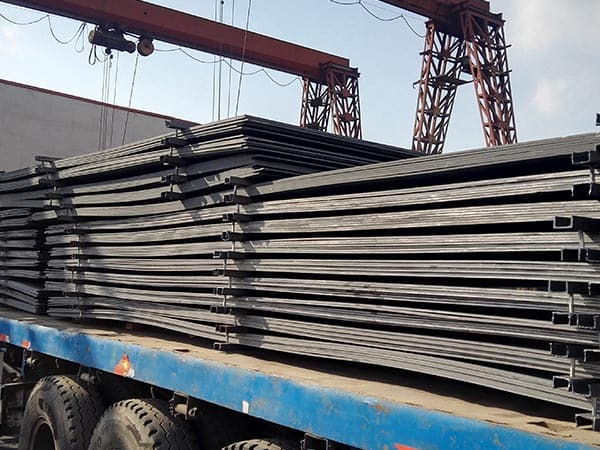
Understanding the Core Identity of S460MC (1.0982)
S460MC, designated by the material number 1.0982 according to the EN 10149-2 standard, represents a pinnacle in the evolution of high-yield strength steels for cold forming. This steel is produced through a sophisticated thermomechanically rolled (TMCP) process, which differentiates it from traditional normalized steels. The 'S' signifies structural steel, '460' denotes a minimum yield strength of 460 MPa, and 'MC' indicates it is thermomechanically rolled for cold forming. This specific manufacturing route allows for a unique combination of high strength, excellent toughness, and superior processing capabilities, making it a preferred choice for weight-reduction strategies in modern engineering.
Superior Cold Forming and Bending Capabilities
One of the standout process characteristics of S460MC is its exceptional ductility relative to its high strength. Unlike conventional structural steels that become brittle as yield strength increases, S460MC maintains a fine-grained microstructure that facilitates tight bending radii without cracking. This is critical for manufacturing complex structural components such as longitudinal beams, cross members, and chassis parts in the automotive and heavy machinery sectors.
When performing cold bending, it is essential to consider the rolling direction. S460MC exhibits isotropic-like behavior, but for the most demanding applications, bending transverse to the rolling direction is generally preferred. The minimum recommended bending radius for S460MC is significantly tighter than that of S355 grades, allowing designers to create more compact and efficient geometries. Typical bending radius guidelines for S460MC (for thickness t) are:
- Bending angle ≤ 90°: Recommended inner radius is approximately 1.0t to 1.5t depending on specific plate thickness.
- Springback management: Due to the high yield strength, S460MC exhibits more springback than lower-grade steels. Tooling must be adjusted to compensate for this elastic recovery to ensure dimensional accuracy.
Exceptional Weldability and Heat-Affected Zone (HAZ) Stability
The chemical composition of S460MC is engineered with a very low carbon equivalent (CEV). This is a direct result of the thermomechanical rolling process, which achieves high strength through grain refinement rather than heavy alloying. A lower CEV translates directly into superior weldability, as the material is less prone to cold cracking in the heat-affected zone.
S460MC can be welded using all standard methods, including MIG/MAG (GMAW), TIG (GTAW), submerged arc welding (SAW), and laser welding. Key welding considerations include:
- No Preheating: In most thickness ranges, S460MC does not require preheating, which significantly reduces production time and energy costs compared to quenched and tempered steels.
- Heat Input Control: While weldable, it is vital to control the heat input. Excessive heat can lead to grain growth in the HAZ, which might slightly reduce the local yield strength. Maintaining a cooling time (t8/5) within the recommended range ensures the integrity of the fine-grained structure.
- Filler Materials: To match the high yield strength of the base metal, high-strength filler wires (matching or slightly over-matching) should be selected to ensure the joint's load-bearing capacity.
Chemical Composition and Its Impact on Processing
The performance of 1.0982 steel is rooted in its precise chemistry. By limiting elements like Carbon and Manganese and adding micro-alloying elements such as Niobium (Nb), Vanadium (V), and Titanium (Ti), the steel achieves its high-performance profile.
| Element | Max Content (%) | Impact on Process |
|---|---|---|
| Carbon (C) | 0.12 | Enhances weldability and prevents brittleness. |
| Manganese (Mn) | 1.60 | Provides solid solution strengthening without sacrificing toughness. |
| Silicon (Si) | 0.50 | Deoxidizer, improves fluidity during welding. |
| Phosphorus (P) | 0.025 | Kept low to ensure superior impact toughness. |
| Niobium (Nb) | 0.09 | Refines grain size during TMCP for high yield strength. |
Precision Cutting and Surface Preparation
S460MC is highly compatible with modern thermal cutting technologies. Whether using laser, plasma, or oxy-fuel cutting, the material maintains its edge integrity. Laser cutting is particularly effective due to the steel's consistent flatness and clean surface finish, which are hallmarks of the EN 10149-2 production standard. The low impurity levels mean that dross formation is minimized, leading to cleaner cuts that require less post-processing grinding.
For surface treatment, S460MC is an excellent candidate for hot-dip galvanizing, provided the silicon content is monitored (SDR effect). Its fine surface scale, resulting from the controlled rolling process, is easily removed via pickling or shot blasting, providing an ideal substrate for high-quality powder coating or painting.
Environmental Adaptability and Fatigue Resistance
In demanding environments, S460MC offers more than just static strength. Its fine-grained structure provides excellent fatigue resistance, which is paramount for components subjected to cyclic loading, such as crane booms or truck frames. Furthermore, its low-temperature toughness is superior to many standard structural steels, ensuring that the material does not undergo brittle fracture in cold climates. This makes it a versatile choice for global equipment manufacturers who export to diverse geographic regions.
Application Industry Expansion
The process characteristics of S460MC allow it to penetrate industries where weight reduction and structural integrity are non-negotiable. Key application areas include:
- Automotive Industry: Production of lightweight chassis, suspension components, and safety reinforcements where high energy absorption is required.
- Lifting and Transportation: Manufacturing of telescopic cranes, trailer frames, and container handles where reducing dead weight increases payload capacity.
- Construction Machinery: Excavator arms, bulldozer frames, and mining equipment components that demand a balance of weldability and wear resistance.
- Agricultural Equipment: High-stress parts of plows, harvesters, and seeders that benefit from the material's ability to be formed into complex shapes.
By leveraging the high yield strength of S460MC, engineers can often reduce the thickness of steel plates by 20% to 30% compared to S355, without compromising the structural safety of the final product. This reduction in material usage leads to lower transportation costs, reduced welding consumables, and a smaller carbon footprint for the entire manufacturing cycle.
Leave a message