
How is the performance of S420MC steel for car safety parts
An in-depth analysis of S420MC steel performance in automotive safety components, focusing on mechanical strength, cold forming capabilities, and crashworthiness.
The Strategic Role of S420MC in Modern Vehicle Safety Architecture
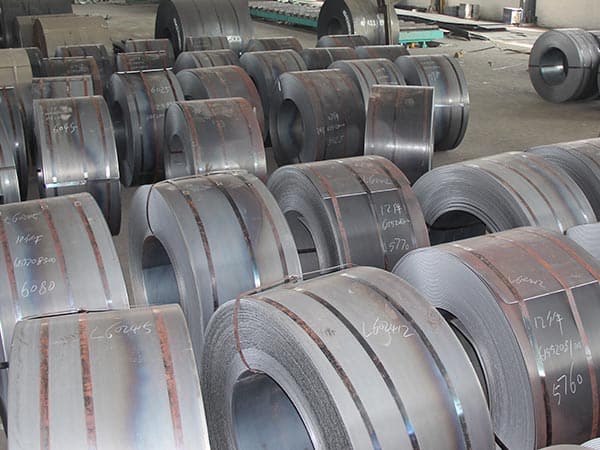
In the pursuit of automotive excellence, the selection of materials for safety-critical components is a decision that balances structural integrity, weight reduction, and manufacturing efficiency. S420MC steel, a high-strength low-alloy (HSLA) grade governed by the EN 10149-2 standard, has emerged as a cornerstone material for engineers. This thermomechanically rolled steel is specifically designed for cold forming, offering a unique combination of high yield strength and exceptional ductility. When we examine the performance of S420MC in the context of car safety parts, we are looking at its ability to absorb energy during a collision while maintaining the survival space of the vehicle cabin.
Chemical Composition and the Science of Micro-Alloying
The superior performance of S420MC is rooted in its precise chemical makeup. Unlike traditional carbon steels, S420MC utilizes micro-alloying elements such as niobium (Nb), vanadium (V), and titanium (Ti). These elements, even in minute quantities, refine the grain structure during the thermomechanical rolling process. This fine-grained structure is the primary reason for the material's high strength and toughness. By keeping the carbon content low (typically below 0.12%), the steel maintains excellent weldability and prevents the formation of brittle phases that could lead to catastrophic failure under impact.
| Element | Carbon (C) | Manganese (Mn) | Silicon (Si) | Phosphorus (P) | Sulfur (S) | Al (Total) |
|---|---|---|---|---|---|---|
| Max Content (%) | 0.12 | 1.60 | 0.50 | 0.025 | 0.015 | 0.015 |
This chemical balance ensures that the steel does not suffer from excessive hardening during the welding process, which is vital for maintaining the integrity of safety frames and chassis components.
Mechanical Resilience: Yield Strength and Tensile Performance
For safety parts like bumper beams, longitudinal members, and cross-beams, the yield strength is the most critical parameter. S420MC offers a minimum yield strength of 420 MPa. This level of strength allows for the use of thinner gauges compared to standard S355MC steel, contributing significantly to vehicle lightweighting without sacrificing the ability to withstand high loads. The tensile strength, ranging between 480 and 620 MPa, ensures that the material can undergo significant deformation before fracturing, a key requirement for energy absorption in crash scenarios.
- Yield Strength (ReH): Min 420 MPa
- Tensile Strength (Rm): 480 - 620 MPa
- Elongation (A80): Min 16% (for thicknesses < 3mm)
- Elongation (A5): Min 19% (for thicknesses ≥ 3mm)
The elongation properties are particularly noteworthy. In a collision, safety parts must bend and fold in a controlled manner (crumple zones) to dissipate kinetic energy. The high ductility of S420MC ensures that these parts do not snap or crack prematurely, providing a predictable deformation pattern that saves lives.
Cold Forming and Manufacturing Versatility
The "C" in S420MC stands for cold forming, highlighting its exceptional performance in stamping, bending, and folding operations. Manufacturing car safety parts often involves complex geometries with tight radii. S420MC's fine-grained structure allows for small bending radii without the risk of surface cracking or "orange peel" effects. This formability reduces the need for complex multi-stage pressing or hot forming, which lowers production costs and energy consumption.
When designing components like seat rails or pillar reinforcements, engineers rely on the material's consistent springback characteristics. S420MC exhibits stable mechanical properties across different batches, ensuring that high-volume automated production lines can maintain tight tolerances. This consistency is paramount for safety parts where a millimeter of deviation can affect the deployment of airbags or the fitment of structural bolts.
Weldability and Joint Integrity in Safety Assemblies
Automotive safety systems are rarely single pieces; they are complex assemblies of stamped parts welded together. S420MC's low carbon equivalent (CEV) makes it exceptionally suitable for all standard welding processes, including MIG/MAG, laser welding, and resistance spot welding. The heat-affected zone (HAZ) in S420MC remains relatively tough, avoiding the brittleness often associated with higher-strength steels.
In safety-critical joints, such as where the bumper beam meets the longitudinal rails, the weld must be as strong as the base metal. S420MC facilitates deep penetration and clean weld pools, resulting in joints that can withstand the dynamic, high-velocity loads experienced during an accident. Furthermore, its compatibility with various coating systems ensures that the welded joints are protected from galvanic corrosion.
Fatigue Resistance and Long-term Durability
Safety parts are not just for crashes; they must endure the life of the vehicle. Components like suspension arms and subframes are subjected to millions of cycles of stress. S420MC demonstrates excellent fatigue resistance due to its homogeneous microstructure. The absence of large inclusions and the refined grain size inhibit the initiation and propagation of fatigue cracks. This durability ensures that the structural integrity of the vehicle's safety cage remains intact even after years of exposure to road vibrations and varying load conditions.
Environmental Adaptability and Corrosion Protection
While S420MC is not a stainless grade, its surface quality is optimized for modern anti-corrosion treatments. Whether it is hot-dip galvanizing, electro-galvanizing, or E-coating (electrophoretic deposition), the steel provides a consistent substrate that promotes excellent adhesion. In the harsh environments where vehicles operate—exposed to road salt, moisture, and temperature fluctuations—the ability of S420MC to hold its protective coating is vital for preventing the rust that could weaken safety structures over time.
Comparative Analysis: S420MC vs. Higher and Lower Grades
Choosing S420MC over S355MC provides a roughly 15-20% weight saving for the same structural stiffness. Conversely, while grades like S500MC or S700MC offer even higher strength, they often come with a trade-off in terms of reduced ductility and more challenging forming requirements. S420MC sits at the "sweet spot" for many safety applications, offering enough strength for significant thinning while remaining easy to process in standard stamping facilities.
| Feature | S355MC | S420MC | S500MC |
|---|---|---|---|
| Yield Strength (min) | 355 MPa | 420 MPa | 500 MPa |
| Formability | Excellent | Very Good | Good/Moderate |
| Weight Saving Potential | Baseline | High | Very High |
| Typical Application | General brackets | Safety beams, chassis | High-load cross members |
Implementation in Specific Automotive Safety Components
The practical application of S420MC is widespread across the global automotive industry. It is frequently found in:
- Chassis Cross-Members: Providing lateral rigidity and protecting the fuel tank and battery packs in EVs.
- Bumper Reinforcements: Absorbing low-speed impacts to prevent damage to the engine cooling system.
- Seat Frames: Ensuring the seat remains anchored and maintains its shape during a rollover or rear-end collision.
- Truck Frame Rails: In light commercial vehicles, S420MC provides the necessary strength to carry heavy loads while keeping the vehicle's tare weight low.
The material's performance in these areas is a testament to its reliability. By utilizing S420MC, manufacturers can meet increasingly stringent crash test ratings (such as Euro NCAP or IIHS) while simultaneously addressing the demand for more fuel-efficient and environmentally friendly vehicles. The synergy between its mechanical properties and its processing ease makes it an indispensable asset in the modern automotive material palette.
Leave a message