
What is the manufacturing method of S700MC high strength alloy steel for auto frame
Discover the intricate manufacturing process of S700MC high-strength alloy steel. Learn how TMCP technology and micro-alloying create the ideal material for lightweight, durable automotive frames.
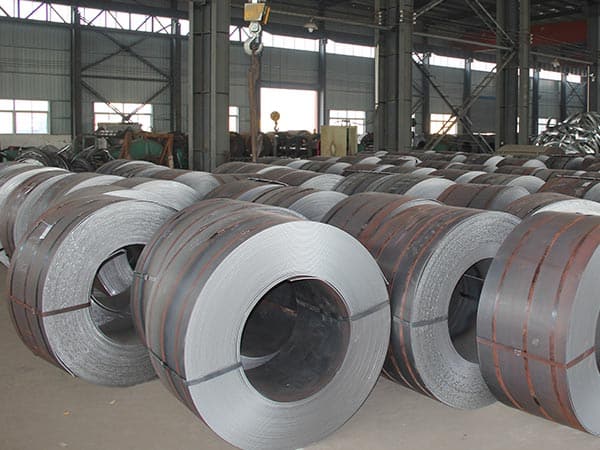
The Evolution of High-Strength Automotive Structural Steel
The automotive industry is undergoing a radical transformation driven by the dual demands of enhanced safety and weight reduction. S700MC high-strength alloy steel stands at the forefront of this evolution. As a thermomechanically rolled steel for cold forming, governed by the EN 10149-2 standard, S700MC offers a yield strength of at least 700 MPa. This allows engineers to design thinner, lighter components without compromising the structural integrity of vehicle frames. The manufacturing method of S700MC is not a simple heating and rolling sequence; it is a sophisticated metallurgical orchestration involving ultra-clean steelmaking, precise micro-alloying, and Thermomechanical Controlled Processing (TMCP).
The Core Manufacturing Pillar: Thermomechanical Controlled Processing (TMCP)
The defining characteristic of S700MC production is TMCP. Unlike traditional normalized or quenched and tempered steels, TMCP integrates thermal treatment and mechanical deformation into a single, continuous process. The goal is to achieve an extremely fine-grained microstructure, typically a mixture of fine ferrite and pearlite or bainite, which provides the high yield strength and excellent toughness required for automotive frames.
The TMCP process begins with the reheating of the slab to a specific temperature, usually between 1100°C and 1250°C. This ensures that micro-alloying elements like Niobium (Nb), Vanadium (V), and Titanium (Ti) are fully dissolved into the austenite matrix. The rolling then occurs in two distinct stages: the recrystallization region and the non-recrystallization region. Rolling in the non-recrystallization region (below the Tnr temperature) creates a high density of deformation bands and dislocations within the austenite grains. These act as nucleation sites for the subsequent phase transformation during cooling, resulting in the ultra-fine grain structure that gives S700MC its name and performance.
Metallurgical Foundation: Clean Steelmaking and Micro-Alloying
The manufacturing method starts long before the rolling mill, in the Basic Oxygen Furnace (BOF) or Electric Arc Furnace (EAF). To achieve the high ductility and fatigue resistance needed for auto frames, S700MC must be exceptionally clean. This involves secondary refining processes such as Ladle Furnace (LF) treatment and Vacuum Degassing (VD) to minimize impurities like sulfur, phosphorus, and non-metallic inclusions.
Micro-alloying Strategy: The chemical composition of S700MC is meticulously balanced. The carbon content is kept low (typically ≤ 0.12%) to ensure excellent weldability. The strength is derived from micro-alloying elements:
- Niobium (Nb): Increases the recrystallization temperature, allowing for effective rolling in the non-recrystallization zone and refining the final grain size.
- Titanium (Ti): Forms stable nitrides that prevent grain growth during reheating and welding.
- Vanadium (V): Provides precipitation hardening, contributing to the final yield strength.
- Manganese (Mn): Enhances hardenability and solid solution strengthening.
Advanced Cooling Technologies: The Role of Accelerated Cooling (ACC)
After the final rolling pass, the S700MC plate or strip undergoes Accelerated Cooling (ACC). This is a critical step in the manufacturing method. By controlling the cooling rate (usually between 10°C/s to 80°C/s) and the finish cooling temperature, manufacturers can suppress the formation of coarse pearlite and promote a fine acicular ferrite or bainitic structure. This precise cooling control ensures that the mechanical properties are uniform across the entire length and width of the steel coil, which is vital for automated automotive stamping and laser cutting processes.
Mechanical Performance and Structural Integrity
The result of this complex manufacturing method is a material with an exceptional strength-to-weight ratio. S700MC is characterized by its high yield strength (minimum 700 MPa) and a tensile strength between 750 and 950 MPa. However, strength is only half the story. For auto frames, energy absorption during a collision is paramount. S700MC maintains a minimum elongation of 10-12% (depending on thickness), allowing it to deform and absorb energy without catastrophic failure.
| Property | Value (S700MC) | Significance for Auto Frames |
|---|---|---|
| Yield Strength (ReH) | ≥ 700 MPa | Allows for thinner gauges and weight reduction. |
| Tensile Strength (Rm) | 750 - 950 MPa | Ensures structural stability under heavy loads. |
| Elongation (A80mm) | ≥ 10% (t < 3mm) | Facilitates complex cold forming and energy absorption. |
| Bending Radius (180°) | ≥ 1.5t to 2.0t | Enables tight bends in chassis and cross members. |
Processing Performance: Welding and Cold Forming
One of the primary reasons S700MC is preferred for auto frames is its superior processing performance. Because the strength is achieved through grain refinement and micro-alloying rather than high carbon content, the Carbon Equivalent (CEV) remains low. This makes S700MC highly weldable using standard industrial methods such as MAG (Metal Active Gas) welding, laser welding, and resistance spot welding. The Heat Affected Zone (HAZ) in S700MC remains relatively tough, preventing the brittleness often associated with welding high-strength steels.
In terms of cold forming, S700MC exhibits excellent behavior. It can be bent, flanged, and cold-pressed into complex shapes like C-channels, side rails, and reinforced pillars. The consistency of the manufacturing process ensures that springback is predictable, which is essential for maintaining dimensional tolerances in high-volume automotive production lines.
Environmental Adaptation and Sustainability
The manufacturing method of S700MC also aligns with modern environmental goals. By enabling the production of lighter vehicles, S700MC directly contributes to reduced fuel consumption and lower CO2 emissions over the vehicle's lifecycle. Furthermore, the TMCP process is more energy-efficient than traditional quenching and tempering cycles, as it utilizes the residual heat from the rolling process to achieve the desired microstructure, eliminating the need for a separate reheating stage for heat treatment.
The corrosion resistance of S700MC, while comparable to standard carbon steels, can be further enhanced through modern coating technologies such as hot-dip galvanizing or cathodic dip painting (KTL). The fine-grained surface of S700MC provides an excellent substrate for these coatings, ensuring long-term durability in the harsh environments auto frames are exposed to, including road salt and moisture.
Application Dynamics in the Heavy-Duty Sector
While primarily designed for automotive frames, the manufacturing method of S700MC makes it suitable for a wide range of demanding applications. It is extensively used in the production of truck chassis, crane jibs, and trailers. In these industries, the ability to lift heavier loads while reducing the dead weight of the equipment is a major competitive advantage. The high fatigue strength of S700MC ensures that these structures can withstand millions of loading cycles throughout their operational life.
The versatility of S700MC is further highlighted in its use for cold-formed sections and tubes. These components are vital for the safety cages of buses and the protective structures of agricultural machinery. The manufacturing precision ensures that every batch of S700MC meets the stringent safety requirements of these diverse sectors.
Strategic Implementation in Modern Manufacturing
Implementing S700MC in a production environment requires an understanding of its unique attributes. Manufacturers must optimize their tooling for higher press forces compared to conventional steels. Laser cutting parameters must also be adjusted to account for the micro-alloying elements to ensure clean, burr-free edges. However, the benefits far outweigh the initial setup costs. The reduction in material usage and the increase in final product performance make S700MC a cost-effective solution for the future of transportation infrastructure.
By mastering the thermomechanical rolling process and the delicate balance of micro-alloying, steel producers can deliver a material that is not only strong but also remarkably versatile. S700MC represents the pinnacle of modern metallurgy, bridging the gap between high-strength requirements and the practicalities of industrial manufacturing. Its role in the automotive frame industry is set to grow as the push for efficiency and safety continues to intensify globally.
Leave a message