
S900MC construction machinery steel cutting is widely used in mechanical manufacturing
Comprehensive analysis of S900MC high-strength steel, covering its mechanical properties, advanced cutting techniques, and its transformative impact on construction machinery manufacturing.
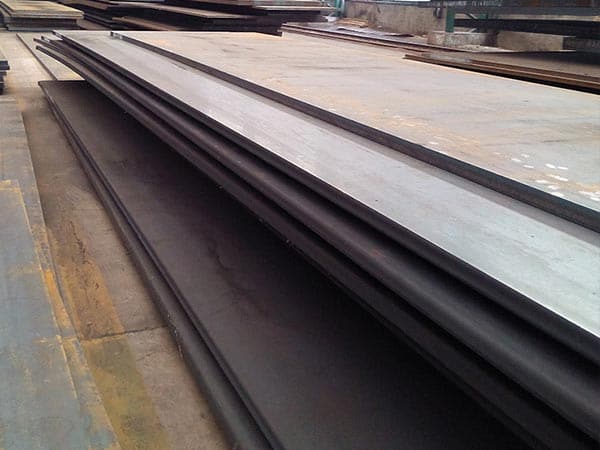
S900MC High-Strength Steel: Engineering the Future of Heavy Machinery
The demand for lighter, stronger, and more efficient mechanical structures has pushed the boundaries of material science, leading to the widespread adoption of S900MC. As a thermomechanically rolled high-strength low-alloy (HSLA) steel, S900MC offers a unique combination of extreme yield strength and excellent cold-forming properties. This material is not merely a substitute for traditional structural steels; it is a catalyst for innovative design in the construction machinery sector. Manufacturers of cranes, trailers, and mining equipment leverage S900MC to reduce dead weight while increasing payload capacity, directly addressing the modern requirements for fuel efficiency and reduced environmental impact.
Metallurgical Foundation and Thermomechanical Processing
The exceptional properties of S900MC are rooted in its precise chemical composition and the Thermomechanical Control Process (TMCP). Unlike traditional quenched and tempered steels, S900MC achieves its strength through a combination of micro-alloying and controlled rolling temperatures. The addition of elements such as Niobium (Nb), Vanadium (V), and Titanium (Ti) facilitates grain refinement and precipitation hardening. This fine-grained microstructure is essential for maintaining high toughness and excellent weldability despite the steel's high yield strength.
During the TMCP process, the rolling is performed at specific temperature ranges where recrystallization is suppressed. This results in a highly deformed austenite structure that transforms into an extremely fine ferrite-bainite or martensitic-bainitic matrix upon cooling. This metallurgical strategy ensures that S900MC maintains a low carbon equivalent value (CEV), which is a critical factor for processing and welding in industrial environments.
| Element | C (max) | Mn (max) | Si (max) | P (max) | S (max) | Al (min) | Nb+V+Ti (max) |
|---|---|---|---|---|---|---|---|
| Content (%) | 0.20 | 2.20 | 0.60 | 0.025 | 0.015 | 0.015 | 0.22 |
Mechanical Performance and Structural Integrity
S900MC is defined by its minimum yield strength of 900 MPa. This level of performance allows engineers to design components with significantly thinner cross-sections compared to conventional S355 or even S700MC grades. The high yield-to-tensile ratio is a hallmark of this steel, providing a robust safety margin for structural applications. Furthermore, S900MC exhibits remarkable impact toughness at low temperatures, which is vital for machinery operating in harsh climates, such as arctic mining sites or high-altitude construction projects.
| Property | Yield Strength (MPa) | Tensile Strength (MPa) | Elongation A5 (%) | Min. Bending Radius (90°) |
|---|---|---|---|---|
| Specification | ≥ 900 | 930 - 1200 | ≥ 7 | 3.0 x t (thickness) |
Advanced Cutting Techniques for S900MC
Precision cutting is a fundamental step in the manufacturing of construction machinery components. Given the high strength and specific microstructure of S900MC, the choice of cutting technology significantly impacts the final quality of the part. Laser cutting is widely considered the gold standard for S900MC. High-power fiber lasers provide the necessary energy density to cut through thick plates with minimal kerf width and an extremely narrow Heat Affected Zone (HAZ). This precision is crucial for parts that require tight tolerances, such as interlocking boom sections for telescopic cranes.
When laser cutting S900MC, it is essential to manage the heat input to prevent localized softening of the edges. Modern CNC laser systems utilize sophisticated pulsing parameters and high-pressure nitrogen or oxygen as assist gases to ensure a clean, burr-free cut. For thicker sections where laser might reach its limits, plasma cutting remains a viable alternative. However, operators must account for the slightly larger HAZ and the potential for edge hardening. Underwater plasma cutting can be employed to further mitigate thermal distortion and preserve the steel's metallurgical properties.
Waterjet cutting, although slower, is an excellent option for applications where any thermal influence must be completely avoided. This cold cutting process ensures that the S900MC retains its original TMCP structure right up to the edge of the cut, which is particularly beneficial for components subjected to high fatigue loads.
Cold Forming and Bending Performance
Despite its extreme strength, S900MC is designed for cold forming. Its high ductility allows for complex bending operations, which are common in the production of U-beams, chassis frames, and arm structures. Successful bending of S900MC requires attention to the grain direction; bending transverse to the rolling direction is generally preferred to minimize the risk of cracking. The use of high-quality tooling with a large die opening and a suitable punch radius is mandatory. Because of the high yield strength, the springback effect in S900MC is more pronounced than in lower-grade steels. Advanced CNC press brakes with integrated springback compensation systems are recommended to achieve the desired bending angles consistently.
Welding and Joining Strategies
The low carbon equivalent of S900MC makes it exceptionally weldable using standard industrial processes such as MAG (Metal Active Gas) and MIG (Metal Inert Gas) welding. The primary challenge in welding S900MC is maintaining the strength of the joint. Since the base material gains its strength from the TMCP process, excessive heat input during welding can lead to grain growth and softening in the HAZ. To prevent this, welders should utilize low heat input techniques and control the interpass temperature.
- Use of high-strength filler metals (e.g., AWS A5.28 ER110S-G or ER120S-G) to match the base metal strength.
- Optimizing the cooling time (t8/5) to ensure a balanced microstructure in the weld metal and HAZ.
- Stringent edge preparation and cleanliness to avoid hydrogen-induced cracking.
Industrial Applications in Mechanical Manufacturing
The adoption of S900MC has transformed the design philosophy of heavy-duty machinery. In the mobile crane industry, S900MC is used to manufacture telescopic booms that are lighter yet capable of reaching greater heights and lifting heavier loads. The weight savings achieved in the boom allow for a lighter counterweight and a more compact chassis, improving the crane's mobility on public roads.
In the transport sector, high-strength trailers and semi-trailers built with S900MC chassis can carry significantly higher payloads. This not only improves the economic efficiency for transport companies but also reduces the number of trips required, leading to a lower carbon footprint. Agricultural machinery, such as large-scale spreaders and harvesters, also benefits from S900MC, as the material provides the necessary durability to withstand the rigorous stresses of field operations while keeping the overall weight low enough to prevent soil compaction.
Mining equipment manufacturers utilize S900MC for the construction of dump bodies and support structures. The steel's resistance to impact and its high load-bearing capacity make it ideal for the extreme environments found in open-pit mines. The ability to cut and weld S900MC into complex, optimized shapes allows for the creation of equipment that is both robust and efficient.
Sustainability and Economic Considerations
The shift toward S900MC is driven by both technical performance and economic necessity. While the per-ton price of S900MC is higher than that of standard structural steels, the overall project cost is often lower. The reduction in material volume leads to lower shipping costs, reduced welding consumables, and faster assembly times. Furthermore, the lifecycle benefits of S900MC-based machinery are substantial. Lighter machines consume less fuel, experience less wear on tires and brakes, and offer a higher resale value due to their advanced engineering. From a sustainability perspective, using less steel to achieve the same structural performance reduces the total energy required for material production and processing, aligning with global efforts to decarbonize the industrial sector.
The strategic implementation of S900MC requires a deep understanding of its processing characteristics. By mastering precision cutting, controlled welding, and accurate cold forming, manufacturers can unlock the full potential of this high-performance steel. As engineering demands continue to evolve, S900MC stands as a critical material in the pursuit of more powerful, efficient, and sustainable mechanical manufacturing solutions.
Leave a message