
Do you know the S460MC steel for car parts standard material
Explore the comprehensive properties of S460MC steel, a high-strength low-alloy (HSLA) material essential for automotive structural parts, featuring detailed mechanical, chemical, and processing insights.
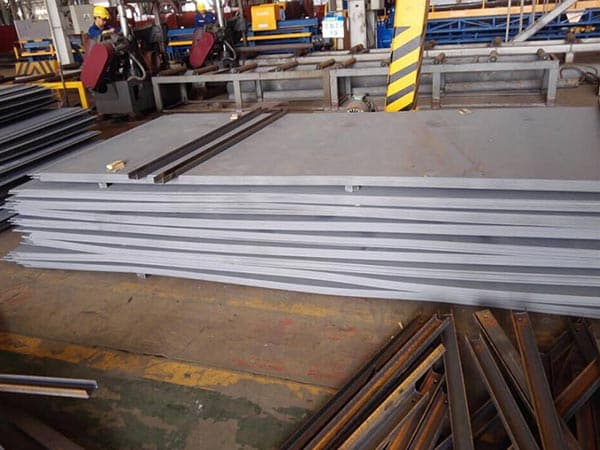
Understanding S460MC: The Backbone of Modern Automotive Structural Integrity
S460MC steel represents a pinnacle of metallurgical engineering within the high-strength low-alloy (HSLA) category, specifically governed by the EN 10149-2 standard. As the automotive industry shifts towards lightweighting to enhance fuel efficiency and reduce carbon emissions, materials like S460MC have become indispensable. This steel is produced through a thermomechanically rolled (TMCP) process, which allows it to achieve high yield strength while maintaining excellent cold formability and weldability. Unlike traditional structural steels, S460MC is designed to meet the rigorous demands of complex automotive geometries and safety-critical components.
The Metallurgical Secret: Chemical Composition and Micro-Alloying
The exceptional performance of S460MC is rooted in its precise chemical balance. By keeping carbon levels low and introducing micro-alloying elements such as Niobium (Nb), Vanadium (V), and Titanium (Ti), manufacturers can achieve a fine-grained microstructure. This grain refinement is the primary mechanism for increasing strength without sacrificing toughness or ductility.
| Element | Max Content (%) |
|---|---|
| Carbon (C) | 0.12 |
| Manganese (Mn) | 1.60 |
| Silicon (Si) | 0.50 |
| Phosphorus (P) | 0.025 |
| Sulphur (S) | 0.015 |
| Aluminum (Al) | 0.015 (min) |
| Niobium (Nb) | 0.09 |
| Titanium (Ti) | 0.15 |
| Vanadium (V) | 0.20 |
Low carbon content is vital for ensuring that the material does not harden excessively during welding, which prevents cold cracking. The addition of Titanium and Niobium acts as a grain refiner during the rolling process, ensuring that the steel remains ductile even at a yield strength of 460 MPa. This micro-alloying strategy allows for thinner gauges to be used in vehicle frames, directly contributing to weight reduction.
Mechanical Performance: Balancing Strength and Ductility
The designation "S460MC" tells a specific story: "S" stands for structural steel, "460" indicates a minimum yield strength of 460 MPa, "M" refers to the thermomechanical rolling, and "C" denotes its suitability for cold forming. For automotive engineers, these properties translate into predictable behavior during crash events and manufacturing.
- Yield Strength: Minimum 460 MPa, providing the necessary resistance against permanent deformation.
- Tensile Strength: Ranges between 520 and 670 MPa, ensuring the material can withstand significant loads before failure.
- Elongation: With a minimum elongation of 14% (for thicknesses < 3mm), it offers the flexibility required for deep drawing and complex bending.
- Impact Toughness: While not always specified for all grades, S460MC typically maintains good impact resistance at low temperatures, crucial for vehicle safety in cold climates.
The high yield-to-tensile ratio of S460MC is a critical factor for automotive designers. It allows for high energy absorption during a collision, which is essential for protecting passengers by managing the deformation of the vehicle's "crumple zones."
Superior Processability: Bending, Welding, and Cutting
One of the primary reasons S460MC is favored over higher-strength grades like S700MC in certain applications is its superior balance of processability. In the workshop, this steel behaves exceptionally well under various fabrication methods.
Cold Forming and Bending: S460MC is specifically designed for cold forming. It can be bent to tight radii without cracking, provided the bending direction and tool radius are correctly managed. For thicknesses (t) up to 3mm, a minimum bending radius of 0.25t to 0.5t is often achievable, making it ideal for U-profiles, C-channels, and complex brackets.
Welding Compatibility: Due to its low carbon equivalent (CEV), S460MC is highly weldable using standard industrial methods such as MAG (Metal Active Gas), MIG (Metal Inert Gas), and Laser welding. It does not require preheating in most thickness ranges, which streamlines production lines and reduces energy costs. The heat-affected zone (HAZ) remains stable, maintaining the structural integrity of the welded joint.
Laser and Plasma Cutting: The clean chemical composition and fine grain structure result in excellent edge quality during thermal cutting. This reduces the need for secondary grinding or finishing, further optimizing the manufacturing cycle.
Strategic Applications in the Automotive Industry
The versatility of S460MC makes it a staple in both passenger vehicles and heavy-duty commercial transport. Its application is usually found where a high strength-to-weight ratio is required to replace heavier, thicker carbon steels.
- Chassis and Frames: Used extensively in truck longitudinal beams and cross members where high load-bearing capacity is required.
- Suspension Systems: Control arms and mounting brackets benefit from the fatigue resistance of S460MC.
- Safety Components: Bumper beams and reinforcement pillars utilize the energy absorption properties of the steel to enhance crash test ratings.
- Cold Pressed Parts: Complex structural reinforcements within the car body that require significant forming.
By utilizing S460MC, manufacturers can reduce the thickness of a component by 20-30% compared to traditional S235 or S355 grades without compromising the structural safety of the vehicle. This weight saving is a direct driver of lower fuel consumption and increased payload capacity for commercial trucks.
Environmental Adaptability and Long-term Durability
S460MC performs reliably under varying environmental conditions. While it is a carbon steel and requires coating (such as galvanizing or E-coating) for corrosion protection, its surface quality is optimized for high-adhesion finishing. The TMCP process ensures a uniform surface scale that is easily removed during pickling, providing a perfect substrate for protective layers. Furthermore, the material's fatigue strength is superior to lower-grade steels, ensuring that automotive components can withstand millions of vibration cycles over the vehicle's lifespan without developing stress cracks.
Technical Comparison: S460MC vs. Conventional Grades
When compared to standard structural steels like s355jr, S460MC offers a significant upgrade in yield strength while maintaining similar forming characteristics. While S700MC provides even higher strength, it often comes with a trade-off in terms of ductility and a higher price point. S460MC sits at the "sweet spot" for many automotive structural applications, providing the best return on investment regarding weight reduction versus fabrication complexity.
| Property | S355MC | S460MC | S700MC |
|---|---|---|---|
| Min Yield (MPa) | 355 | 460 | 700 |
| Formability | Excellent | Very Good | Good (Limited) |
| Weight Saving Pot. | Baseline | High | Very High |
| Weldability | Excellent | Excellent | Good |
Choosing S460MC allows engineers to push the limits of design. The material's consistency in thickness and mechanical properties across different batches ensures that automated robotic welding and forming cells can operate with minimal adjustments, maximizing throughput and reducing scrap rates. In an era where precision and efficiency define market leaders, S460MC stands out as a reliable, high-performance solution for the future of transportation.
Leave a message