
Is S500MC steel complete specifications and tool steel the same?
Detailed comparison between S500MC high-strength steel and tool steel, covering mechanical properties, chemical composition, and industrial applications to clarify technical differences.
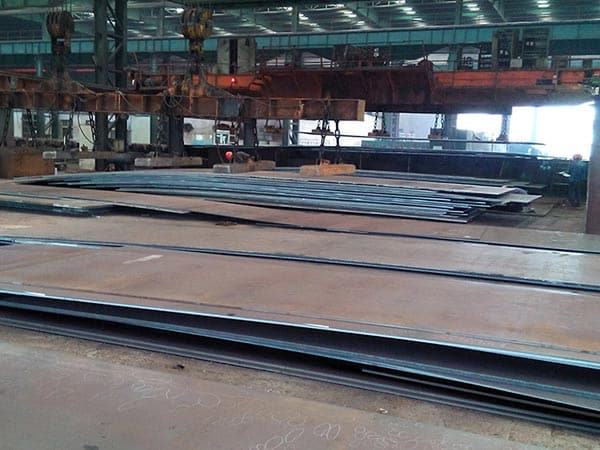
Technical Foundations: Defining S500MC and Tool Steel
In the complex landscape of metallurgy, the distinction between S500MC steel and tool steel is fundamental yet often misunderstood by those outside the engineering core. S500MC is a high-yield-strength, hot-rolled steel designed specifically for cold forming. It belongs to the EN 10149-2 standard, characterized by its thermomechanically rolled process. Conversely, tool steel refers to a broad category of carbon and alloy steels that are particularly well-suited to be made into tools. While both materials boast impressive strength, their internal logic, chemical makeup, and performance objectives diverge significantly.
S500MC is engineered for structural efficiency, aiming to reduce weight while maintaining high load-bearing capacity. Tool steels, such as D2, H13, or O1, are engineered for hardness, abrasion resistance, and the ability to hold a cutting edge at elevated temperatures. Understanding these differences is crucial for procurement and design, as substituting one for the other could lead to catastrophic structural failure or tool degradation.
Chemical Composition and Microstructural Integrity
The chemical profile of S500MC is lean and precise. It is a micro-alloyed steel, meaning it uses small additions of niobium (Nb), vanadium (V), or titanium (Ti) to refine the grain structure during the thermomechanical rolling process. This grain refinement is the secret behind its high yield strength (minimum 500 MPa) and excellent toughness. The carbon content is kept low (typically below 0.12%) to ensure superior weldability and cold formability.
Tool steels operate on a different chemical philosophy. They often contain high levels of carbon (0.5% to over 2%) and significant alloying elements like chromium, molybdenum, tungsten, and vanadium. These elements form hard carbides within the steel matrix, providing the wear resistance necessary for cutting, stamping, and molding. Unlike S500MC, tool steels are designed to undergo complex heat treatment cycles, including quenching and tempering, to reach their final hardness levels, often measured on the Rockwell C scale (HRC).
Mechanical Performance: Yield vs. Hardness
When evaluating S500MC steel complete specifications, the focus is primarily on yield strength, tensile strength, and elongation. S500MC provides a reliable yield point that allows for thinner sections in automotive frames or crane arms without sacrificing safety. Its ductility is a key feature, allowing it to be bent and folded without cracking.
Tool steel performance is measured by red hardness (resistance to softening at heat), toughness (resistance to chipping), and wear resistance. While S500MC might deform under extreme pressure, tool steel is designed to resist deformation entirely until it reaches its brittle fracture point. The following table highlights the core differences in their typical mechanical profiles:
| Property | S500MC (EN 10149-2) | Typical Tool Steel (e.g., D2) |
|---|---|---|
| Yield Strength | Min. 500 MPa | Variable (High after hardening) |
| Tensile Strength | 550 - 700 MPa | Up to 2000+ MPa |
| Hardness | Approx. 150-180 HB | 58 - 62 HRC (Hardened) |
| Weldability | Excellent | Poor (Requires pre/post heat) |
| Primary Processing | Cold Forming / Bending | Machining / Grinding / Heat Treat |
Processing Characteristics and Fabrication Utility
The fabrication path for S500MC is streamlined for mass production. Because of its low carbon equivalent, it can be welded using standard methods like MIG, TIG, or submerged arc welding without the risk of cold cracking in the heat-affected zone (HAZ). Its cold forming properties are exceptional, allowing for tight bend radii that are essential in the manufacturing of chassis components and longitudinal beams.
Tool steel fabrication is significantly more labor-intensive. It is usually supplied in an annealed state to allow for machining into complex shapes. Once the tool or die is formed, it must undergo a precise vacuum or salt bath heat treatment to achieve its functional hardness. Post-heat treatment, the material is often too hard for conventional milling and must be finished via electrical discharge machining (EDM) or grinding. The risk of distortion during heat treatment is a constant concern for tool steel, a factor that is non-existent for S500MC.
Industry Applications and Specification Scope
S500MC finds its home in the transportation and heavy machinery sectors. It is the material of choice for:
- Truck chassis frames and cross members
- Telescopic booms for mobile cranes
- Cold-pressed parts for agricultural machinery
- Structural tubing for high-load environments
Tool steel is reserved for the "shapers" of industry. Its applications include:
- Injection molds for plastics
- Stamping dies for automotive body panels
- Cutting tools like drills, taps, and end mills
- High-pressure die casting tools
Environmental Adaptability and Longevity
S500MC is often used in outdoor environments where it is subjected to cyclic loading and vibration. Its fine-grained structure provides good fatigue resistance, though it requires protective coatings (like galvanizing or painting) to prevent corrosion, as it is not a stainless or weathering grade. Its performance at low temperatures is also a highlight, with many specifications meeting impact test requirements at -20°C or -40°C.
Tool steels are often used in controlled industrial environments, but they must withstand extreme thermal cycling (in the case of hot-work tool steels like H13) or intense abrasive friction. The longevity of tool steel is measured in "cycles" or "hits" before the tool requires regrinding or replacement. While S500MC is built to last the lifetime of a vehicle, tool steel is a high-performance consumable that maintains the precision of the manufacturing process.
Selection Strategy: Choosing the Right Material
The question of whether S500MC and tool steel are the same is answered by the intended function of the end product. If the goal is to build a lightweight, strong, and weldable structure that can be mass-produced through bending and welding, S500MC is the undisputed winner. If the requirement is to cut, shape, or mold other materials under high pressure and heat, tool steel is the only viable option.
Designers must look beyond the "high strength" label. S500MC offers structural strength (the ability to carry a load), while tool steel offers surface strength (the ability to resist wear and deformation). Confusing these two can lead to either a tool that shatters upon first use or a structural frame that is impossible to weld and prohibitively expensive to machine. By respecting the specific complete specifications of each grade, engineers can optimize both the performance and the cost-effectiveness of their industrial projects.
Leave a message