
What are the characteristics of qualified S315MC auto steel flat
Technical analysis of S315MC automotive steel flats, covering chemical composition, mechanical yield limits, cold forming performance, and welding specs.
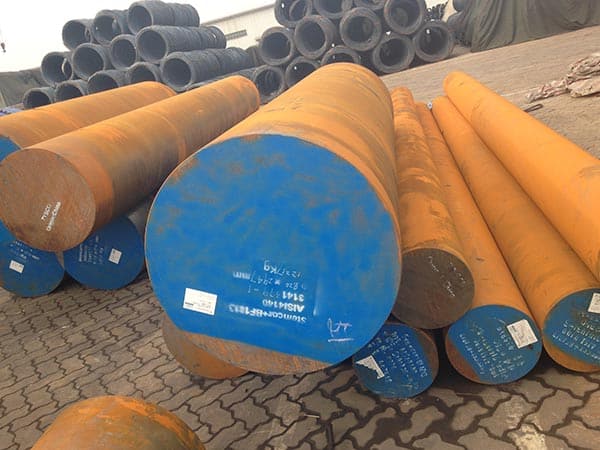
Technical Breakdown of S315MC Automotive Steel
S315MC stands as a micro-alloyed, high-strength cold-forming steel, governed by the EN 10149-2 standard. In the automotive manufacturing chain, engineers select this grade for structural components that demand a balance between weight reduction and load-bearing capacity. A qualified S315MC auto steel flat does not just meet a label; it must perform under the press and maintain integrity during high-speed assembly.
Chemical Composition and Grain Refinement
The performance of S315MC starts in the melt shop. Unlike standard carbon steels, S315MC relies on thermomechanical rolling and precise micro-alloying. The 'MC' designation indicates a thermomechanically rolled material designed for cold forming.
- Carbon (C) Content: Kept below 0.12%. Low carbon ensures the steel remains ductile and easy to weld without preheating.
- Manganese (Mn): Usually capped around 1.30%. Manganese increases strength and hardness while improving the steel's response to heat treatment.
- Silicon (Si): Limited to 0.50% to prevent brittleness during cold work.
- Micro-alloying Elements (Nb, V, Ti): These are the workhorses. Niobium, Vanadium, and Titanium refine the grain structure. Small additions (totaling less than 0.22%) prevent grain growth during rolling, creating a fine-grained microstructure that stops cracks from propagating.
- Phosphorus (P) and Sulfur (S): These impurities are strictly controlled (typically <0.025% and <0.020% respectively) to avoid hot shortness and lamellar tearing.
Mechanical Property Benchmarks
A qualified S315MC flat must hit specific physical numbers during tensile testing. If the batch fails these, the automotive frame might buckle or crack under fatigue.
| Property | Requirement (Thickness ≤ 8mm) |
|---|---|
| Yield Strength (ReH) | Min 315 MPa |
| Tensile Strength (Rm) | 390 - 510 MPa |
| Elongation (A80mm) | Min 20% |
| Elongation (A5) | Min 24% |
The yield strength is the critical floor. At 315 MPa, the steel provides enough resistance to handle the static and dynamic loads of a vehicle chassis. The narrow gap between yield and tensile strength allows for predictable deformation during stamping processes.
Cold Forming and Bending Performance
Automotive flats undergo intense bending and flanging. S315MC is engineered to bend 180 degrees over a specific mandrel radius without showing surface fissures. For thicknesses under 3mm, the bending radius is typically 0.5 times the thickness (0.5t). For thicker plates up to 6mm, it moves to 1t.
Qualified material exhibits isotropic behavior, meaning the properties remain consistent whether you bend it longitudinal or transverse to the rolling direction. This consistency prevents 'springback' issues in automated production lines, where a 1-degree deviation can ruin a batch of chassis rails.
Weldability in Automated Environments
In modern car plants, robots perform thousands of spot and arc welds daily. S315MC accommodates this through a low carbon equivalent (CEV). Because the steel lacks heavy alloying, it does not form brittle martensite in the heat-affected zone (HAZ) after welding.
Welding Methods
- MAG/MIG Welding: Works seamlessly with standard filler wires.
- Laser Welding: High-precision joins remain stable due to the clean chemical profile of the steel.
- Resistance Spot Welding: Common for brackets and reinforcements; S315MC provides consistent electrical resistance for uniform nugget formation.
Surface Quality and Dimensional Tolerances
A 'flat' is only useful if it is actually flat. Automotive standards (like EN 10051) dictate strict tolerances for thickness, width, and flatness. A qualified S315MC flat should show no heavy scale, pits, or scratches that could act as stress concentrators. Most automotive flats are supplied in a 'pickled and oiled' (P&O) state to remove mill scale, ensuring the steel is ready for painting or galvanizing immediately after forming.
Application Scenarios
Where do you find S315MC? It is the backbone of the vehicle's structural integrity. You will find it in:
- Truck Chassis Rails: Providing the stiffness needed for heavy loads.
- Cross Members: Linking the main frame components.
- Cold Pressed Parts: Complex brackets and seat frames where standard S235 steel is too weak and S420 is too difficult to form.
- Drip Rails and Pillars: Managing the energy transfer during a collision.
Summary of Quality Indicators
To verify if an S315MC auto steel flat is qualified, check the Mill Test Certificate (MTC). It must confirm the EN 10149-2 standard, show a yield strength above 315 MPa, and prove a fine-grained microstructure through metallurgical reporting. If the steel cracks during a 1t bend test or shows sulfur levels above 0.020%, it fails the automotive grade requirement. High-quality S315MC allows manufacturers to down-gauge (use thinner sheets) to save weight without sacrificing the safety of the vehicle structure.
Leave a message