
What are the main factors affecting the hardenability of S550MC
A deep dive into the metallurgical factors, chemical elements, and thermal processes that dictate the hardenability of S550MC high-strength low-alloy steel.
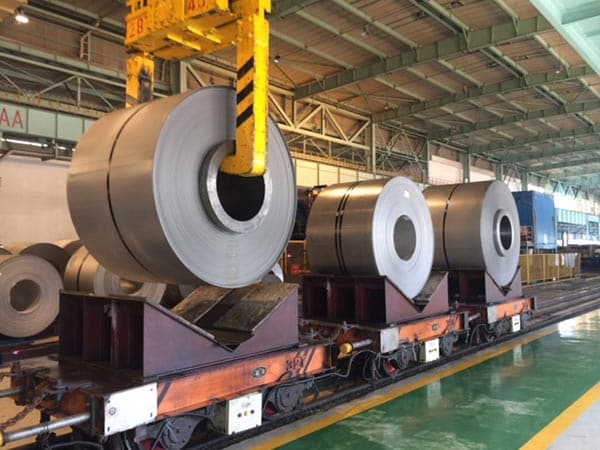
Understanding the Hardenability of S550MC Steel
S550MC is a high-strength low-alloy (HSLA) steel, primarily governed by the EN 10149-2 standard. Unlike traditional carbon steels, S550MC achieves its mechanical properties through thermomechanical rolling. However, when engineers discuss hardenability in the context of S550MC, they often confuse it with its yield strength. Hardenability refers specifically to the depth and distribution of hardness induced by quenching from a high temperature. For S550MC, several variables dictate how the microstructure transforms from austenite into martensite, bainite, or pearlite.
The Impact of Chemical Composition
Chemistry drives the bus in metallurgy. While S550MC is designed for weldability and cold forming, its elemental makeup sets the ceiling for its hardenability.
Carbon Content: The Hardness Ceiling
Carbon is the primary hardening agent in any steel. In S550MC, carbon levels are kept low, typically below 0.12%. This low carbon content ensures excellent weldability but limits the maximum attainable hardness. Carbon atoms sit in the interstitial sites of the iron lattice; during a rapid quench, they distort the lattice to form martensite. With only 0.12% carbon, the resulting martensite lacks the extreme hardness found in tool steels, affecting the overall hardenability profile.
Manganese and Its Role in Shifting Transformation Curves
Manganese (Mn) is a critical alloying element in S550MC, usually present in amounts up to 1.60%. Manganese increases hardenability by slowing down the transformation of austenite into ferrite and pearlite. By shifting the Continuous Cooling Transformation (CCT) curves to the right, manganese allows for slower cooling rates to still achieve a hardened structure. It effectively gives the steel more 'time' to bypass the pearlite nose during quenching.
Micro-alloying Elements: Nb, V, and Ti
S550MC relies heavily on Niobium (Nb), Vanadium (V), and Titanium (Ti). These elements are not just for strength; they influence how the steel reacts to heat. These micro-alloys form stable carbides and nitrides. During heating, these particles pin the grain boundaries, preventing grain growth. While fine grains generally decrease hardenability, they are essential for the toughness and yield strength that define S550MC.
Austenitizing Conditions and Grain Size
How you heat the steel matters as much as what is in it. The state of the austenite before quenching determines the final outcome.
Temperature and Soaking Time
To harden S550MC, you must first transform it into a fully austenitic state. If the temperature is too low, or the soaking time too short, carbides may not fully dissolve. Undissolved carbides act as nucleation sites for non-martensitic products, which kills hardenability. Conversely, excessive heat leads to grain coarsening. Larger austenite grains actually increase hardenability because there are fewer grain boundaries to nucleate ferrite, but this comes at the cost of severe brittleness.
The Grain Size Paradox
In S550MC, the fine-grained structure is a double-edged sword. A fine grain size increases the total surface area of grain boundaries. Since ferrite and pearlite prefer to nucleate at these boundaries, a fine-grained S550MC will transform more quickly during cooling, effectively lowering its hardenability. Engineers must balance the need for high yield strength (fine grains) with the depth of hardening required for specific parts.
Cooling Rates and Quenching Media
Hardenability is useless if the cooling rate doesn't match the steel's chemistry. The rate at which heat is extracted from the S550MC part determines the final phase distribution.
- Water Quenching: Provides the fastest cooling rate. It is often necessary for S550MC due to its low alloy content to ensure the core reaches the required hardness.
- Oil Quenching: Slower than water. While it reduces the risk of cracking and distortion, it might not be fast enough to prevent the formation of bainite in thicker sections of S550MC.
- Air Cooling: In S550MC, air cooling usually results in a ferritic-pearlitic structure, which is the standard delivery state for thermomechanically rolled sheets.
The Mass Effect and Section Thickness
The geometry of the part plays a massive role. In a thin S550MC sheet, heat escapes rapidly from the center to the surface. In a thick plate, the center stays hot for much longer. Because S550MC has relatively low hardenability compared to high-alloy steels, the 'mass effect' is pronounced. You may find that the surface of a 10mm plate reaches the desired hardness, while the core remains soft because the cooling rate at the center was too slow to bypass the pearlite transformation.
Comparison Table: S550MC Chemical Limits (EN 10149-2)
| Element | Maximum Weight % | Effect on Hardenability |
|---|---|---|
| Carbon (C) | 0.12 | Determines peak hardness potential |
| Manganese (Mn) | 1.60 | Significantly increases depth of hardening |
| Silicon (Si) | 0.50 | Mildly increases hardenability |
| Niobium (Nb) | 0.09 | Refines grain, slightly lowers hardenability |
| Titanium (Ti) | 0.15 | Pins grains, affects transformation kinetics |
Summary of Practical Considerations
When working with S550MC, you aren't looking for deep hardening like you would in a 4140 chrome-moly steel. Instead, you are managing a delicate balance. If your process requires increased hardenability for specific components made from S550MC, you must focus on the cooling gradient and ensure that the austenitizing temperature is high enough to dissolve micro-alloys without triggering massive grain growth. Ultimately, the hardenability of S550MC is a product of its lean alloy design, optimized more for strength-to-weight ratios and weldability than for deep through-hardening capabilities.
Leave a message