
How to cut s500mc data sheet
Master the processing of S500MC high-strength steel. This guide provides a deep dive into S500MC data sheets, mechanical properties, laser cutting parameters, and welding techniques for industrial applications.
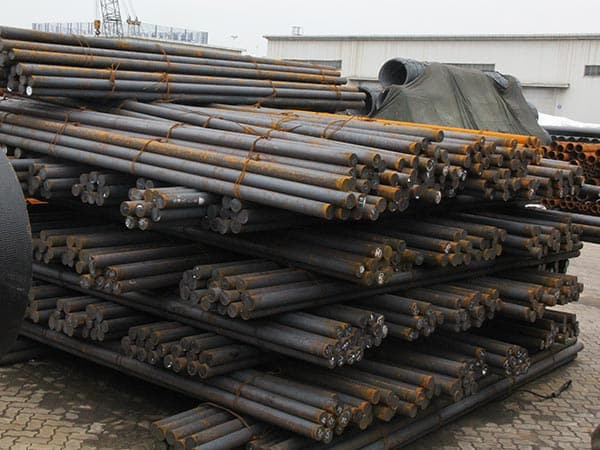
Understanding the Essence of S500MC: Beyond the Data Sheet
S500MC is a high-strength, thermomechanically rolled steel specifically designed for cold forming applications, governed by the European standard EN 10149-2. The nomenclature itself reveals its core identity: 'S' denotes structural steel, '500' represents the minimum yield strength of 500 MPa, 'M' indicates its thermomechanical rolling process, and 'C' signifies its suitability for cold forming. This material is a cornerstone of modern lightweight engineering, offering a superior strength-to-weight ratio compared to traditional structural steels like S355.
The thermomechanical rolling process (TMCP) is what sets S500MC apart. Unlike conventional normalized steels, S500MC achieves its high strength through a carefully controlled cooling process and micro-alloying, rather than high carbon content. This metallurgical strategy results in an exceptionally fine grain structure, which is the primary driver behind its excellent toughness and weldability. For manufacturers, understanding these underlying physics is crucial for optimizing cutting and forming operations.
How to Cut S500MC: Precision Techniques and Parameters
Cutting S500MC requires a nuanced approach because its high yield strength and micro-alloyed composition react differently to thermal and mechanical stresses than standard carbon steels. Achieving a clean edge without compromising the material's structural integrity is the ultimate goal.
Laser Cutting: The Gold Standard for S500MC
Laser cutting is the preferred method for S500MC due to its precision and minimal Heat Affected Zone (HAZ). When cutting S500MC, the choice of auxiliary gas is paramount. Oxygen (O2) cutting is often used for thicker plates to leverage the exothermic reaction, which increases cutting speed. However, for S500MC, Nitrogen (N2) cutting is frequently recommended for thicknesses up to 6mm or 8mm to ensure an oxide-free edge, which is vital if the part is to be painted or powder-coated later.
- Focal Position: For fiber lasers, the focal point should be positioned slightly below the surface for oxygen cutting and deeper into the material for nitrogen cutting to ensure efficient melt expulsion.
- Cutting Speed: While S500MC allows for high speeds, exceeding the optimal limit can lead to 'dross' or burr formation at the bottom edge, which is harder to remove due to the steel's inherent strength.
- Nozzle Selection: Use double nozzles for oxygen cutting to stabilize the gas flow and prevent turbulence that can cause edge roughness.
Plasma Cutting: Efficiency for Heavy Sections
For thicker S500MC plates where laser cutting might become cost-prohibitive, high-definition plasma cutting is a robust alternative. It is essential to manage the heat input carefully. Because S500MC relies on a fine-grained structure for its properties, excessive heat from slow plasma cutting can cause localized grain growth, slightly reducing the yield strength at the very edge of the cut.
Mechanical Shearing and Blanking
When using mechanical methods, the shear strength of S500MC must be accounted for. Typically, the shear strength is approximately 70-80% of the tensile strength. This means that shearing S500MC requires significantly more force than shearing S355. Ensure that the blade clearance is set correctly—usually between 12% and 15% of the material thickness—to prevent premature tool wear and to achieve a clean break-over zone.
S500MC Technical Data Sheet: Chemical and Mechanical Analysis
A deep dive into the S500MC data sheet reveals the meticulous balance of elements that allow for such high performance. The low carbon content is particularly noteworthy, as it is the key to the material's exceptional weldability and cold-forming capacity.
| Chemical Element | Maximum Content (%) | Role in S500MC Metallurgy |
|---|---|---|
| Carbon (C) | 0.12 | Ensures excellent weldability and prevents brittleness. |
| Manganese (Mn) | 1.60 | Increases strength and hardness through solid solution strengthening. |
| Silicon (Si) | 0.50 | Acts as a deoxidizer and contributes to strength. |
| Phosphorus (P) | 0.025 | Kept low to maintain low-temperature toughness. | 0.015 | Minimized to prevent lamellar tearing and improve ductility. |
| Niobium (Nb) + Vanadium (V) + Titanium (Ti) | 0.22 (Combined) | Micro-alloying elements for grain refinement and precipitation hardening. |
The mechanical properties are where S500MC truly shines. The narrow gap between yield and tensile strength indicates a material that is highly efficient but requires precision during the engineering phase to avoid overstressing.
| Property | Value (Thickness ≤ 8mm) | Implication for Engineering |
|---|---|---|
| Min. Yield Strength (ReH) | 500 MPa | High load-bearing capacity for structural components. |
| Tensile Strength (Rm) | 550 - 700 MPa | Provides a safety margin beyond the yield point. |
| Min. Elongation (A5) | 12% - 14% | Allows for significant deformation during cold forming. |
Advanced Cold Forming and Bending Dynamics
S500MC is designed to be bent, but its high strength introduces 'springback'—the tendency of the metal to return to its original shape after the bending force is removed. When calculating the bend angle, engineers must over-bend the material more than they would with standard structural steel. The springback for S500MC can be 2-3 times greater than that of S355.
The minimum bending radius (Ri) is another critical factor. For S500MC, the recommended minimum radius for a 90-degree bend transverse to the rolling direction is typically 1.0 times the thickness (t), and 1.5t when bending longitudinal to the rolling direction. Ignoring these limits can lead to micro-cracking at the outer tension zone of the bend, which significantly compromises the fatigue life of the component.
Welding S500MC: Maintaining Metallurgical Integrity
Due to its low Carbon Equivalent Value (CEV), S500MC is exceptionally easy to weld using standard methods like MAG (Metal Active Gas), MIG, or Laser welding. However, the high-strength properties derived from the thermomechanical rolling process are sensitive to excessive heat input.
- Heat Input Control: Keep the heat input low to prevent the 'softening' of the Heat Affected Zone (HAZ). If the HAZ stays at high temperatures for too long, the fine grain structure can coarsen, leading to a localized drop in yield strength.
- Filler Materials: Use filler metals that match the strength of the base material. For S500MC, electrodes or wires classified as ER80S-D2 or similar are often appropriate.
- Preheating: Generally, S500MC does not require preheating unless the ambient temperature is extremely low or the plate thickness is at the upper limit, reducing the risk of hydrogen-induced cracking.
Industrial Implementation and Application Expansion
The move toward sustainability and fuel efficiency has propelled S500MC into various high-performance sectors. By using S500MC, manufacturers can reduce the thickness of structural parts by 20-30% compared to S355 without losing structural integrity. This weight reduction is critical in the automotive industry for truck chassis, cross members, and suspension parts, where every kilogram saved translates into higher payload capacity and lower CO2 emissions.
Beyond transportation, S500MC is widely utilized in the production of crane arms, agricultural machinery, and heavy-duty storage racking. Its ability to withstand dynamic loads and its excellent fatigue resistance make it ideal for environments where vibration and repeated stress are common. Furthermore, its surface quality, often provided in a pickled and oiled condition, ensures that it is ready for high-speed automated processing, reducing prep time and increasing overall manufacturing throughput.
Operational success with S500MC depends on a holistic understanding of its life cycle—from the initial interpretation of the data sheet to the final surface treatment. By respecting the material's metallurgical limits while leveraging its high-strength advantages, engineers can create products that are not only lighter and stronger but also more cost-effective in the long run.
Leave a message