
s355mc vs s355j2 prices continue to be weak and downward
Explore the critical differences between S355MC and S355J2 steel grades. This expert guide covers metallurgy, mechanical performance, application scenarios, and a deep dive into current market price factors.
Introduction to S355MC and S355J2 Engineering Grades
In the current global industrial landscape, the choice between S355MC and S355J2 steel grades often dictates the structural integrity and cost-efficiency of heavy-duty projects. While both share the '355' designation—indicating a minimum yield strength of 355 MPa—they belong to fundamentally different European standards: EN 10149-2 for S355MC and EN 10025-2 for S355J2. Understanding their divergence is essential as market prices for both continue to face downward pressure due to shifting demand in the automotive and construction sectors.
Metallurgical Composition and Manufacturing Processes
The core difference between these two grades lies in their production methodology. S355MC is a thermomechanically rolled (TMCP) steel. This process involves precise temperature control during rolling to achieve a fine-grained microstructure without the need for additional heat treatment. It utilizes micro-alloying elements like Niobium (Nb), Vanadium (V), and Titanium (Ti) to enhance strength and toughness simultaneously.
Conversely, S355J2 is a non-alloy structural steel, typically supplied in a normalized or as-rolled condition. Its chemistry relies more on Carbon (C) and Manganese (Mn) content to achieve its properties. The 'J2' suffix signifies that the material has undergone Charpy V-notch impact testing at -20°C, ensuring its reliability in cold-weather environments where brittle fracture is a risk.
| Element (%) | S355MC (Max) | S355J2 (Max) |
|---|---|---|
| Carbon (C) | 0.12 | 0.20 |
| Manganese (Mn) | 1.50 | 1.60 |
| Silicon (Si) | 0.50 | 0.55 |
| Phosphorus (P) | 0.025 | 0.025 |
| Sulfur (S) | 0.020 | 0.025 |
The lower carbon content in S355MC provides it with a significantly lower Carbon Equivalent (CEV), which directly translates to superior weldability compared to S355J2, particularly in automated welding lines where heat input control is critical.
Mechanical Performance: Strength vs. Ductility
While both grades target 355 MPa yield strength, their behavior under stress varies. S355MC is engineered for high-strength applications where weight reduction is paramount. Its high elongation values allow for complex cold forming and bending without cracking. This makes it a staple in the manufacturing of truck chassis, crane arms, and cold-pressed sections.
S355J2, however, is the backbone of general civil engineering. It offers robust performance in heavy plates used for bridges, skyscrapers, and offshore platforms. The mandatory impact energy of 27J at -20°C makes S355J2 the safer choice for load-bearing structures exposed to the elements. While S355MC also possesses good low-temperature properties, its primary focus is on the balance between strength and formability.
- S355MC: Excellent for cold forming, high fatigue resistance, and weight-saving designs.
- S355J2: Superior for heavy structural loads, guaranteed impact toughness at sub-zero temperatures, and widely available in thick plates.
Processing Characteristics and Industrial Suitability
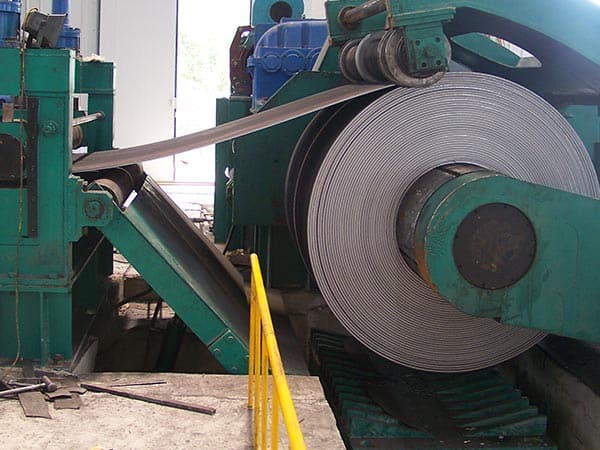
From a fabrication perspective, S355MC excels in laser cutting and bending operations. Its fine-grained structure ensures a clean cut edge and consistent spring-back during folding. Manufacturers in the automotive sector prefer S355MC because it allows for thinner sections without compromising the structural safety of the vehicle frame, thereby improving fuel efficiency through mass reduction.
S355J2 is often preferred in heavy machining and structural welding. Its availability in a wider range of thicknesses (often up to 250mm or more) makes it indispensable for heavy machinery bases and large-scale infrastructure. Because S355J2 is a standard non-alloy steel, it is also easier to source in smaller quantities for diverse regional projects, whereas S355MC is typically purchased in large coils for industrial processing.
Current Market Price Analysis: Why the Downward Trend?
The observation that s355mc vs s355j2 prices continue to be weak and downward is driven by several macroeconomic factors. First, the global slowdown in the manufacturing and construction sectors has led to an oversupply of hot-rolled coils and plates. With high interest rates dampening investment in new infrastructure, the demand for S355J2 has stagnated. Similarly, the automotive industry's transition toward electric vehicles has caused a temporary lull in traditional chassis steel consumption, affecting S355MC prices.
Furthermore, raw material costs, specifically iron ore and coking coal, have seen volatility but generally trended lower as global steel production capacity outpaces current consumption. The price gap between S355MC and S355J2 has also narrowed. Historically, S355MC carried a premium due to the TMCP technology required; however, as production efficiency improves and mills compete for market share, this premium is eroding, making high-performance TMCP steels more accessible to mid-tier manufacturers.
Environmental Adaptability and Sustainability
In terms of environmental adaptability, S355J2 remains the standard for outdoor structures in temperate and cold climates. Its resistance to brittle fracture is well-documented and verified through rigorous testing protocols. S355MC, while highly durable, is more sensitive to high-heat environments. If S355MC is subjected to temperatures exceeding 580°C (such as during hot-dip galvanizing or stress-relieving), there is a risk of losing the strength gains achieved through the TMCP process.
From a sustainability perspective, the ability to use S355MC to reduce the total weight of a structure (down-gauging) is a significant advantage. Using less steel to achieve the same strength reduces the carbon footprint of the final product—a factor increasingly prioritized by European and North American engineering firms under ESG (Environmental, Social, and Governance) mandates.
Strategic Selection: Choosing the Right Grade
Selecting between these two grades requires a balance of technical requirements and economic reality. If the project involves intricate bending, weight sensitivity, and automated welding, S355MC is the clear winner, especially with current low price points making it a high-value option. If the project involves thick sections, heavy structural loads, and strict safety requirements for low-temperature impact, S355J2 remains the industry benchmark.
Engineers should also consider the surface finish. S355MC usually has a tighter scale and a smoother surface due to the TMCP process, which can reduce the cost of surface preparation before painting or coating. S355J2 plates may require more intensive shot-blasting if a high-quality finish is required for aesthetic or protective reasons.
The current downward price trend offers a unique opportunity for procurement departments to secure high-quality S355MC or S355J2 materials at lower margins. Monitoring the spread between these grades is essential for optimizing the bill of materials in large-scale manufacturing and construction operations.
Leave a message