
What is the S500MC thermomechanically rolled steels machining
A comprehensive technical guide to S500MC thermomechanically rolled steel machining, covering mechanical properties, chemical composition, welding, and industrial applications.
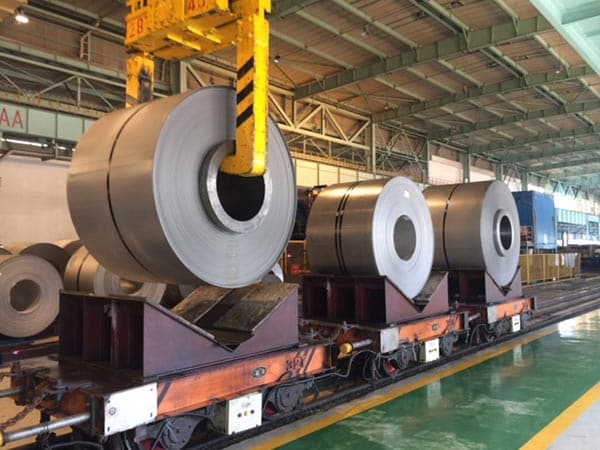
Understanding the Essence of S500MC Thermomechanically Rolled Steel
S500MC is a high-yield-strength steel designed specifically for cold forming, governed by the European standard EN 10149-2. The designation "S" stands for structural steel, "500" indicates a minimum yield strength of 500 MPa, and "MC" signifies that the material is thermomechanically rolled (M) and intended for cold forming (C). This steel represents a pinnacle of metallurgical engineering, balancing extreme strength with remarkable ductility and weldability.
The thermomechanical rolling process (TMCP) is what sets S500MC apart from traditional normalized steels. By controlling the temperature and the deformation during the rolling process, manufacturers achieve a fine-grained microstructure that is impossible to replicate through heat treatment alone. This refined grain structure is the primary reason why S500MC can offer such high strength without the heavy alloying elements that typically compromise weldability and toughness. When we discuss S500MC thermomechanically rolled steels machining, we are looking at a material that behaves differently under a cutting tool compared to standard carbon steels like S235 or S355.
Chemical Composition and Its Impact on Machinability
The machinability of S500MC is directly influenced by its lean chemical composition. Unlike older generations of high-strength steels, S500MC utilizes micro-alloying elements such as Niobium (Nb), Vanadium (V), and Titanium (Ti) in very small quantities. These elements facilitate grain refinement and precipitation hardening without significantly increasing the carbon equivalent (CEV).
| Element | Maximum Content (%) |
|---|---|
| Carbon (C) | 0.12 |
| Manganese (Mn) | 1.60 |
| Silicon (Si) | 0.50 |
| Phosphorus (P) | 0.025 |
| Sulfur (S) | 0.015 |
| Aluminium (Al) | 0.015 |
| Nb + V + Ti | 0.22 |
The low carbon content (max 0.12%) is a critical factor for machining. It ensures that the steel does not form hard, brittle martensite in the heat-affected zone (HAZ) during thermal cutting or welding. However, the high manganese content and the micro-alloys increase the toughness, which can lead to higher cutting forces and potential work hardening if the machining parameters are not optimized.
Mechanical Properties: Beyond the Yield Strength
While the 500 MPa yield strength is the headline figure, the machining and forming behavior of S500MC is equally dictated by its tensile strength and elongation. The material maintains a high level of uniformity across the entire plate, which is essential for automated CNC machining and robotic welding.
- Yield Strength (ReH): Minimum 500 MPa.
- Tensile Strength (Rm): 550 - 700 MPa.
- Elongation (A80): Minimum 12% to 14% depending on thickness.
- Bending Radius: Can be bent to very tight radii (typically 0.5t to 1.5t) without cracking.
These properties imply that while the material is strong, it possesses enough "give" to be processed extensively. In machining operations like drilling or milling, the high tensile strength means the tool must overcome significant resistance, but the consistent microstructure prevents sudden tool failure caused by hard spots often found in lower-quality steels.
Optimizing Machining Processes for S500MC
Machining S500MC requires a strategic approach to tool selection and cutting parameters. Because it is a high-strength low-alloy (HSLA) steel, it is more abrasive than mild steel. Carbide tooling is highly recommended over High-Speed Steel (HSS) for any high-volume production.
Drilling Operations: When drilling S500MC, heat dissipation is the primary concern. The material's toughness can cause heat to build up at the drill tip. Using internal cooling (through-tool coolant) is the most effective way to maintain tool life. For twist drills, a point angle of 135 degrees with a split point is ideal to reduce thrust forces. Cutting speeds (Vc) should typically range between 40-60 m/min for HSS and 80-120 m/min for coated carbide drills.
Milling and Turning: For milling, climb milling is preferred to reduce work hardening at the entry point of the cutter. Positive rake geometries help in shearing the material more efficiently, reducing the load on the machine spindle. In turning, chip breaking can be a challenge due to the material's ductility. Selecting a chip breaker geometry designed for "tough" materials will prevent the formation of long, stringy chips that can mar the workpiece surface or tangle in the chuck.
Thermal Cutting: Laser, Plasma, and Flame
S500MC is an excellent candidate for thermal cutting. Its low carbon equivalent ensures that the cut edges remain relatively soft and workable. However, the precision of the cut depends heavily on the technology used.
- Laser Cutting: This is the most common method for S500MC. Due to the clean surface finish of thermomechanically rolled plates (which often have less scale than hot-rolled plates), laser absorption is consistent. Nitrogen is often used as a shielding gas for thinner gauges to ensure a burr-free, oxide-free edge that is ready for welding or painting.
- Plasma Cutting: For thicker sections, high-definition plasma cutting provides a cost-effective balance between speed and precision. The heat-affected zone is slightly larger than laser cutting but remains well within acceptable limits for structural integrity.
- Oxygen-Fuel Cutting: While possible, it is less common for S500MC unless dealing with very thick plates. The higher heat input can lead to more distortion, which must be managed through proper clamping and sequence planning.
Cold Forming and Bending Performance
One of the primary reasons engineers select S500MC is its superior cold forming capability. Unlike standard S500 grade steels, the "MC" variant is optimized for tight bends. This is vital in the manufacturing of truck chassis, crane arms, and structural profiles where weight reduction is achieved by using thinner, high-strength sections instead of thick, heavy mild steel.
When bending S500MC, it is important to account for springback. Because the yield strength is higher than S355, the material will tend to return toward its original shape more forcefully after the pressure is released. Modern CNC press brakes with angle sensors are ideal for this material. The minimum inner bending radius for S500MC is remarkably low, often allowing for compact designs that save space and material.
Welding Characteristics of S500MC
Welding S500MC is straightforward, provided the correct consumables and heat inputs are used. The fine-grained structure is sensitive to excessive heat; if the heat input is too high for too long, the grains in the heat-affected zone can grow, leading to a localized loss of strength.
Recommended Welding Methods: MAG (Metal Active Gas) welding is the industry standard for S500MC. Using a shielding gas mix of Argon and CO2 provides a stable arc and deep penetration. For filler materials, wires matching the yield strength (e.g., ER80S-D2 or equivalent) should be used. Preheating is generally not required for thicknesses under 20mm, which is a significant advantage in reducing production time and energy costs.
Post-Weld Heat Treatment (PWHT): Generally, PWHT is not recommended for S500MC. The thermomechanical properties are achieved through the rolling process; subjecting the welded assembly to high-temperature stress relief can degrade the mechanical properties of the base metal. If stress relief is mandatory, it must be performed with strict temperature controls, usually not exceeding 580°C.
Environmental Adaptability and Durability
S500MC exhibits good atmospheric corrosion resistance compared to standard carbon steels, although it is not "weathering steel." In most industrial applications, it is protected by galvanizing, priming, or powder coating. The surface quality of thermomechanically rolled steel is typically smoother and cleaner than hot-rolled steel, providing an excellent substrate for protective coatings.
Furthermore, S500MC maintains its toughness at lower temperatures. While the standard EN 10149-2 focuses on ambient temperature properties, many manufacturers produce S500MC with guaranteed impact toughness at -20°C or even -40°C. This makes it suitable for equipment operating in harsh, cold environments, such as offshore structures or arctic transport vehicles.
Broadening Industry Applications
The unique combination of high strength, low weight, and excellent processing characteristics has made S500MC a staple in several high-performance industries.
- Automotive and Transportation: Used extensively for truck frames, chassis members, and cross-beams. The weight savings directly translate to higher payloads and better fuel efficiency.
- Lifting and Handling Equipment: Crane booms, forklift carriages, and telehandler arms benefit from the high yield strength, allowing for longer reaches and higher lifting capacities without increasing the overall weight of the machine.
- Agricultural Machinery: Plow frames, trailer chassis, and harvester components require the durability and fatigue resistance that S500MC provides.
- Construction and Infrastructure: Cold-formed sections and profiles used in modern building designs often utilize S500MC to achieve slender, aesthetically pleasing structures that do not sacrifice safety.
The transition from traditional S355 to S500MC allows for a thickness reduction of approximately 25-30% while maintaining the same load-bearing capacity. This "down-gauging" is a key driver in sustainable engineering, reducing the total carbon footprint of the final product through material savings and reduced transport energy.
Technical Comparison: S500MC vs. Conventional Grades
To fully appreciate S500MC, it is helpful to compare it with other common grades. Compared to S355J2, S500MC offers nearly 40% higher yield strength with similar weldability. Compared to quenched and tempered (Q&T) steels like S690QL, S500MC is much easier to cold-form and weld, although it has lower absolute strength. It occupies a "sweet spot" in the engineering spectrum where high performance meets manufacturing ease.
In the context of machining, S500MC is more predictable than many commodity steels. The absence of large inclusions and the uniformity of the TMCP process mean that once a machining program is optimized, tool life and part quality remain consistent across thousands of units. This reliability is crucial for Tier 1 automotive suppliers and heavy equipment OEMs who operate on tight margins and strict schedules.
By understanding the metallurgical foundation and the physical limits of S500MC, manufacturers can push the boundaries of what is possible in metal fabrication. Whether it is through precision laser cutting, high-speed drilling, or complex robotic welding, S500MC remains a versatile and formidable material in the modern industrial landscape.
Leave a message