
How is the performance of S420MC steel for car body
Discover the technical performance of S420MC steel in automotive applications. This guide covers its mechanical properties, cold forming capabilities, and impact on vehicle lightweighting.
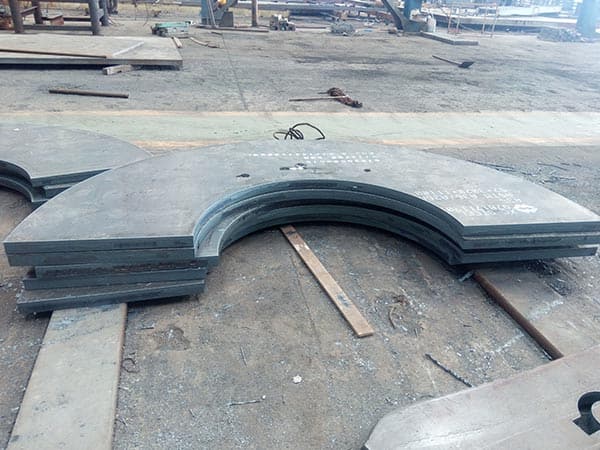
The Role of S420MC in Modern Automotive Engineering
In the pursuit of automotive lightweighting and enhanced safety, S420MC steel has emerged as a critical material. As a high-yield-strength cold-forming steel produced via thermomechanical rolling, it offers a unique balance of strength, ductility, and processability. Automotive manufacturers utilize S420MC to reduce vehicle weight without compromising structural integrity, which directly translates to improved fuel efficiency and lower emissions. This steel grade, governed by the EN 10149-2 standard, is specifically designed for components that require high load-bearing capacity and complex geometries.
Chemical Composition and Metallurgical Advantages
The performance of S420MC is rooted in its precise chemical composition. Unlike traditional carbon steels, S420MC utilizes micro-alloying elements such as Niobium (Nb), Vanadium (V), and Titanium (Ti). These elements facilitate grain refinement during the thermomechanical rolling process (TMCP). A finer grain structure is the primary reason why S420MC achieves a minimum yield strength of 420 MPa while maintaining excellent toughness.
The low carbon content (typically ≤ 0.12%) is another vital factor. It ensures that the material remains weldable and ductile. By keeping the carbon equivalent (CEV) low, the risk of cold cracking during welding is significantly reduced, which is a paramount concern in high-speed automated automotive assembly lines.
| Element | C (%) | Mn (%) | Si (%) | P (%) | S (%) | Al (%) | Nb (%) |
|---|---|---|---|---|---|---|---|
| S420MC Max Content | 0.12 | 1.60 | 0.50 | 0.025 | 0.015 | 0.015 | 0.09 |
Mechanical Performance and Structural Integrity
The "420" in S420MC refers to its minimum yield strength of 420 MPa. In the context of a car body, this strength is utilized in the chassis, cross members, and longitudinal beams. These parts must withstand significant static and dynamic loads. The tensile strength ranges between 480 and 620 MPa, providing a safety margin that prevents catastrophic failure under extreme stress.
One of the standout features of S420MC is its elongation property. With a minimum elongation of 16% to 19% (depending on thickness), it allows for significant energy absorption during a collision. This "crumple zone" capability is essential for passenger safety, as the steel deforms plastically to soak up kinetic energy rather than snapping or transferring the force directly to the cabin.
- Yield Strength: ≥ 420 MPa
- Tensile Strength: 480 - 620 MPa
- Elongation (A80mm): ≥ 16% (for thickness < 3mm)
- Impact Toughness: Excellent at low temperatures, preventing brittle fracture in cold climates.
Cold Forming and Stamping Excellence
Automotive components often feature complex shapes with tight radii. S420MC is specifically optimized for cold forming. Its high ductility allows it to be bent and stamped into intricate profiles without cracking or significant springback. This performance is critical for manufacturing chassis frames and suspension parts where precision is non-negotiable.
The thermomechanical rolling process ensures that the material has a uniform internal structure, which leads to consistent behavior during the stamping process. Manufacturers benefit from reduced scrap rates and longer tool life, as the steel's predictable flow characteristics minimize localized thinning and necking. When compared to traditional S355MC, S420MC provides a higher strength-to-weight ratio, allowing engineers to use thinner gauges to achieve the same structural performance.
Welding Characteristics in Automated Production
Welding is the primary joining method in car body construction. S420MC exhibits exceptional weldability across various methods, including Metal Active Gas (MAG) welding, laser welding, and resistance spot welding. Because of its low alloy content and fine grain structure, the Heat Affected Zone (HAZ) remains relatively stable.
In many high-strength steels, the heat from welding can lead to grain coarsening in the HAZ, which softens the material and creates a weak point. However, the micro-alloying elements in S420MC help pin the grain boundaries, maintaining much of the base metal's strength even after thermal cycling. This ensures that the welded joints are as robust as the parent material, a critical requirement for the long-term durability of a vehicle's frame.
Environmental Adaptability and Corrosion Resistance
While S420MC is not inherently a stainless steel, its surface quality and chemical purity make it an excellent substrate for various corrosion protection systems. In the automotive industry, S420MC components are typically hot-dip galvanized or coated with E-coat (electrophoretic deposition). The steel's low silicon content is particularly beneficial for galvanizing, as it prevents the formation of excessively thick and brittle zinc-iron alloy layers (the Sandelin effect).
Furthermore, its performance in low-temperature environments is a key safety factor. Many structural steels become brittle as temperatures drop below zero. S420MC maintains its toughness, ensuring that the car body remains resilient during winter conditions or in northern geographical regions where temperatures frequently fall below -20°C.
Expanding Applications: Beyond the Standard Passenger Car
While S420MC is a staple in passenger car chassis, its performance attributes have led to widespread adoption in other sectors. Heavy truck manufacturers use it for side rails and cross members to handle massive payloads while keeping the unladen weight low. Specialized vehicles, such as ambulances and fire trucks, rely on S420MC for reinforced structural frames that must support heavy equipment without compromising vehicle handling.
The move toward electric vehicles (EVs) has further increased the demand for S420MC. EV battery packs are heavy, requiring a stronger chassis to support the weight. S420MC provides the necessary stiffness and strength to protect the battery casing during side impacts, making it a preferred choice for the next generation of sustainable transport.
Technical Comparison: S420MC vs. S355MC
Choosing between S355MC and S420MC often comes down to the balance between cost and weight. S420MC offers approximately an 18% increase in yield strength over S355MC. This allows for a potential weight reduction of 10-15% in specific structural parts by reducing the thickness of the steel sheet. While the material cost per ton may be slightly higher for S420MC, the reduction in total material volume and the resulting fuel savings over the vehicle's lifespan provide a superior return on investment.
| Property | S355MC | S420MC | Advantage of S420MC |
|---|---|---|---|
| Min Yield (MPa) | 355 | 420 | Higher load capacity |
| Tensile (MPa) | 430-550 | 480-620 | Greater ultimate strength |
| Weight Potential | Baseline | -12% Average | Improved fuel efficiency |
Strategic Implementation in Vehicle Design
Integrating S420MC into a vehicle's design requires a holistic understanding of its fatigue life. Automotive frames are subject to millions of stress cycles. S420MC demonstrates high fatigue resistance due to its clean metallurgical profile and lack of large inclusions. Engineers use Finite Element Analysis (FEA) to map out high-stress areas where S420MC can replace heavier, lower-grade steels. This targeted application ensures that the car body is optimized for both performance and manufacturing cost.
The synergy between S420MC’s high strength and its cold-forming ability allows for the consolidation of parts. Instead of welding multiple small components together, engineers can design a single, complex stamped part from S420MC. This reduces the number of weld seams, lowers production time, and creates a more rigid and reliable structure.
As the automotive industry continues to evolve, the reliance on high-performance HSLA steels like S420MC will only grow. Its ability to meet the conflicting demands of high strength, light weight, and ease of manufacture makes it an indispensable asset in the toolkit of modern automotive engineers.
Leave a message