
What is the S460MC Steel for automotive inner panels price export to Thailand
Explore the pricing dynamics, technical specifications, and application advantages of S460MC steel for automotive inner panels exported to Thailand. Learn about its mechanical properties and market trends.
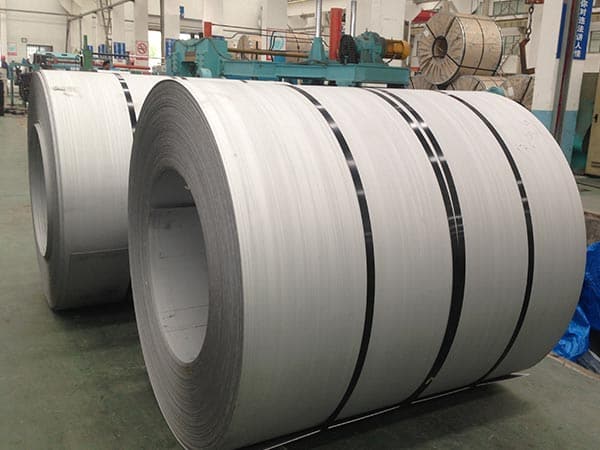
The Fundamentals of S460MC Steel in the Global Automotive Supply Chain
S460MC is a high-strength low-alloy (HSLA) steel grade specifically designed for cold forming. Governed by the EN 10149-2 standard, this thermomechanically rolled steel offers a unique combination of high yield strength and excellent ductility. For manufacturers targeting the Thai automotive hub—often referred to as the 'Detroit of the East'—understanding the nuances of S460MC is critical for optimizing both structural integrity and cost-efficiency in vehicle production.
The 'S' in S460MC stands for structural steel, '460' represents the minimum yield strength of 460 MPa, and 'MC' indicates that the material is thermomechanically rolled (M) and intended for cold forming (C). This grade is frequently selected for automotive inner panels, chassis components, and structural reinforcements where weight reduction is a primary objective without compromising safety standards.
Chemical Composition and Metallurgical Precision
The performance of S460MC is rooted in its precise chemical makeup. Unlike traditional carbon steels, HSLA steels like S460MC utilize micro-alloying elements such as Niobium (Nb), Vanadium (V), and Titanium (Ti) to refine grain size and enhance strength through precipitation hardening. This allows for a lower carbon content, which significantly improves weldability and toughness.
| Element | C (max %) | Mn (max %) | Si (max %) | P (max %) | S (max %) | Al (min %) | Nb+V+Ti (max %) |
|---|---|---|---|---|---|---|---|
| S460MC Value | 0.12 | 1.60 | 0.50 | 0.025 | 0.015 | 0.015 | 0.22 |
By maintaining low levels of sulfur and phosphorus, the steel achieves high purity, reducing the risk of internal defects during heavy deformation processes. This metallurgical cleanliness is a key factor that Thai automotive engineers look for when sourcing materials for complex inner panel geometries.
Mechanical Properties: Balancing Strength and Formability
For automotive inner panels, the material must withstand complex stamping and deep drawing processes. S460MC provides a high yield-to-tensile ratio, ensuring that the part remains stable under load while allowing for intricate shaping during the manufacturing phase.
| Property | Yield Strength (MPa) | Tensile Strength (MPa) | Elongation A80 (%) | Bending Radius (180°) |
|---|---|---|---|---|
| S460MC Specification | ≥ 460 | 520 - 670 | ≥ 14 (t < 3mm) | 0.5t - 1.0t |
The elongation properties are particularly vital. Even with a yield strength of 460 MPa, the material retains enough plasticity to avoid cracking during high-speed stamping. This makes it an ideal candidate for inner door panels, pillar reinforcements, and seat frames where complex curves are common.
Processing Performance and Manufacturing Efficiency
Efficiency in the production line is a major driver for the Thai automotive industry. S460MC excels in several processing areas:
- Cold Forming: Its fine-grained structure allows for tight bending radii without surface orange peel effects or edge cracking.
- Weldability: Due to its low carbon equivalent (CEV), S460MC can be welded using standard methods like MIG, TIG, and spot welding without preheating, which accelerates assembly times.
- Surface Quality: Typically supplied in a pickled and oiled condition, it provides a clean surface ready for E-coating or painting, which is essential for inner panels that require corrosion protection.
- Laser Cutting: The consistency in thickness and flatness ensures high precision during laser blanking, reducing scrap rates and operational costs.
Exporting S460MC to Thailand: Price Dynamics and Market Factors
Determining the price of S460MC for the Thai market involves several variables. As of current market trends, prices are influenced by global raw material costs, logistics, and regional trade policies. When exporting from major steel hubs like China or Europe to Thailand, the following factors play a decisive role:
1. Raw Material Fluctuations: The cost of iron ore and coking coal remains the baseline for S460MC pricing. Any volatility in these commodities is immediately reflected in the FOB (Free on Board) price of the hot-rolled coils.
2. Trade Agreements and Tariffs: Thailand is a member of RCEP (Regional Comprehensive Economic Partnership). For exports from China to Thailand, the Form E certificate can significantly reduce or eliminate import duties, making Chinese S460MC highly competitive compared to non-FTA regions.
3. Logistics and Shipping: Freight rates to Laem Chabang or Bangkok ports fluctuate based on fuel surcharges and container availability. Bulk shipments of steel coils often utilize breakbulk vessels to minimize costs per ton.
4. Volume and Specification: Custom widths, specific tolerances, or non-standard thicknesses (e.g., 1.5mm vs 2.0mm) will impact the final quotation. Large-scale automotive contracts usually secure more stable pricing through quarterly or annual agreements.
Environmental Adaptability in Tropical Climates
Thailand’s climate is characterized by high humidity and temperature, which can accelerate oxidation. S460MC, while not a stainless grade, possesses a dense surface structure that, when combined with modern automotive coating technologies, provides excellent corrosion resistance. The material's stability ensures that inner panels maintain their structural integrity throughout the vehicle's lifecycle, even in coastal regions with high salinity.
Furthermore, the trend toward lightweighting in the Thai EV (Electric Vehicle) sector has increased the demand for S460MC. By using thinner gauges of high-strength steel to replace thicker mild steel, manufacturers can reduce vehicle weight, thereby extending battery range and improving energy efficiency.
Expanded Applications Beyond Inner Panels
While primarily discussed for inner panels, the versatility of S460MC allows it to be utilized in various other sectors within the Thai industrial landscape:
- Commercial Vehicles: Used in truck chassis and cross-members to handle heavy loads while reducing tare weight.
- Construction Machinery: Ideal for crane booms and excavator components where high strength-to-weight ratios are required.
- Agricultural Equipment: Providing durability for machinery operating in harsh soil conditions.
- Solar Racking Systems: The strength of S460MC allows for longer spans and fewer support structures in large-scale solar farms.
Procurement Strategy for Thai Buyers
For Thai automotive parts manufacturers, sourcing S460MC requires a focus on quality certification and supply chain reliability. It is essential to verify that the material comes with a Mill Test Certificate (MTC) according to EN 10204 3.1, detailing the chemical analysis and mechanical test results. Establishing a partnership with exporters who understand the Thai industrial standards (TIS) and can provide just-in-time delivery is crucial for maintaining lean production schedules.
Current price estimates for S460MC exported to Thailand typically range based on the global HRC index plus a premium for the HSLA properties and processing. Buyers should monitor the London Metal Exchange (LME) and regional steel price indexes to time their purchases effectively.
Technological Trends and Future Outlook
The shift toward Industry 4.0 in Thailand’s Eastern Economic Corridor (EEC) is pushing for smarter material usage. S460MC is evolving with better surface finishes and tighter thickness tolerances to suit automated robotic assembly lines. As the automotive industry continues to prioritize carbon neutrality, the role of high-strength steels like S460MC—which allow for material savings and lower CO2 footprints during transport—will only become more prominent.
Technically advanced exporters are now offering S460MC with enhanced hole expansion ratios (HER), which is particularly beneficial for parts with extruded holes or complex flanging. This continuous improvement ensures that S460MC remains a cornerstone material for the next generation of vehicles produced in Thailand.
Leave a message