
Is s355mc high strength steel auto plate en 10149-2 steel stainless?
Technical analysis of S355MC high-strength steel under EN 10149-2, clarifying its classification as HSLA rather than stainless, and exploring its mechanical and industrial applications.
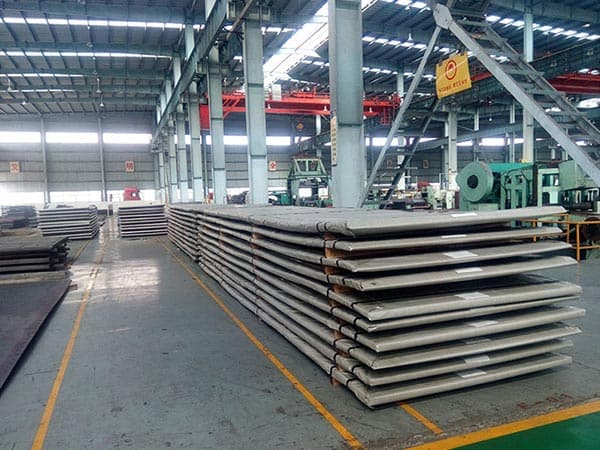
The Fundamental Distinction: Is S355MC Stainless Steel?
When engineers and procurement specialists evaluate materials for automotive or structural applications, the question often arises: Is S355MC high strength steel auto plate EN 10149-2 steel stainless? The short and definitive answer is no. S355MC is a High Strength Low Alloy (HSLA) steel, specifically designed for cold forming. Unlike stainless steel, which must contain a minimum of 10.5% chromium to form a protective passive layer of chromium oxide, S355MC contains only trace amounts of chromium. It is a carbon-manganese steel refined with micro-alloying elements like niobium, vanadium, or titanium.
Understanding this distinction is critical for material selection. While stainless steels are chosen primarily for their corrosion resistance in harsh environments, S355MC is engineered for its exceptional yield strength-to-weight ratio and superior formability. It belongs to the EN 10149-2 standard, which governs hot-rolled flat products made of high yield strength steels for cold forming. The 'MC' designation indicates that the steel is thermomechanically rolled (M) and intended for cold forming (C).
Chemical Composition and the Role of Micro-alloying
The performance of S355MC is rooted in its precise chemical makeup. Because it is not a stainless steel, its chemistry focuses on grain refinement rather than oxidation resistance. The inclusion of micro-alloying elements allows the steel to achieve high strength without the brittleness typically associated with high carbon content.
| Element | Maximum Percentage (%) |
|---|---|
| Carbon (C) | 0.12 |
| Manganese (Mn) | 1.50 |
| Silicon (Si) | 0.50 |
| Phosphorus (P) | 0.025 |
| Sulfur (S) | 0.020 |
| Aluminium (Al) | 0.015 (min) |
| Niobium (Nb) | 0.09 |
| Titanium (Ti) | 0.15 |
The extremely low carbon content (max 0.12%) is the secret behind its excellent weldability. Niobium and Titanium act as grain refiners during the thermomechanical rolling process. These elements create a fine-grained microstructure that prevents crack propagation and allows the plate to be bent at tight radii without fracturing. This is a stark contrast to many stainless steel grades, which may work-harden rapidly or require specific heat treatments after welding.
Mechanical Properties: Strength Meets Ductility
S355MC is defined by its minimum yield strength of 355 MPa. In the automotive industry, this allows for the design of thinner, lighter components that do not sacrifice structural integrity. This process of "lightweighting" is essential for improving fuel efficiency and reducing emissions in modern vehicles.
- Yield Strength: Minimum 355 MPa (for thicknesses ≤ 16mm).
- Tensile Strength: 430 to 550 MPa.
- Elongation: Minimum 19% to 23% depending on thickness, ensuring the material can withstand significant deformation during stamping or drawing.
- Impact Strength: While EN 10149-2 does not always mandate impact testing unless specified, S355MC typically exhibits good toughness at low temperatures.
Compared to standard structural steels like s355jr (EN 10025-2), S355MC offers much better cold forming properties. The thermomechanical rolling process (TMCP) ensures that the strength is achieved through microstructure control rather than simply adding alloying elements, which keeps the material cost-effective and highly processable.
Processing Performance: Bending, Welding, and Cutting
One of the primary reasons S355MC is favored in manufacturing is its predictable behavior during fabrication. Since it is designed for cold forming, it responds exceptionally well to modern CNC bending and press braking. Manufacturers can achieve tight internal bend radii, which is often a limitation with higher-strength steels or certain stainless grades.
Weldability is another standout feature. Due to its low carbon equivalent (CEV), S355MC can be welded using all standard methods, including MIG/MAG, TIG, and submerged arc welding, without the need for preheating in most thickness ranges. This accelerates production cycles and reduces energy costs. However, it is vital to use consumables that match the strength of the base metal to maintain the integrity of the joint.
In terms of cutting, S355MC is highly compatible with laser, plasma, and waterjet technologies. Its clean surface finish (typical of hot-rolled pickled and oiled products) ensures minimal dross and high-quality edges, which is a prerequisite for automated robotic welding systems used in automotive assembly lines.
Environmental Adaptability and Corrosion Protection
Since S355MC is not stainless, it will oxidize (rust) if exposed to moisture and oxygen without protection. In automotive applications, this is managed through various surface treatments. The material is frequently supplied in a Pickled and Oiled (P&O) state, which removes mill scale and provides a temporary oil film to prevent rust during transport and storage.
For long-term environmental adaptability, S355MC components are typically:
- Hot-Dip Galvanized: Providing a sacrificial zinc layer that protects the underlying steel even if the coating is scratched.
- E-Coated (Electrophoretic Painting): A standard in the automotive industry for chassis components, providing deep coverage and excellent salt spray resistance.
- Powder Coated: Used for visible structural parts where aesthetic finish and durability are both required.
When compared to stainless steel, the combination of S355MC plus a high-quality coating system is often more economically viable for structural parts that do not require the high-temperature resistance or extreme chemical inertness of stainless alloys.
Expansion of Application Industries
While the automotive sector is the largest consumer of S355MC, its unique properties have led to its adoption in various other high-stress industries. The demand for weight reduction and high load-bearing capacity is universal.
Heavy Machinery and Lifting Equipment: Crane arms, telescopic booms, and excavator frames utilize S355MC to reduce dead weight, thereby increasing the lifting capacity and stability of the machine. The ability to weld these high-strength parts reliably is a major advantage here.
Transportation and Logistics: Beyond passenger cars, S355MC is the backbone of the trucking industry. It is used for longitudinal beams, cross members, and chassis frames for heavy-duty trucks and trailers. These components must endure constant vibration and cyclic loading, making the fatigue resistance of HSLA steel indispensable.
Renewable Energy: In the solar industry, S355MC is used for mounting systems and trackers. These structures must be lightweight for easy installation but strong enough to withstand high wind loads over a 25-year lifespan. Galvanized S355MC provides the perfect balance of strength and cost-efficiency for these large-scale projects.
Technical Comparison: S355MC vs. Stainless Steel 304
To further clarify the "stainless" question, it is helpful to compare S355MC with a common stainless grade like AISI 304. While 304 stainless offers superior corrosion resistance, S355MC often wins on mechanical performance and cost for structural roles.
| Property | S355MC (HSLA) | AISI 304 (Stainless) |
|---|---|---|
| Yield Strength | 355 MPa | ~215 MPa |
| Corrosion Resistance | Low (Requires Coating) | High (Passive Layer) |
| Formability | Excellent (Cold Forming) | Good (Work Hardens) |
| Cost | Economical | High (Due to Nickel/Chrome) |
| Magnetic Property | Magnetic | Non-Magnetic (usually) |
For structural components where the environment is controlled or where coating is feasible, S355MC provides nearly 65% higher yield strength than standard annealed 304 stainless steel. This allows for significantly thinner sections, leading to a "double win" of lower material weight and lower material cost per ton.
Operational Considerations for Engineers
When specifying S355MC, engineers must account for springback. Due to its high yield strength, the material has a tendency to return slightly to its original shape after bending compared to lower-strength mild steels. Modern press brakes with angle sensors can easily compensate for this, but it must be factored into the initial tooling design.
Furthermore, the orientation of the part during cutting matters. Although S355MC is designed to be isotropic (having similar properties in all directions), the best practice for critical bends is to orient the bend axis transverse to the rolling direction to maximize ductility and prevent any risk of micro-cracking at the outer radius.
Selecting S355MC under the EN 10149-2 standard ensures a level of consistency and quality that is vital for automated manufacturing. By recognizing that it is a high-performance HSLA steel rather than a stainless grade, designers can leverage its strengths—literally and figuratively—to build safer, lighter, and more efficient structures across a multitude of industrial sectors.
Leave a message