
What are the operation principles to be followed in the s500mc en 10149-2 automobile structure steel cutting process
Comprehensive guide on the operational principles for cutting S500MC EN 10149-2 high-strength steel, focusing on thermal management, precision, and material integrity.
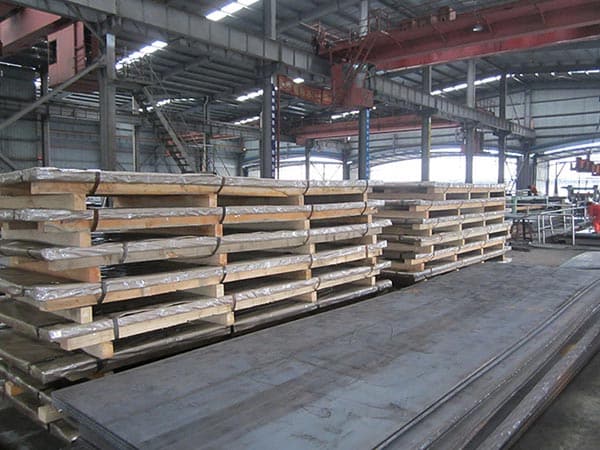
Technical Foundation of S500MC EN 10149-2 High-Strength Steel
S500MC is a thermomechanically rolled, high-yield-strength cold-forming steel governed by the EN 10149-2 standard. This material is specifically engineered for the automotive industry, where weight reduction and structural integrity are paramount. The "MC" designation indicates a thermomechanically rolled steel designed for cold forming, which achieves its mechanical properties through a precise combination of chemical composition and controlled rolling temperatures. Unlike traditional hot-rolled steels, S500MC possesses a fine-grained microstructure that offers exceptional toughness and weldability despite its high yield strength of 500 MPa.
Processing S500MC requires a deep understanding of its metallurgical state. Because its strength is derived from the thermomechanical rolling process rather than high alloy content, excessive heat input during cutting can potentially alter the microstructure, leading to localized softening or reduced fatigue resistance. This characteristic dictates the fundamental principles of any cutting operation, whether thermal or mechanical.
| Chemical Element | Maximum Content (%) | Mechanical Property | Value (Min/Max) |
|---|---|---|---|
| Carbon (C) | 0.12 | Yield Strength (ReH) | 500 MPa min |
| Manganese (Mn) | 1.60 | Tensile Strength (Rm) | 550-700 MPa |
| Silicon (Si) | 0.50 | Elongation (A80mm) | 12% min |
| Niobium (Nb) | 0.09 | Bending Radius | 0.5t to 1.0t |
Thermal Cutting Principles: Managing the Heat Affected Zone (HAZ)
Laser cutting is the most prevalent method for S500MC in automotive structural applications due to its precision and speed. However, the primary operational principle is the minimization of the Heat Affected Zone (HAZ). Since S500MC relies on a fine-grained structure, a wide HAZ can create a "soft zone" where the yield strength drops below the specified 500 MPa. To mitigate this, high-power fiber lasers are preferred over CO2 lasers as they allow for higher cutting speeds, which reduces the dwell time of the heat source on any single point of the material.
When utilizing oxygen as a cutting gas, the exothermic reaction assists the cutting speed but increases the oxidation on the edge. For automotive components that require subsequent painting or coating, nitrogen is often the superior choice. Nitrogen cutting (high-pressure fusion cutting) prevents oxidation and results in a cleaner edge, though it requires significantly higher power to melt the material without the assistance of an exothermic reaction. The principle here is to balance the gas pressure (typically between 10 to 18 bar for 6mm S500MC) with the nozzle height to ensure efficient dross removal without turbulent gas flow destabilizing the cut.
Mechanical Shearing and Punching Dynamics
For high-volume production of simpler S500MC geometries, mechanical shearing or punching is often employed. The operational principle here shifts from thermal management to clearance control and tool hardness. S500MC has a high tensile strength (up to 700 MPa), which exerts significant stress on cutting blades and punches. The cutting clearance—the distance between the punch and the die—must be calculated precisely based on the material thickness (t). For S500MC, a clearance of 12% to 15% of the material thickness is generally recommended to ensure a clean fracture and minimize the rollover zone.
Using tools with insufficient hardness or improper clearance leads to excessive burr formation and work hardening of the edge. Work hardening is particularly detrimental to S500MC because it reduces the local ductility, which can lead to cracking during subsequent cold-forming or bending operations. Tools should be coated with Titanium Aluminum Nitride (TiAlN) or similar PVD coatings to resist the abrasive wear caused by the micro-alloying elements like Niobium and Vanadium present in the steel.
Edge Quality and Surface Integrity Requirements
Automotive structural parts are frequently subjected to cyclic loading, making fatigue resistance a critical design factor. The cutting process must ensure that the edges are free from micro-cracks, notches, or heavy dross. A fundamental principle in S500MC processing is the elimination of stress concentrators. Laser-cut edges should have a surface roughness (Rz) that meets the ISO 9013 standard, typically Class 2 or 3 for high-performance structural parts.
- Pre-Processing Inspection: Ensure the S500MC sheets are flat and free from heavy scale or oil, as surface contaminants can cause laser beam scattering or unstable plasma arcs.
- Nozzle Alignment: Centering the laser beam within the nozzle is critical for S500MC to ensure an identical cut quality in all directions (X and Y axis).
- Post-Cut Cooling: Avoid rapid quenching of thermal-cut edges with water, as this can induce martensitic transformation in the thin edge layer, leading to brittleness.
Plasma Cutting Optimization for Thicker Sections
While laser cutting dominates thin-gauge S500MC, plasma cutting is utilized for thicker structural reinforcements (8mm and above). The operational principle for plasma cutting S500MC involves arc stability and gas selection. Using a high-definition plasma system with an oxygen/air or nitrogen/water-mist combination can produce edges that rival laser quality. The key is to maintain a constant torch height (Arc Voltage Control) to prevent beveling. Because S500MC is often used in chassis components, a beveled edge can lead to poor fit-up during welding, compromising the structural integrity of the entire vehicle frame.
Environmental and Material Adaptation
S500MC is designed to perform in diverse environments, but its processing must account for its sensitivity to hydrogen embrittlement if acid pickling is used post-cutting. Furthermore, the material's excellent low-temperature toughness (often tested at -20°C or -40°C) must be preserved. Any cutting process that introduces excessive residual tensile stress into the edge can negate these toughness benefits. Therefore, a principle of low-stress processing should be adopted, which may include vibration aging or controlled thermal stress relief if the cutting geometry is particularly complex and prone to distortion.
| Cutting Method | Key Principle | Primary Advantage for S500MC |
|---|---|---|
| Fiber Laser | High Speed / Low Heat | Preserves fine-grained microstructure and minimizes HAZ. |
| HD Plasma | Arc Density Control | Cost-effective for thicker structural plates with decent precision. |
| Waterjet | Cold Cutting | Zero thermal impact; ideal for maintaining 100% mechanical properties. |
| Mechanical Shearing | Clearance Optimization | High productivity for straight-line cuts in automotive frames. |
Operational Workflow for Automotive Excellence
To achieve the best results with S500MC EN 10149-2, the workflow must integrate the material's metallurgical properties with the cutting machine's capabilities. Start by validating the material certificate (MTC) to confirm the actual yield strength, as "over-strength" material may require adjustments in cutting speed or tool pressure. During the cutting process, real-time monitoring of the kerf width and dross levels allows for immediate adjustments to the focal position or gas flow. Finally, a secondary edge-finishing step, such as deburring or slight chamfering, is often necessary to remove the recast layer formed during thermal cutting, thereby maximizing the fatigue life of the automotive structural component.
By adhering to these principles—minimizing thermal distortion, optimizing mechanical clearances, and maintaining edge integrity—manufacturers can fully leverage the high-strength and lightweight potential of S500MC steel, ensuring that the resulting automotive structures are both safe and efficient.
Leave a message