
What is the 1.0972 flat bar for auto frame process flow
Explore the technical specifications and manufacturing process flow of 1.0972 (S315MC) flat bars for automotive frames, including chemical composition, mechanical properties, and TMCP technology.
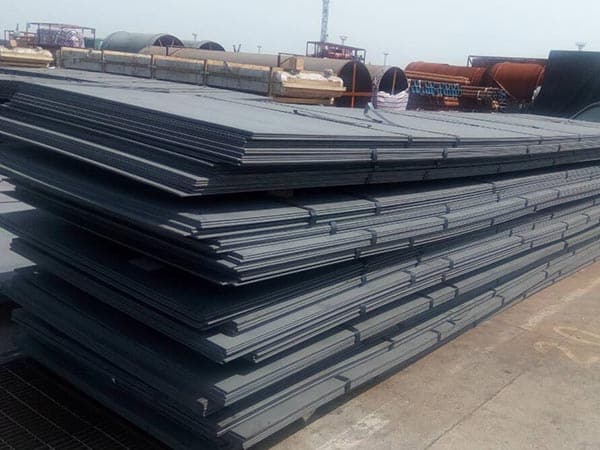
Understanding the 1.0972 Grade in Modern Automotive Engineering
The 1.0972 steel grade, widely recognized under the EN 10149-2 standard as S315MC, represents a pinnacle of high-yield strength steel designed specifically for cold forming. In the context of automotive frame manufacturing, the 1.0972 flat bar serves as a critical structural component. Its popularity stems from a delicate balance between weight reduction and structural integrity. Vehicle manufacturers are under constant pressure to improve fuel efficiency by reducing curb weight without compromising safety standards. This is where 1.0972 excels, offering a minimum yield strength of 315 MPa while maintaining the ductility required for complex shaping operations.
Unlike traditional carbon steels, 1.0972 is a micro-alloyed steel. It utilizes small additions of niobium, vanadium, or titanium to achieve grain refinement. This microscopic structure is the secret behind its superior mechanical properties. When processed into flat bars, this material provides the longitudinal strength necessary for truck chassis, cross members, and various reinforcement brackets within the automotive skeleton.
Chemical Composition and Micro-alloying Strategy
The performance of 1.0972 flat bars begins at the atomic level. The chemical composition is strictly controlled to ensure weldability and formability. The low carbon content is particularly important for preventing the formation of brittle martensite during welding processes.
| Element | Maximum Percentage (%) |
|---|---|
| Carbon (C) | 0.12 |
| Manganese (Mn) | 1.30 |
| Silicon (Si) | 0.50 |
| Phosphorus (P) | 0.025 |
| Sulphur (S) | 0.020 |
| Aluminum (Al) | 0.015 (min) |
| Niobium (Nb) | 0.09 |
| Titanium (Ti) | 0.15 |
The inclusion of Niobium and Titanium acts as a grain refiner during the rolling process. These elements form carbides and nitrides that pin grain boundaries, preventing grain growth even at elevated temperatures. This results in a fine-grained ferrite-pearlite microstructure, which is essential for the high impact toughness and fatigue resistance required in automotive frames that endure constant vibration and cyclic loading.
The Manufacturing Process Flow of 1.0972 Flat Bars
The transition from raw steel to a precision-engineered flat bar involves several sophisticated stages. Each step is designed to preserve the micro-alloyed properties while achieving the required geometric tolerances.
- Steelmaking and Secondary Refining: The process starts in an Electric Arc Furnace (EAF) or Basic Oxygen Furnace (BOF). Secondary refining in a Ladle Furnace (LF) and Vacuum Degassing (VD) is crucial to remove impurities like hydrogen and oxygen, ensuring the steel's internal cleanliness.
- Continuous Casting: The molten steel is cast into billets or slabs. Controlled cooling during casting prevents internal cracking and segregation of alloying elements.
- Reheating: Billets are reheated in a walking beam furnace to a specific temperature (usually between 1150°C and 1250°C) to ensure the micro-alloying elements are in solid solution.
- Thermomechanical Controlled Processing (TMCP): This is the most critical stage. Unlike conventional rolling, TMCP involves rolling at specific temperature ranges and controlled cooling rates. The deformation in the non-recrystallization zone creates a high density of nucleation sites for ferrite, leading to an ultra-fine grain structure.
- Hot Leveling and Cooling: After rolling, the steel is leveled while still hot to ensure flatness. It is then cooled on a cooling bed at a controlled rate to finalize the phase transformation.
- Slitting and Edge Processing: For flat bars, the wide strips are slit to the required widths. Edge conditioning may be performed to remove burrs, which is vital for subsequent welding in the auto frame assembly line.
- Surface Treatment: Many 1.0972 flat bars undergo pickling and oiling to remove mill scale and provide temporary corrosion protection during transport and storage.
Mechanical Properties and Performance Metrics
The 1.0972 grade is defined by its mechanical reliability. For automotive frames, the yield strength determines the point at which the frame will permanently deform under load, while the tensile strength indicates the maximum stress it can withstand before failure.
| Property | Value (Thickness ≤ 16mm) |
|---|---|
| Minimum Yield Strength (ReH) | 315 MPa |
| Tensile Strength (Rm) | 390 - 510 MPa |
| Minimum Elongation (A80mm) | 20% - 24% (depending on thickness) |
| 180° Cold Bend Test (Mandrel Diameter) | 0.5 x thickness |
The high elongation value is particularly noteworthy. It allows the flat bar to be bent into various profiles for the chassis without cracking. The low yield-to-tensile ratio also provides a safety margin, allowing the material to absorb energy during a collision through plastic deformation.
Technological Advantages in Automotive Applications
Beyond basic strength, 1.0972 flat bars offer several technological advantages that streamline the manufacturing of vehicle frames. Excellent Weldability is perhaps the most significant. Due to its low Carbon Equivalent (CEV), 1.0972 can be welded using standard methods like MAG (Metal Active Gas) or laser welding without the need for pre-heating or post-weld heat treatment. This reduces production cycle times and energy costs.
Superior Formability allows for the creation of complex cross-sections. Automotive frames often require flat bars to be flanged or punched. The fine grain structure of S315MC minimizes the risk of "orange peel" effects or edge cracking during these intensive cold-forming operations. Furthermore, the material's consistent thickness and flatness tolerances ensure compatibility with automated robotic assembly lines, where precision is paramount.
Environmental Adaptability and Fatigue Life
Automotive frames are exposed to harsh environments, including road salt, moisture, and extreme temperature fluctuations. While 1.0972 is not a stainless grade, its chemical purity contributes to better atmospheric corrosion resistance compared to standard structural steels. When combined with modern E-coating (electrophoretic coating) or galvanizing processes, 1.0972 flat bars provide a service life that exceeds the typical lifespan of the vehicle.
Fatigue resistance is another critical factor. Automotive frames undergo millions of stress cycles. The homogeneous microstructure of 1.0972 prevents the early initiation of fatigue cracks. This durability is essential for heavy-duty trucks and commercial vehicles where the frame must support high payloads over hundreds of thousands of kilometers. The stability of the material under dynamic loading ensures that the vehicle maintains its handling characteristics and structural alignment over time.
Expanding the Scope: Beyond the Main Frame
While the primary use of 1.0972 flat bars is in the main longitudinal rails of vehicle frames, its utility extends to various sub-assemblies. In the trailer manufacturing industry, these bars are used for side guards and floor supports. In the agricultural machinery sector, the high strength-to-weight ratio of S315MC makes it ideal for the chassis of tractors and harvesters, where soil compaction must be minimized by reducing machine weight.
The versatility of 1.0972 also finds a place in the renewable energy sector, specifically in the mounting structures for solar panels and wind turbine internal components, where cold-formed high-strength profiles are required. However, its heart remains in the automotive sector, driving the evolution of safer, lighter, and more efficient transport solutions. By mastering the process flow from TMCP rolling to final slitting, manufacturers ensure that every 1.0972 flat bar meets the rigorous demands of the modern road.
Leave a message