
Why s500 steel iron equivalent material grades is not easy to rust
Discover why S500 steel and its equivalent grades exhibit better corrosion resistance than standard carbon steels through chemical composition and microstructure analysis.
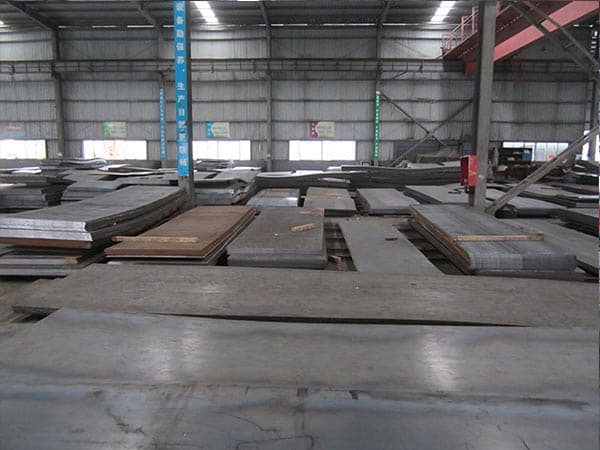
The Scientific Basis for S500 steel's Corrosion Resistance
When discussing high-strength structural steels like S500, the focus often shifts immediately to its impressive yield strength of 500 MPa. However, a critical factor that determines the longevity of structures built with this material is its ability to withstand environmental degradation. While S500 is not a stainless steel, its specific chemical formulation and the thermomechanical rolling process (often denoted as S500MC) provide it with a distinct advantage over lower-grade carbon steels like S235 or S355 when it comes to oxidation and rust formation.
The resistance to rust in S500 equivalent grades is not accidental. It is the result of precise micro-alloying. Unlike standard structural steels, S500 incorporates small but significant amounts of elements such as Niobium (Nb), Vanadium (V), and Titanium (Ti). these elements do more than just refine the grain size; they influence the electrochemical potential of the steel surface. By creating a more homogenous microstructure, these alloys reduce the number of localized galvanic cells that typically initiate the rusting process in coarser, less pure steels.
Chemical Composition and Its Impact on Surface Stability
The chemical makeup of S500 steel is strictly controlled to ensure both strength and durability. Below is a comparison of typical chemical components found in S500 equivalent grades compared to standard mild steel.
| Element | S500MC (Typical %) | S235JR (Typical %) | Impact on Rust Resistance |
|---|---|---|---|
| Carbon (C) | Max 0.12 | Max 0.17 | Lower carbon reduces carbide precipitation, limiting corrosion sites. |
| Manganese (Mn) | Max 1.60 | Max 1.40 | Improves surface density and resistance to pitting. |
| Silicon (Si) | Max 0.50 | Max 0.35 | Enhances the formation of a stable oxide layer. |
| Niobium (Nb) | Max 0.09 | Trace | Refines grains, preventing deep oxygen penetration. |
The low carbon content in S500 is particularly vital. High carbon levels can lead to the formation of iron carbides, which act as cathodes in the presence of moisture, accelerating the oxidation of the surrounding iron matrix. By keeping carbon levels low and utilizing micro-alloys, S500 maintains a more uniform surface chemistry that is less reactive to atmospheric oxygen.
Microstructure and Grain Refinement
The manufacturing process of S500, specifically the Thermomechanically Controlled Processing (TMCP), plays a pivotal role in its environmental adaptability. During TMCP, the steel is rolled at specific temperatures that prevent grain growth, resulting in an ultra-fine grain structure. This fine grain is not just about mechanical toughness; it also affects how the material interacts with its environment.
- Dense Oxide Layer: The fine-grained surface of S500 promotes the formation of a more adherent and compact oxide scale during the initial stages of exposure. This layer acts as a physical barrier, slowing down the diffusion of oxygen and moisture into the deeper layers of the steel.
- Reduced Porosity: Standard hot-rolled steels often have a more porous surface structure. S500's refined microstructure minimizes these microscopic voids, leaving fewer places for moisture to trap and initiate sub-surface corrosion.
- Homogeneity: The uniform distribution of alloying elements prevents 'selective leaching' or localized corrosion, which is common in steels with significant chemical segregation.
Mechanical Performance vs. Environmental Longevity
It is a common misconception that higher strength leads to higher brittleness and faster corrosion. S500 proves the opposite. Its mechanical properties are engineered to complement its environmental performance. For instance, the high yield strength allows for thinner sections to be used in construction, which can be more effectively galvanized or painted compared to bulky, heavy sections of lower-grade steel.
| Property | S500 Grade Value | Operational Advantage |
|---|---|---|
| Yield Strength | Min 500 MPa | Reduces dead weight, allowing for sleeker, more aerodynamic designs. |
| Tensile Strength | 550 - 700 MPa | Ensures structural integrity under extreme stress and vibration. | Min 12-14% | Allows for complex forming without creating micro-cracks where rust could start. |
Processing Advantages and Surface Integrity
The way S500 is processed during fabrication also contributes to its rust-resistant profile. Because S500MC and its equivalents are designed for cold forming, they possess excellent surface quality right from the mill. This smooth surface finish is easier to clean and prepare for protective coatings.
Welding Compatibility: S500 has a low carbon equivalent (CEV), which significantly improves weldability. In inferior steels, the Heat Affected Zone (HAZ) of a weld is often the first place to rust because of phase changes in the metal. In S500, the HAZ remains relatively stable, maintaining a similar level of corrosion resistance to the base metal. This ensures that the joints—the most vulnerable parts of any structure—do not become the 'weak link' for rust.
Global Equivalents and Industry-Specific Performance
S500 steel is recognized under various international standards, each ensuring that the material meets the necessary criteria for both strength and environmental durability. Common equivalents include ASTM A514 (in certain conditions), StE 500, and Q500. These materials are widely utilized in industries where exposure to the elements is unavoidable.
In the heavy transport industry, truck chassis made from S500MC are subjected to road salts, constant moisture, and mechanical abrasion. The material's ability to resist deep-seated rust ensures that the structural frame remains safe over hundreds of thousands of miles. Similarly, in the crane and lifting equipment industry, S500's resistance to atmospheric corrosion is vital for maintaining the safety factors required for high-altitude operations where maintenance is difficult.
Environmental Adaptability in Harsh Conditions
Whether in coastal regions with high salt content or industrial zones with acidic rain, S500 performs predictably. The synergy between its alloying elements and its refined grain structure creates a material that, while still requiring standard protection (like painting or galvanizing for long-term outdoor use), is far more forgiving than its predecessors. The 'incubation period' for rust—the time it takes for visible oxidation to appear—is significantly longer for S500 than for S355 under identical conditions.
This durability is further enhanced when S500 is used in conjunction with modern coating technologies. The chemical stability of the steel provides an excellent substrate for powder coatings and zinc-rich primers, ensuring that the bond between the metal and the coating remains intact even under thermal expansion and contraction cycles.
Strategic Selection for Long-Term Value
Choosing S500 or its equivalent grades is a strategic decision that balances initial material costs with long-term maintenance savings. By reducing the rate of corrosion and providing superior mechanical strength, S500 allows engineers to design structures that are not only lighter and stronger but also more resilient to the passage of time. The inherent properties of the steel—born from advanced metallurgical techniques—ensure that rust remains a manageable factor rather than a structural threat.
Leave a message