
What is the price en 10149-2 automotive steel sheet s355mc pdf in Iran?
Comprehensive guide on EN 10149-2 S355MC steel sheets in Iran, covering technical specs, mechanical performance, pricing trends, and industrial applications.
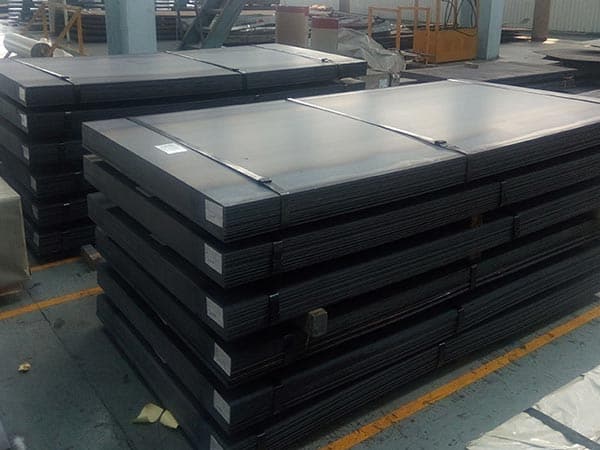
Understanding S355MC Steel within the Iranian Industrial Context
The procurement of EN 10149-2 S355MC automotive steel sheets in Iran involves a complex interplay of metallurgical requirements and market dynamics. S355MC is a high-yield strength steel designed specifically for cold forming, characterized by its thermomechanically rolled state. In the Iranian market, where the automotive and heavy machinery sectors are significant contributors to the GDP, the demand for S355MC is driven by the need for lightweight yet structurally sound components. The "S" denotes structural steel, "355" represents the minimum yield strength in megapascals (MPa), and "MC" indicates that the material is thermomechanically rolled (M) and intended for cold forming (C).
The price of S355MC in Iran is not a static figure; it is influenced by the LME (London Metal Exchange) global steel prices, local production capacities of giants like Mobarakeh Steel Company (MSC), and the fluctuating exchange rate of the Iranian Rial (IRR) against the US Dollar. For engineers and procurement officers, obtaining a S355MC PDF data sheet is the first step in ensuring the material meets the stringent safety standards required for automotive chassis, suspension systems, and longitudinal beams.
Technical Specifications and Chemical Composition
The EN 10149-2 standard governs the delivery conditions for flat products made of high yield strength steels. The chemical composition of S355MC is meticulously controlled to ensure superior weldability and formability. Unlike traditional structural steels, S355MC utilizes micro-alloying elements such as Niobium (Nb), Vanadium (V), and Titanium (Ti) to achieve its strength without increasing the carbon equivalent significantly.
| Element | Max % (Cast Analysis) |
|---|---|
| Carbon (C) | 0.12 |
| Manganese (Mn) | 1.50 |
| Silicon (Si) | 0.50 |
| Phosphorus (P) | 0.025 |
| Sulfur (S) | 0.020 |
| Aluminum (Al) | 0.015 |
| Nb + V + Ti | 0.22 |
The low carbon content (max 0.12%) is critical for the Iranian automotive industry, as it allows for high-speed robotic welding without the risk of cold cracking in the heat-affected zone (HAZ). The inclusion of micro-alloys facilitates grain refinement during the thermomechanical rolling process, which is the secret behind its high strength-to-weight ratio.
Mechanical Performance and Structural Integrity
Mechanical properties are the primary concern for structural designers. S355MC offers a unique balance of high yield strength and excellent elongation, which is essential for components that must absorb energy during a collision. The following table outlines the mechanical requirements according to EN 10149-2:
| Property | Value |
|---|---|
| Minimum Yield Strength (Reh MPa) | 355 |
| Tensile Strength (Rm MPa) | 430 - 550 |
| Minimum Elongation (A80mm %) for t < 3mm | 19 |
| Minimum Elongation (A5.65 %) for t ≥ 3mm | 23 |
| Bending Radius (180°) | 0.5t (for t ≤ 3mm) to 1.5t (for t > 6mm) |
These properties ensure that the steel can be bent into complex shapes without fracturing. In Iran's manufacturing plants, such as those supplying IKCO or SAIPA, S355MC is often used in parts where weight reduction is prioritized to meet fuel efficiency standards without compromising passenger safety.
Processing Performance: Welding and Cold Forming
One of the standout features of S355MC automotive steel is its exceptional processing performance. Because it is thermomechanically rolled, it possesses a fine-grained microstructure that remains stable during fabrication. When welding S355MC, standard methods like MIG/MAG, TIG, and submerged arc welding (SAW) can be employed. The low carbon equivalent (CEV) means that preheating is generally unnecessary for standard thicknesses, which significantly reduces production costs and time in Iranian workshops.
Cold forming is another area where S355MC excels. It can withstand tight bending radii, making it ideal for cold-pressed parts. However, it is vital to account for the material's springback effect, which is more pronounced than in lower-strength grades like S235JR. Precision tooling and experienced operators are required to maintain dimensional tolerances in high-volume production lines.
Environmental Adaptation and Durability
The environmental conditions in Iran range from the humid Caspian regions to the arid and hot central plateaus. S355MC, while not a weathering steel like Corten, offers reasonable resistance to atmospheric corrosion when properly coated or galvanized. Its fine-grained structure also provides good low-temperature toughness, which is beneficial for vehicles and machinery operating in the mountainous regions of the Alborz and Zagros ranges where winter temperatures can drop significantly.
For applications requiring enhanced corrosion resistance, S355MC can be supplied in a pickled and oiled condition, protecting the surface during transit and storage in humid Iranian ports like Bandar Abbas. This surface treatment also ensures a clean substrate for subsequent painting or powder coating processes.
Market Price Factors in Iran
Determining the price of S355MC in Iran requires an understanding of several economic variables. First, the source of the material plays a huge role. Locally produced S355MC from Mobarakeh Steel is often more price-competitive due to the absence of import duties and lower logistics costs. However, for specific high-end automotive projects that mandate European-sourced material (e.g., ThyssenKrupp, Voestalpine, or SSAB), the price will include international shipping, customs clearance fees, and the premium associated with Western certifications.
Key factors influencing the IRR price per ton include:
- Global Iron Ore and Coking Coal Prices: As these are the primary raw materials, their global price swings directly impact the production cost in Iran.
- Energy Costs: Steel production is energy-intensive. Changes in domestic natural gas and electricity subsidies for industrial units in Iran can cause price shifts.
- Currency Volatility: Since many alloying elements and specialized machinery are imported, the USD/IRR exchange rate is a constant factor in pricing calculations.
- Supply and Demand Balance: Large-scale infrastructure projects or new automotive model launches in Iran can lead to temporary supply shortages, driving up the spot price.
How to Interpret the S355MC PDF Certificate
When purchasing S355MC, the Mill Test Certificate (MTC), often provided as a PDF, is the most important document. It serves as the material's birth certificate, confirming that the batch meets the EN 10149-2 requirements. Buyers in Iran should verify the following in the PDF:
- Heat Number: Matches the stamp on the steel sheets.
- Mechanical Test Results: Ensure the yield and tensile strengths are within the specified ranges.
- Chemical Analysis: Check that the micro-alloying elements (Nb, V, Ti) are present.
- Standard Compliance: It must explicitly state compliance with EN 10149-2.
Reputable suppliers in Tehran, Esfahan, and Tabriz will always provide these documents to ensure transparency and quality assurance for critical engineering projects.
Expanded Applications in Iranian Industry
While primarily known as an automotive grade, the utility of S355MC extends far beyond car frames. In Iran, it is increasingly used in the manufacture of:
- Heavy Lifting Equipment: Crane booms and telescopic arms benefit from the high strength and low weight.
- Agricultural Machinery: Plow frames and harvester components that require durability and formability.
- Pressure Vessels: Non-pressurized structural components of large tanks.
- Telecommunication Towers: Where reducing the weight of the structure simplifies installation in remote areas.
The versatility of S355MC makes it a staple in the inventory of Iranian steel stockholders. By choosing S355MC over traditional S355J2, manufacturers can often reduce the thickness of the steel sheets used, leading to significant material savings and lighter final products without sacrificing safety or performance.
Leave a message