
Is S460MC special steel for automobiles steel stainless?
Detailed analysis of S460MC steel, comparing it with stainless steel, exploring mechanical properties, chemical composition, and automotive applications.
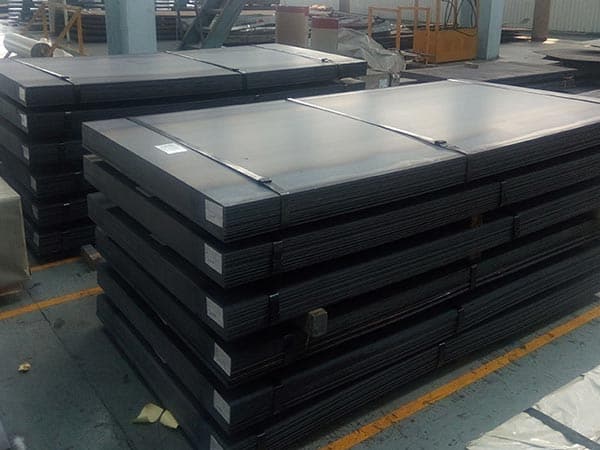
Understanding S460MC: High-Strength Low-Alloy vs. Stainless Steel
When discussing high-performance materials for the automotive industry, S460MC often surfaces as a primary candidate for structural components. A common question arises among procurement specialists and junior engineers: Is S460MC special steel for automobiles steel stainless? The short answer is no. S460MC is a high-strength low-alloy (HSLA) hot-rolled steel designed for cold forming, governed by the European standard EN 10149-2. Unlike stainless steel, which requires a minimum of 10.5% chromium to provide atmospheric corrosion resistance through a passive oxide layer, S460MC relies on a precise balance of micro-alloying elements like niobium, vanadium, and titanium to achieve its superior mechanical strength.
S460MC belongs to the category of thermomechanically rolled steels. The 'S' denotes structural steel, '460' represents the minimum yield strength of 460 MPa, and 'MC' indicates it is suitable for cold forming (C) and has been thermomechanically rolled (M). While it lacks the 'stainless' tag, its role in modern vehicle manufacturing is indispensable due to its exceptional strength-to-weight ratio, which directly contributes to fuel efficiency and crash safety.
Chemical Composition and the Role of Micro-Alloying
The performance of S460MC is rooted in its chemical architecture. To maintain excellent weldability and formability, the carbon content is kept significantly low. Instead of high carbon levels, which would make the steel brittle, engineers use micro-alloying elements to refine the grain structure. This grain refinement is the secret behind its high yield strength and toughness.
| Element | Maximum Percentage (%) |
|---|---|
| Carbon (C) | 0.12 |
| Manganese (Mn) | 1.60 |
| Silicon (Si) | 0.50 |
| Phosphorus (P) | 0.025 |
| Sulphur (S) | 0.015 |
| Aluminum (Al) | 0.015 |
| Niobium (Nb) | 0.09 |
| Vanadium (V) | 0.20 |
| Titanium (Ti) | 0.15 |
The addition of Niobium (Nb) and Titanium (Ti) facilitates the formation of fine precipitates during the thermomechanical rolling process. These precipitates pin the grain boundaries, preventing grain growth and resulting in a fine-grained ferrite-pearlite microstructure. This specific metallurgy is what differentiates S460MC from standard carbon steels and stainless steels. While stainless steels like 304 or 316 focus on chromium and nickel for corrosion protection, S460MC focuses on these micro-additions for structural integrity.
Mechanical Performance and Structural Advantages
The primary reason for selecting S460MC over other grades is its mechanical profile. In the automotive sector, reducing the 'unsprung weight' of a vehicle without compromising safety is a constant challenge. S460MC provides a yield strength that is nearly double that of conventional mild steel (like S235JR), allowing designers to use thinner gauges of steel to carry the same loads.
- Yield Strength (ReH): Minimum 460 MPa.
- Tensile Strength (Rm): 520 to 670 MPa.
- Elongation (A5): Minimum 14% (depending on thickness).
- Impact Strength: Excellent energy absorption at low temperatures, crucial for vehicle safety in cold climates.
These properties ensure that components made from S460MC can withstand high stress and dynamic loads. For example, in truck chassis frames, the material must resist constant vibration and bending moments. The high fatigue strength of S460MC makes it a superior choice compared to many stainless steel grades, which might offer better corrosion resistance but fail to match the fatigue performance or cost-effectiveness required for heavy-duty structural applications.
Processing Capabilities: Bending, Welding, and Cutting
A critical attribute of S460MC is its 'C' designation, standing for cold forming. Manufacturers require materials that can be pressed, bent, and stamped into complex shapes without cracking. S460MC exhibits a very tight bending radius, which is essential for compact automotive component designs.
Cold Bending: For S460MC, the recommended minimum inner bending radius is typically 1.0 to 1.5 times the thickness of the plate (for 90-degree bends). This high ductility, despite the high strength, is a direct result of the fine-grained structure mentioned earlier. Unlike some high-strength stainless steels that work-harden rapidly, S460MC remains manageable during the stamping process.
Weldability: Because of its low carbon equivalent (CEV), S460MC is exceptionally easy to weld using standard methods such as MAG (Metal Active Gas), MIG, or laser welding. There is a minimal risk of cold cracking in the heat-affected zone (HAZ), which is a significant advantage over higher carbon steels. While stainless steel welding requires specific filler metals and shielding gases to maintain corrosion resistance, S460MC can be integrated into high-speed automated assembly lines with standard structural welding parameters.
Environmental Adaptability and Surface Protection
Since S460MC is not a stainless steel, it does not possess inherent resistance to rust. If exposed to moisture and oxygen, it will oxidize. However, in the automotive industry, this is addressed through advanced surface treatment technologies. Components are typically subjected to E-coating (Electrophoretic deposition), hot-dip galvanizing, or specialized zinc-nickel plating.
When protected, S460MC outperforms many materials in terms of longevity under mechanical stress. Its environmental adaptability is further enhanced by its low-temperature toughness. Many structural steels become brittle at sub-zero temperatures, but the thermomechanical processing of S460MC ensures it maintains its ductility, making it safe for vehicles operating in arctic or high-altitude environments. This makes it a more reliable structural choice than certain ferritic stainless steels that might suffer from low-temperature brittleness.
Automotive Industry Applications and Weight Reduction
The push for 'lightweighting' in both Internal Combustion Engine (ICE) vehicles and Electric Vehicles (EVs) has propelled S460MC into the spotlight. In EVs specifically, the weight of the battery pack requires the chassis to be both stronger and lighter to maintain range efficiency. S460MC is frequently utilized in the following components:
- Truck Chassis Frames: Longitudinal and cross members that require high stiffness and fatigue resistance.
- Automotive Seat Frames: Where complex bending and high strength are needed to pass crash tests.
- Suspension Parts: Control arms and brackets that endure high dynamic loads.
- Crane Arms and Lifting Equipment: While not strictly 'automotive', the transport industry uses S460MC extensively for trailer construction and mobile cranes.
By substituting S355MC with S460MC, engineers can often achieve a weight reduction of 15-20% in specific structural parts. This reduction is vital for meeting global emission standards and increasing the payload capacity of commercial vehicles.
Comparative Analysis: S460MC vs. Stainless Steel
To clarify the distinction for procurement strategies, a direct comparison is necessary. Stainless steels like Grade 304 offer superior aesthetics and corrosion resistance without painting. However, their yield strength is typically around 200-250 MPa in the annealed state. To reach the 460 MPa yield strength of S460MC, stainless steel would need to be cold-worked, which significantly reduces its ductility and increases costs.
Furthermore, the cost of S460MC is substantially lower than that of 300-series or even 400-series stainless steels. For structural parts hidden within the vehicle's architecture, the high cost of chromium and nickel in stainless steel is often unjustifiable. S460MC provides the necessary strength and formability at a fraction of the price, provided a suitable coating is applied. This economic efficiency combined with high performance is why S460MC remains the 'workhorse' of automotive structural engineering.
Technical Synthesis of S460MC Utility
The choice between S460MC and other materials hinges on the specific requirements of the application. If the primary goal is structural integrity, weight reduction, and cost-effective mass production, S460MC is nearly peerless. It offers a sophisticated balance of high yield strength, excellent cold forming properties, and superb weldability. While it is not a stainless steel, its role in the automotive ecosystem is arguably more critical for the structural safety and efficiency of modern transport. Understanding that S460MC is a specialized HSLA steel allows engineers to leverage its properties correctly, ensuring that vehicles are not only safe and light but also economically viable to produce. As the industry moves toward even higher strength requirements, the foundations laid by grades like S460MC will continue to evolve, driving innovation in thermomechanical rolling and micro-alloying techniques.
Leave a message