
What are the mechanical properties of S460MC steel for construction machinery
A comprehensive technical analysis of S460MC high-strength low-alloy steel, focusing on its mechanical properties, chemical composition, processing advantages, and its critical role in modern construction machinery engineering.
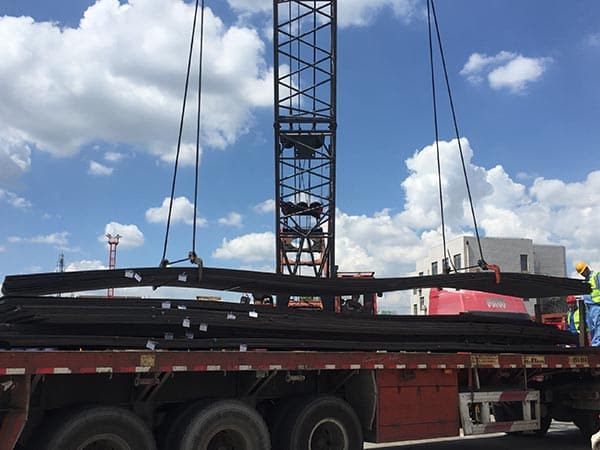
The Technical Profile of S460MC: High-Strength Performance for Heavy Engineering
S460MC is a high-yield-strength steel specifically designed for cold forming, governed by the European standard EN 10149-2. In the modern landscape of construction machinery manufacturing, where the demand for lightweighting and high load-bearing capacity is paramount, S460MC has emerged as a cornerstone material. Unlike traditional structural steels, S460MC is produced through a process known as Thermomechanically Controlled Processing (TMCP). This metallurgical approach ensures a fine-grained microstructure that balances extreme strength with exceptional ductility, a combination that was historically difficult to achieve.
The "S" in its designation stands for structural steel, "460" refers to the minimum yield strength of 460 MPa, "M" indicates the thermomechanically rolled delivery condition, and "C" signifies its suitability for cold forming. This grade is engineered to replace heavier, thicker sections of lower-grade steels like S355, allowing engineers to reduce the dead weight of machinery without compromising structural integrity. For equipment such as mobile cranes, concrete pump trucks, and heavy-duty chassis, this weight reduction directly translates to higher fuel efficiency and increased payload capacity.
Core Mechanical Properties and Yield Strength Dynamics
The primary appeal of S460MC lies in its robust mechanical profile. The yield strength is the most critical parameter for construction machinery designers, as it determines the point at which the material will begin to deform plastically. S460MC offers a minimum yield strength of 460 MPa for thicknesses up to 16mm. This high threshold allows for the design of thinner-walled components that can still withstand the massive hydraulic forces and structural stresses typical of excavators and lifting equipment.
| Mechanical Property | Value (Thickness ≤ 16mm) |
|---|---|
| Yield Strength (ReH) | ≥ 460 MPa |
| Tensile Strength (Rm) | 520 - 670 MPa |
| Elongation (A5) | ≥ 14% (depending on thickness) |
| Bending Radius (180°) | 0.8t to 1.5t (t=thickness) |
Tensile strength, ranging from 520 to 670 MPa, provides a safety margin against ultimate failure. However, strength alone is insufficient for construction machinery. The elongation properties of S460MC, typically exceeding 14%, ensure that the material can absorb energy and redistribute stress concentrations. This ductility is vital for preventing brittle fractures in components subjected to sudden impact or overloads, such as the boom of a crane or the bucket of a large loader.
Micro-Alloying and Chemical Composition Strategy
The superior performance of S460MC is not accidental; it is the result of precise micro-alloying. By adding small amounts of Niobium (Nb), Vanadium (V), and Titanium (Ti), manufacturers can achieve significant grain refinement. These elements form fine carbides and nitrides during the rolling process, which pin the grain boundaries and prevent grain growth. This fine-grained structure is the secret behind the steel's ability to maintain high strength while remaining highly weldable and formable.
- Carbon (C): Kept very low (≤ 0.12%) to ensure excellent weldability and prevent the formation of brittle martensite in the heat-affected zone.
- Manganese (Mn): Added up to 1.60% to enhance strength through solid solution strengthening and to improve hardenability.
- Silicon (Si): Limited to 0.50% to maintain surface quality and avoid issues during galvanizing or painting.
- Sulfur and Phosphorus: Strictly controlled to extremely low levels (≤ 0.015% and ≤ 0.025% respectively) to minimize inclusions and improve toughness.
This chemical balance results in a low Carbon Equivalent (CEV), which is a major advantage for fabricators. A low CEV means that S460MC can often be welded without the need for expensive and time-consuming preheating, even when working with thicker plates. This significantly reduces production costs and cycle times in the manufacturing of complex machinery frames.
Cold Forming and Processing Performance
One of the standout features of S460MC is its exceptional cold forming capability. In the production of construction machinery, many parts require complex bending and folding to create stiffening ribs or aerodynamic shapes. S460MC is designed to be bent to tight radii without cracking. For thicknesses under 3mm, the minimum bending radius can be as low as 0.8 times the thickness, which is remarkable for a steel with a yield strength of 460 MPa.
The consistency of the mechanical properties across the plate is another critical factor. Because of the TMCP process, the variation in yield strength and thickness is minimized, leading to predictable springback during bending operations. This predictability is essential for automated manufacturing environments using CNC press brakes, where precision is required to ensure the fitment of large-scale structural assemblies.
Environmental Adaptation and Fatigue Resistance
Construction machinery often operates in harsh environments, from the freezing temperatures of arctic mining sites to the humid, corrosive atmosphere of coastal infrastructure projects. S460MC demonstrates excellent low-temperature toughness. While the standard specification focuses on room temperature properties, many high-quality S460MC variants are tested for impact energy at -20°C or even -40°C. This ensures that the steel remains "tough" rather than "brittle" in cold climates, preventing catastrophic structural failures during winter operations.
Fatigue resistance is another area where S460MC excels. Construction equipment is subjected to millions of cyclic loads over its lifespan. The fine-grained structure of S460MC inhibits the initiation and propagation of fatigue cracks. When combined with proper weld design and surface finishing, S460MC components can significantly outlast those made from conventional structural steels, reducing the total cost of ownership for the end-user by extending service intervals and reducing repair needs.
Strategic Application in Modern Machinery Design
The transition to S460MC allows for a "leaner" design philosophy. In the fabrication of telescopic booms for all-terrain cranes, the use of S460MC instead of S355 allows for a reduction in plate thickness of approximately 20-25% while maintaining the same load capacity. This weight saving at the top of the boom improves the machine's stability and increases its maximum lifting height.
Similarly, for the chassis of heavy-duty trailers and trucks, S460MC provides the stiffness required to prevent excessive deflection under load while keeping the vehicle's tare weight low. This is increasingly important as global regulations on axle loads become stricter. By utilizing the high strength-to-weight ratio of S460MC, manufacturers can produce equipment that is not only more capable but also more environmentally friendly due to reduced material consumption and lower fuel usage during transport.
The material also finds extensive use in the agricultural sector, where equipment like large-scale seeders and harvesters require high strength to handle the stresses of uneven terrain but must remain light enough to minimize soil compaction. S460MC provides the perfect balance for these conflicting requirements, proving its versatility across the entire spectrum of heavy equipment engineering.
Choosing S460MC is not just about meeting a specification; it is about optimizing the entire lifecycle of the machine. From the ease of welding and forming in the factory to the durability and efficiency in the field, the mechanical properties of S460MC provide a robust foundation for the next generation of high-performance construction machinery.
Leave a message