
What is S420MC construction-machinery high-strength steel grade?
Explore the technical specifications, chemical composition, and mechanical properties of S420MC high-strength steel. Learn why this EN 10149-2 grade is essential for construction machinery and heavy-duty applications.
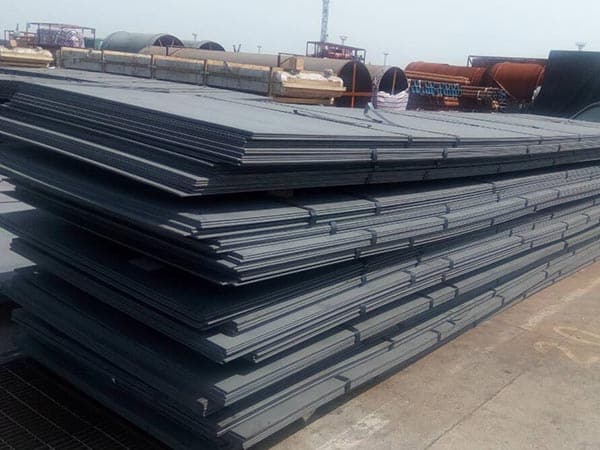
Understanding the Fundamentals of S420MC High-Strength Steel
S420MC represents a pinnacle of metallurgical engineering within the category of high-yield-strength steels designed specifically for cold forming. Governed by the European standard EN 10149-2, this grade is characterized by its thermomechanically rolled (M) process and its suitability for cold-forming (C) operations. Unlike traditional structural steels, S420MC is engineered to provide a superior strength-to-weight ratio, allowing manufacturers to reduce the mass of structural components without compromising safety or structural integrity. This makes it an indispensable material for modern heavy-duty equipment and transport systems where efficiency and durability are paramount.
The Metallurgy and Chemical Composition of S420MC
The exceptional performance of S420MC is rooted in its precise chemical balance. By utilizing a low-carbon approach supplemented with micro-alloying elements, steelmakers achieve a fine-grained microstructure that is both tough and ductile. The inclusion of elements such as Niobium (Nb), Vanadium (V), and Titanium (Ti) is critical. These elements act as grain refiners, pinning grain boundaries during the thermomechanical rolling process to prevent grain growth. This results in a material that can withstand significant stress while remaining easy to weld and form.
| Element | Max Content (%) | Function in S420MC |
|---|---|---|
| Carbon (C) | 0.12 | Ensures weldability and prevents brittleness. |
| Manganese (Mn) | 1.60 | Enhances strength and hardenability. |
| Silicon (Si) | 0.50 | Acts as a deoxidizer and solid solution strengthener. |
| Phosphorus (P) | 0.025 | Kept low to maintain toughness. |
| Sulfur (S) | 0.015 | Minimized to improve lamellar tearing resistance. |
| Niobium (Nb) | 0.09 | Grain refinement and precipitation hardening. |
| Titanium (Ti) | 0.15 | Provides high-temperature stability during welding. |
This lean alloy design ensures that the Carbon Equivalent Value (CEV) remains low, which is a significant advantage for fabrication processes. Lower CEV translates directly to reduced risks of cold cracking in the heat-affected zone (HAZ) during welding, often eliminating the need for costly preheating or post-weld heat treatments.
Mechanical Properties and Structural Performance
The "420" in S420MC signifies a minimum yield strength of 420 MPa. This high yield point allows engineers to design thinner sections that can carry the same loads as thicker, heavier sections of standard S355 grade steel. The tensile strength typically ranges between 480 and 620 MPa, providing a robust safety margin for dynamic loading environments.
- Minimum Yield Strength: 420 MPa for thicknesses ≤ 16mm.
- Tensile Strength: 480 - 620 MPa.
- Elongation: Minimum 16% to 19% depending on thickness, ensuring excellent energy absorption.
- Impact Strength: Often tested at -20°C or -40°C to ensure performance in arctic or high-altitude environments.
One of the standout features of S420MC is its consistent mechanical behavior across different batches. The thermomechanical rolling process (TMCP) ensures that the properties are uniform throughout the plate, which is vital for automated manufacturing processes such as robotic welding and CNC bending.
Processing and Fabrication Advantages
Fabricating with S420MC offers distinct advantages in the workshop. Its cold-forming capabilities are exceptional for a steel of this strength level. For thicknesses up to 3mm, the recommended internal bending radius can be as tight as 0.5 times the plate thickness (0.5t), while for thicknesses between 3mm and 6mm, a 1.0t radius is generally achievable. This tight bendability allows for more compact and complex structural designs.
Welding Performance: S420MC is compatible with all standard welding methods, including MAG, TIG, and laser welding. Due to the fine-grained structure, the material maintains its strength and toughness even after the thermal cycles of welding. However, it is crucial to manage heat input to avoid excessive grain growth in the HAZ, which could locally reduce the yield strength.
Cutting and Machining: The material is highly suited for laser, plasma, and waterjet cutting. Its low internal stress levels mean that parts remain flat and dimensionally stable after cutting, reducing the need for secondary straightening operations. This stability is a key factor in increasing throughput in high-volume production lines.
Strategic Applications in Construction and Heavy Machinery
The adoption of S420MC has transformed several heavy industries. By replacing conventional S355 steel with S420MC, manufacturers can achieve weight savings of up to 20-25%. This weight reduction has a ripple effect: it increases the payload capacity of transport vehicles, reduces fuel consumption, and lowers the overall carbon footprint of the machinery over its lifecycle.
- Crane Manufacturing: Used in telescopic booms and lattice structures where high strength and low weight are critical for reach and stability.
- Truck Chassis and Trailers: S420MC provides the necessary fatigue resistance to withstand the constant vibrations and stresses of long-haul transport.
- Agricultural Equipment: Plows, harvesters, and trailers benefit from the impact resistance and formability of this grade.
- Earthmoving Machinery: Excavator arms and loader frames utilize S420MC to handle high breakout forces while maintaining a lean profile.
Environmental Adaptability and Long-Term Durability
Operating environments for construction machinery are often harsh, involving extreme temperatures and corrosive atmospheres. S420MC performs reliably across a wide temperature spectrum. Its high toughness at low temperatures prevents brittle fractures, which is a common failure mode in heavy equipment operating in cold climates. Furthermore, when combined with modern coating technologies such as galvanizing or high-performance painting, S420MC structures exhibit excellent longevity. The clean steel chemistry (low sulfur and phosphorus) also improves the adherence and quality of protective coatings.
Economic Impact and Sustainability
From an economic perspective, the shift toward S420MC is driven by total cost of ownership. While the raw material cost per ton may be slightly higher than standard structural steel, the reduction in total material weight often leads to lower overall project costs. Fewer tons of steel mean lower shipping costs, less welding filler metal required, and faster assembly times. Additionally, the environmental benefits of lighter, more fuel-efficient machinery align with global sustainability goals and stringent emission regulations. Within the context of modern engineering, S420MC is not just a material choice; it is a strategic asset for competitive manufacturing.
Comparing S420MC with Other High-Strength Grades
While S420MC is a workhorse for many applications, it sits in a spectrum of high-strength steels. Compared to S355MC, it offers a significant jump in load-bearing capacity. When compared to higher grades like S700MC, S420MC provides a more balanced profile of strength versus cost and ease of processing. It remains the "sweet spot" for many structural applications where extreme strength is not as critical as the ability to perform complex cold-forming operations without the risk of cracking. Selecting S420MC ensures a reliable performance envelope that meets the rigorous demands of the construction and transport sectors while maintaining high fabrication efficiency.
Leave a message