
What is the plate S700MC steel for large truss truck boom beveling
Explore the technical specifications, beveling processes, and mechanical advantages of S700MC steel plates specifically engineered for large truss truck booms and heavy lifting equipment.
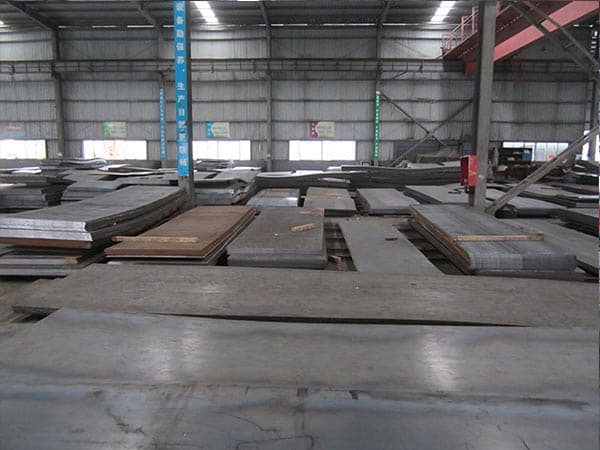
The Evolution of High-Strength Steel in Lifting Machinery
Modern engineering demands for mobile cranes, concrete pumps, and heavy-duty transport vehicles have pushed material science to its limits. The requirement for lighter yet stronger structures has led to the widespread adoption of S700MC steel. This grade, defined under the EN 10149-2 standard, represents a high-strength, low-alloy (HSLA) steel produced through a specialized thermomechanically rolled (TMCP) process. When discussing large truss truck booms, the focus shifts to how this material handles extreme stress while maintaining a reduced self-weight, which directly translates to higher lifting capacities and improved fuel efficiency for the vehicle.
The "S" in S700MC stands for structural steel, "700" denotes its minimum yield strength of 700 MPa, and "MC" indicates its thermomechanically rolled condition with high cold-forming properties. For manufacturers of large truss booms, the choice of S700MC is not merely about strength; it is about the synergy between weight reduction and structural reliability during complex maneuvers. The beveling of these plates is a critical preparatory step for welding, ensuring that the deep penetration required for truss joints is achieved without compromising the integrity of the heat-affected zone (HAZ).
Chemical Architecture of S700MC: The Power of Micro-alloying
The exceptional performance of S700MC is rooted in its precise chemical composition. Unlike traditional carbon steels that rely on high carbon content for strength, S700MC utilizes micro-alloying elements such as Niobium (Nb), Vanadium (V), and Titanium (Ti). These elements facilitate grain refinement during the rolling process, resulting in a fine-grained microstructure that offers both high strength and excellent toughness.
Low carbon levels (typically below 0.12%) are maintained to ensure superior weldability and ductility. This is vital for truss booms, where multiple components are welded together at various angles. The low carbon equivalent (CEV) minimizes the risk of cold cracking, a common issue in high-strength steel fabrication. Below is a representative table of the chemical composition and mechanical properties of S700MC:
| Element/Property | Typical Value / Requirement |
|---|---|
| Carbon (C) % max | 0.12 |
| Manganese (Mn) % max | 2.10 |
| Silicon (Si) % max | 0.60 |
| Yield Strength (Reh) MPa | Min. 700 |
| Tensile Strength (Rm) MPa | 750 - 950 |
| Elongation (A5) % min | 12 (depending on thickness) |
Mechanical Superiority: Why 700MPa Yield Strength Matters
In the context of a large truss truck boom, the yield strength is the most critical parameter. A yield strength of 700 MPa allows designers to use thinner plates compared to standard S355 steel, reducing the weight of the boom by up to 30-40%. This weight saving is a game-changer for mobile cranes, as it lowers the center of gravity and increases the reach of the truss structure.
However, strength alone is insufficient. Truss booms operate in diverse environments, from scorching deserts to arctic construction sites. S700MC provides excellent impact toughness at low temperatures (often tested at -20°C or -40°C), ensuring that the steel does not become brittle and fail catastrophically under sudden loads. The fine-grained structure produced by the TMCP process ensures that the energy absorption capacity remains high, providing a safety buffer for operators.
Precision Beveling and Cutting Techniques for Truss Booms
Beveling is the process of preparing the edges of the S700MC plate for welding, usually into V, U, or X shapes. For large truss booms, where the precision of the fit-up is paramount, the beveling method must be chosen carefully to avoid altering the steel's properties. Because S700MC is a TMCP steel, it is sensitive to excessive heat input which can soften the material.
- Laser Cutting and Beveling: Offers the highest precision and a very narrow heat-affected zone. It is ideal for the complex geometries found in truss nodes.
- Plasma Beveling: Faster for thicker plates, though it requires careful calibration to minimize the edge hardening or softening.
- Mechanical Milling: The preferred method for high-end boom manufacturing. It involves no heat, preserving the TMCP microstructure perfectly and providing a clean surface for high-quality welding.
When beveling S700MC, it is essential to remove any oxide layers or scale from the edges. The cleanliness of the bevel directly affects the quality of the subsequent weld, particularly in robotic welding environments where consistency is key.
Welding S700MC: Maintaining Structural Integrity in the HAZ
Welding is the most critical phase in the fabrication of truss booms. The challenge with S700MC lies in the Heat Affected Zone (HAZ). Excessive heat input during welding can lead to grain growth, which reduces the yield strength in the area adjacent to the weld. To prevent this, fabricators must strictly control the cooling time (t8/5), which is the time it takes for the weld to cool from 800°C to 500°C.
Using low-hydrogen welding consumables is mandatory to prevent hydrogen-induced cracking. Matching or slightly under-matching filler metals are often used depending on the design requirements. For truss structures where fatigue is a concern, ensuring a smooth transition between the weld bead and the base metal is vital. Proper beveling helps in achieving a full-penetration weld with a favorable profile, reducing stress concentrations at the joints.
Cold Forming and Ductility: Shaping the Future of Boom Design
Despite its high strength, S700MC exhibits remarkable cold-forming characteristics. It can be bent to tight radii without cracking, which is essential for forming the U-shaped or hexagonal profiles often used in boom sections. The minimum bending radius for S700MC is typically 2 to 3 times the plate thickness, depending on the bending direction relative to the rolling direction.
This ductility is a result of the low carbon content and the controlled rolling process. For truss booms that utilize hollow sections or folded plates, S700MC allows for innovative designs that maximize the moment of inertia while minimizing material usage. Fabricators must ensure that the bending tools are clean and that the plate surface is free from scratches, as high-strength steels are more sensitive to surface defects during the forming process.
Environmental Resilience and Fatigue Life in Heavy Operations
Truss truck booms are subjected to cyclic loading, making fatigue resistance a primary design consideration. The uniform microstructure of S700MC provides a consistent baseline for fatigue life calculations. Furthermore, the steel's resistance to atmospheric corrosion can be enhanced through modern coating systems, though the material itself possesses a degree of resilience due to its dense, fine-grained surface.
In high-cycle applications, the quality of the bevel and the subsequent weld toe treatment (such as grinding or ultrasonic impact treatment) can significantly extend the service life of the boom. S700MC’s ability to withstand these post-weld treatments without losing its core mechanical properties makes it the preferred choice for long-term durability in the field.
Comparative Analysis: S700MC vs. Conventional Structural Steels
To understand the value proposition of S700MC, one must compare it to traditional grades like S355. While S355 is easier to process and cheaper per ton, the total cost of ownership for a crane made of S700MC is often lower. The reduction in material weight leads to lower transport costs, smaller hydraulic components, and higher operational efficiency.
| Feature | S355J2 | S700MC |
|---|---|---|
| Yield Strength | 355 MPa | 700 MPa |
| Weight Reduction Potential | Baseline | Up to 40% |
| Weldability | Excellent | Excellent (with heat control) |
| Cold Forming | Good | Excellent |
| Application | General Construction | High-Performance Lifting |
The shift towards S700MC in the manufacturing of large truss truck booms is driven by the relentless pursuit of performance. By understanding the nuances of its chemical composition, the requirements for precision beveling, and the necessity of controlled welding, engineers can unlock the full potential of this advanced material, creating machines that are not only stronger and lighter but also safer and more sustainable for the global infrastructure market.
Leave a message