
What does S960MC steel for car safety parts stand for?
A comprehensive technical guide to S960MC steel, explaining its nomenclature, mechanical properties, thermomechanical processing, and its critical role in automotive safety and lightweighting.
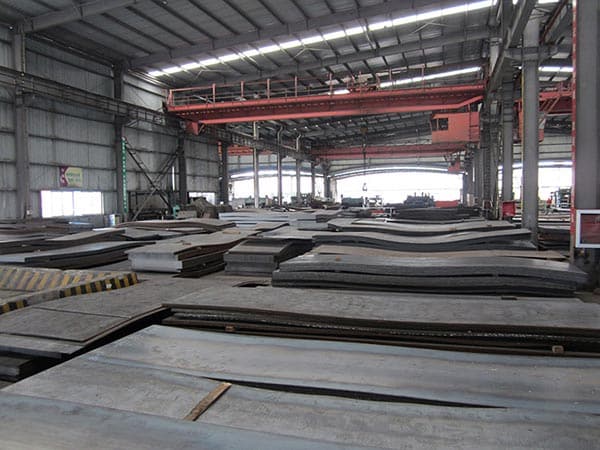
The Technical Breakdown of S960MC Nomenclature
S960MC is not merely a sequence of characters; it is a precise technical shorthand defined by the European standard EN 10149-2. To understand its role in automotive safety, one must first decode the structural DNA embedded in its name. The 'S' designates this material as a structural steel, intended for load-bearing applications where integrity is paramount. The number '960' represents the minimum yield strength of 960 Megapascals (MPa). In practical terms, this means the steel can withstand a pressure of 960 Newtons per square millimeter before it begins to undergo permanent plastic deformation. For automotive engineers, this high threshold allows for the design of components that maintain their shape under extreme stress.
The 'M' refers to the delivery condition: Thermomechanically Rolled (TMCP). Unlike traditional normalized or quenched and tempered steels, TMCP steel achieves its strength through a sophisticated combination of controlled temperature rolling and accelerated cooling. This process refines the grain structure to a microscopic level, enhancing both strength and toughness simultaneously. Finally, the 'C' stands for Cold Forming. This indicates that despite its immense strength, the material retains the ductility required to be bent, pressed, or flanged into complex automotive geometries without cracking or structural failure.
Metallurgical Composition and the Role of Micro-alloying
The performance of S960MC in car safety parts is rooted in its low-carbon, micro-alloyed chemical profile. Traditional high-strength steels often rely on high carbon content, which compromises weldability and increases brittleness. S960MC breaks this trade-off. By keeping carbon levels typically below 0.12%, the steel maintains excellent weldability and impact resistance. The strength is instead derived from minute additions of micro-alloying elements such as Niobium (Nb), Vanadium (V), and Titanium (Ti).
These elements form fine precipitates within the steel matrix, pinning grain boundaries and preventing grain growth during the rolling process. This grain refinement is the only strengthening mechanism that improves both yield strength and low-temperature toughness. In the event of a vehicle collision, this metallurgical structure ensures that the safety parts absorb energy through deformation rather than fracturing abruptly. Manganese (Mn) is also utilized, often up to 2.20%, to enhance hardenability and solid solution strengthening without significantly increasing the carbon equivalent (Ceq).
Mechanical Performance and Safety Implications
In the context of automotive safety, S960MC offers a unique balance of mechanical properties. While its yield strength is the headline feature, its tensile strength and elongation are equally critical. Typically, S960MC exhibits a tensile strength between 980 and 1250 MPa, providing a robust safety margin. The elongation at break, though lower than mild steels, is optimized around 7% to 10% (depending on thickness), which is sufficient for the energy-absorbing requirements of modern crash-test standards.
| Property | Value (Typical for S960MC) | Unit |
|---|---|---|
| Minimum Yield Strength (ReH) | 960 | MPa |
| Tensile Strength (Rm) | 980 - 1250 | MPa |
| Minimum Elongation (A5) | 7 | % |
| Bending Radius (90°) | 3.0t - 4.0t | - |
The high yield-to-tensile ratio of S960MC is particularly beneficial for parts like bumper beams and side-impact protection bars. These components must resist intrusion into the passenger cabin during a crash. By utilizing S960MC, manufacturers can achieve the necessary stiffness with significantly thinner gauges, contributing to the overarching goal of vehicle lightweighting without compromising occupant protection.
Processing Performance: Welding and Cold Forming
Fabricating safety parts from S960MC requires a deep understanding of its thermal sensitivity. Because the strength is derived from the TMCP process and micro-alloying, excessive heat input during welding can lead to a phenomenon known as "softening" in the Heat Affected Zone (HAZ). To mitigate this, engineers must strictly control the cooling time (t8/5). Using low-hydrogen welding consumables and techniques like MAG (Metal Active Gas) welding with optimized pulse settings ensures that the joint maintains a high percentage of the base metal's strength.
- Cold Forming: S960MC is designed for cold pressing. However, due to its high strength, the "springback" effect is more pronounced than in lower-grade steels. Tooling must be designed with compensation for this elastic recovery.
- Bending: The minimum bending radius is typically 3 to 4 times the material thickness. It is recommended to bend transverse to the rolling direction to minimize the risk of surface tearing.
- Laser Cutting: The low impurity content (low Sulfur and Phosphorus) of S960MC makes it ideal for high-precision laser cutting, resulting in clean edges that require minimal post-processing.
Strategic Applications in the Automotive Industry
The shift toward Electric Vehicles (EVs) has accelerated the adoption of S960MC. The heavy weight of battery packs necessitates drastic weight reduction in the chassis and body-in-white to maintain range. S960MC is frequently employed in cross-members, longitudinal beams, and seat frames. These parts are critical for maintaining the structural cage of the vehicle. By replacing traditional S355 or S700MC grades with S960MC, weight savings of 20% to 40% can be achieved in specific components.
Furthermore, the material's environmental adaptability is noteworthy. S960MC maintains its toughness at low temperatures, which is vital for vehicles operating in arctic climates where materials can become brittle. The consistent performance across a wide temperature range ensures that safety systems like bumper brackets and towing hooks function reliably regardless of the environment.
Sustainability and Lifecycle Efficiency
Beyond immediate safety, S960MC contributes to the broader goal of sustainable mobility. Thinner steel sections mean less raw material is consumed per vehicle. Additionally, the high strength-to-weight ratio directly correlates to lower fuel consumption in internal combustion engines and increased efficiency in EVs. The recyclability of S960MC is also a major advantage; as a low-alloy steel, it can be easily integrated back into the steelmaking process at the end of the vehicle's life, supporting a circular economy.
The manufacturing process of TMCP steel itself is more energy-efficient than traditional quenching and tempering routes, as it eliminates the need for separate heat treatment cycles. This reduces the overall carbon footprint of the automotive supply chain. As global regulations on CO2 emissions tighten, the transition to ultra-high-strength grades like S960MC is no longer an option but a necessity for the modern automotive engineer.
Leave a message