
Is strenx steel steel stainless?
Discover why Strenx is not stainless steel and how its high-strength properties revolutionize engineering. Learn about its composition, welding, and industrial uses.
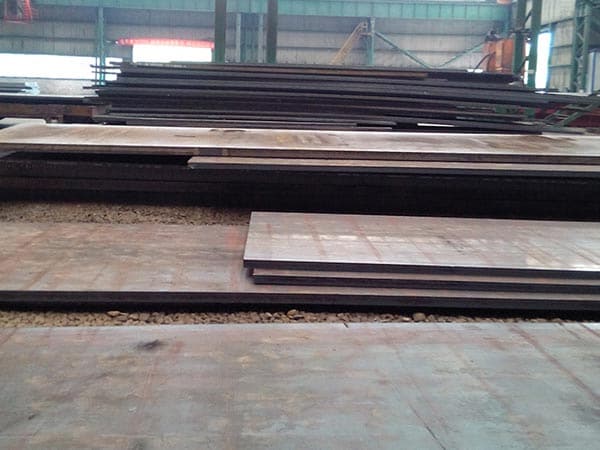
The Fundamental Distinction: Is Strenx Steel Stainless?
When engineers and procurement specialists evaluate materials for high-performance applications, a common question arises: Is Strenx steel stainless? To provide a direct answer: No, Strenx is not a stainless steel. Strenx is a high-strength structural steel (HSS) developed by SSAB, specifically designed for applications where weight reduction and high load-bearing capacity are paramount. While stainless steel is defined by its high chromium content (minimum 10.5%) to provide corrosion resistance, Strenx focuses on yield strength, toughness, and workshop productivity.
Understanding the difference is crucial for material selection. Stainless steels like Grade 304 or 316 are chosen for their ability to resist oxidation and chemical attack. In contrast, Strenx is a quenched and tempered (Q&T) or thermomechanically rolled steel that offers yield strengths ranging from 600 MPa to 1300 MPa. This allows for significantly thinner sections compared to standard mild steel, leading to lighter structures without sacrificing safety or durability.
Chemical Composition and Why It Differs from Stainless
The chemistry of Strenx is optimized for weldability and formability rather than passive film formation. While stainless steel relies on a thick layer of chromium oxide to prevent rust, Strenx utilizes a precise micro-alloying strategy. It contains low levels of carbon to ensure excellent welding properties and utilizes elements like manganese, silicon, and sometimes boron or molybdenum to achieve its extreme strength.
| Element | Strenx 700 MC (Typical %) | 304 Stainless Steel (Typical %) |
|---|---|---|
| Chromium (Cr) | Max 0.15 - 0.30 | 18.0 - 20.0 |
| Nickel (Ni) | Minimal traces | 8.0 - 10.5 |
| Carbon (C) | Max 0.12 | Max 0.08 |
| Manganese (Mn) | Max 2.10 | Max 2.00 |
As shown in the table, the chromium content in Strenx is negligible compared to stainless steel. Therefore, Strenx will oxidize (rust) if exposed to moisture and oxygen without a protective coating. However, this lack of high alloy content makes it much more cost-effective for large-scale structural projects where corrosion can be managed through painting, galvanizing, or specialized primers.
Mechanical Performance: The Power of Yield Strength
The primary value proposition of Strenx lies in its mechanical properties. Traditional structural steels like S355 offer a yield strength of 355 MPa. Strenx starts where these steels end. For instance, Strenx 700 provides nearly double the strength of S355, allowing engineers to reduce the thickness of steel plates by up to 40% while maintaining the same load capacity.
- High Yield Strength: Available from 600 to 1300 MPa, enabling extreme weight savings.
- Impact Toughness: Most Strenx grades offer guaranteed impact toughness at low temperatures (e.g., -40°C or -60°C), making them ideal for Arctic environments or high-stress dynamic loads.
- Consistency: Tight tolerances on thickness and flatness ensure that automated laser cutting and robotic welding processes remain stable.
This mechanical superiority translates directly into fuel efficiency for the transport industry. A lighter trailer made of Strenx can carry more payload, reducing the number of trips and lowering the overall carbon footprint of the operation.
Fabrication and Workshop Properties
One might assume that such a strong steel would be difficult to work with. On the contrary, Strenx is engineered for the workshop. Its low carbon equivalent (CEV) makes it exceptionally easy to weld using standard methods like MAG/MIG, MMA, or submerged arc welding. Unlike some stainless steels that suffer from high thermal expansion and distortion, Strenx remains relatively stable during the welding process.
Bending and Forming: Strenx possesses remarkable cold-forming properties. Despite its hardness, it can be bent to tight radii without cracking, provided the manufacturer's guidelines for minimum inner radius and die width are followed. This ductility is a result of the clean steel-making process and controlled rolling temperatures used by SSAB.
Cutting: Whether using laser, plasma, or waterjet cutting, Strenx maintains its edge quality. The low impurity levels mean that dross is minimized, and the heat-affected zone (HAZ) is narrow, preserving the integrity of the high-strength properties near the cut edge.
Environmental Adaptability and Surface Protection
Since Strenx is not stainless, environmental adaptation requires a strategy for surface protection. In heavy machinery and lifting equipment, this is typically achieved through high-quality industrial coating systems. Because Strenx has a very clean surface finish and tight scale adhesion, it provides an excellent substrate for primers and paints.
In environments where atmospheric corrosion is a major concern, Strenx can be hot-dip galvanized, though care must be taken regarding the silicon and phosphorus content to ensure a uniform zinc layer. For many applications, the sheer thickness reduction allowed by Strenx means that even with a coating system, the total lifecycle cost is lower than using thicker, heavier mild steel or expensive stainless alloys.
Expanding Applications Across Industries
The shift toward Strenx is visible in sectors where performance and weight are critical. In the lifting industry, crane booms made of Strenx 1100 or 1300 can reach higher and lift heavier loads than ever before. The reduction in boom weight also improves the stability of the entire vehicle.
In the agricultural sector, implements like sprayers and plows benefit from Strenx by becoming lighter, which reduces soil compaction and lowers tractor fuel consumption. Similarly, in the recycling and waste management industry, container bodies made of Strenx can withstand the rigorous impact of loading and unloading while remaining light enough to maximize legal road weights.
The transport industry remains the largest consumer of these materials. From chassis frames to side guards, the integration of high-strength steel allows for a "design-to-weight" philosophy that is essential for modern logistics. By choosing Strenx over stainless or mild steel, manufacturers can optimize the balance between strength, weight, and cost-efficiency.
Summary of Material Choice
Choosing between Strenx and stainless steel depends entirely on the primary failure mode the design seeks to prevent. If the primary threat is chemical corrosion or hygiene requirements (such as in food processing), stainless steel is the correct choice. However, if the goal is to build a stronger, lighter, and more sustainable structure that can withstand massive mechanical stresses, Strenx is the undisputed leader. Its role in modern engineering is not to replace stainless steel, but to redefine what is possible in structural design through advanced metallurgy and superior mechanical performance.
Leave a message