
How about the cost performance of s420mc galvanealed coil density
A professional guide exploring S420MC galvanealed coil, focusing on its density, mechanical properties, and economic advantages for industrial applications.
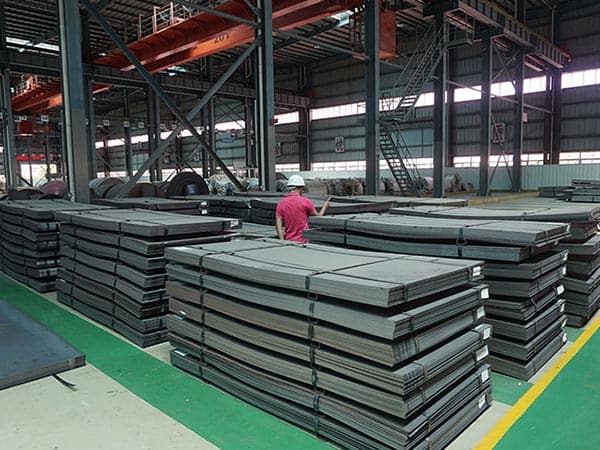
Understanding the Core Value of S420MC Galvanealed Coil
In the modern steel market, selecting a material that balances high strength with exceptional surface protection is a strategic necessity. S420MC galvanealed coil stands out as a high-strength low-alloy (HSLA) steel that has undergone thermomechanical rolling and a specialized zinc-iron alloy coating process. The "420" signifies a minimum yield strength of 420 MPa, while the "MC" indicates its suitability for cold forming. When we analyze the cost performance of this material, we must integrate its physical density with its structural efficiency and processing advantages.
The galvanealing process (often designated as ZF in European standards) differs from standard hot-dip galvanizing. After the zinc bath, the steel undergoes an additional annealing heat treatment, causing the iron from the substrate to diffuse into the zinc coating. This creates a matte, zinc-iron alloy layer (typically 8-12% iron) that offers superior weldability and paint adhesion compared to traditional galvanized surfaces. For manufacturers, this means reduced post-processing costs and enhanced product longevity.
The Intersection of Density and Structural Efficiency
The density of S420MC steel is approximately 7.85 g/cm³ (or 7850 kg/m³). While this value is standard across most carbon and alloy steels, the "cost performance" arises from the strength-to-weight ratio. Because S420MC offers significantly higher yield strength than standard mild steels like S235JR or DC01, engineers can specify thinner gauges without compromising the structural integrity of the component.
Consider a structural bracket: replacing a 4.0mm thick S235 steel part with a 2.5mm or 3.0mm S420MC part can achieve the same load-bearing capacity. This reduction in thickness directly translates to a reduction in the total mass of the material used. Even if the price per ton of S420MC is higher, the total material cost per unit often decreases because fewer kilograms of steel are required. This lightweighting is particularly critical in automotive and transportation sectors where reducing vehicle weight improves fuel efficiency and payload capacity.
| Property | Value / Specification |
|---|---|
| Density | 7.85 g/cm³ |
| Yield Strength (ReH) | Min. 420 MPa |
| Tensile Strength (Rm) | 480 - 620 MPa |
| Elongation (A80mm) | Min. 16% (Thickness < 3mm) |
| Coating Type | Galvanealed (Zinc-Iron Alloy) |
Mechanical Properties and Processing Performance
The cost-effectiveness of S420MC is deeply rooted in its mechanical reliability. Unlike older generations of high-strength steels, S420MC maintains excellent ductility and cold-forming properties. This is achieved through precise control of the chemical composition, utilizing micro-alloying elements such as Niobium (Nb), Titanium (Ti), and Vanadium (V) to refine the grain structure.
- Cold Forming: S420MC is designed for complex bending and folding. Its fine-grained microstructure prevents cracking at the bend radii, which reduces scrap rates during production.
- Weldability: The low carbon equivalent (CEV) of S420MC ensures that it can be welded using standard methods (MIG, TIG, Spot Welding) without the need for pre-heating or complex post-weld heat treatments.
- Hole Expansion: This grade exhibits a high hole expansion ratio, making it ideal for parts that require flanging or punched holes that undergo subsequent stretching.
From a manufacturing perspective, the consistency of these properties across different batches of S420MC galvanealed coils ensures that automated production lines can run at high speeds with minimal adjustments. This stability is a hidden but vital component of the overall cost performance equation.
Galvanealed Coating: Beyond Simple Corrosion Resistance
The galvanealed (GA) coating on S420MC provides a unique set of benefits that standard galvanized (GI) coatings cannot match. The zinc-iron alloy layer is harder and more brittle than pure zinc, which might seem like a disadvantage, but it provides a microscopic surface profile that is exceptionally conducive to painting and bonding.
In automotive body-in-white applications or industrial enclosures, the ability to paint directly onto the galvanealed surface with minimal surface preparation saves significant time and chemical costs. The coating's high electrical resistance also improves the efficiency of spot welding, as it requires lower current and causes less electrode wear than pure zinc coatings. This extends the life of manufacturing consumables and reduces maintenance downtime.
Chemical Composition and Microstructural Stability
The performance of S420MC is a result of strict metallurgical control. The balance of elements ensures that the steel remains strong yet workable. Below is a typical chemical composition breakdown for S420MC according to EN 10149-2 standards:
| Element | Maximum Content (%) |
|---|---|
| Carbon (C) | 0.12 |
| Manganese (Mn) | 1.60 |
| Silicon (Si) | 0.50 |
| Phosphorus (P) | 0.025 |
| Sulfur (S) | 0.015 |
| Aluminium (Al) | 0.015 (Min) |
| Nb+Ti+V | 0.22 |
This lean chemistry is the reason for the material's excellent weldability. The inclusion of micro-alloys facilitates "precipitation hardening," where small carbides and nitrides pin grain boundaries, preventing grain growth during the thermomechanical rolling process. This results in a material that is uniform in its density and mechanical response across the entire width and length of the coil.
Environmental Adaptation and Lifecycle Costs
When evaluating the cost performance of S420MC galvanealed coil, the lifecycle of the final product is a primary factor. The zinc-iron alloy coating provides sacrificial protection to the steel substrate. Even if the coating is scratched, the surrounding zinc will corrode preferentially, protecting the structural S420MC core.
Furthermore, the matte finish of the galvanealed coating is highly resistant to "powdering" or "flaking" during heavy forming operations, provided the tooling is correctly calibrated. This means the corrosion protection remains intact even after the steel has been stamped into complex shapes. For products exposed to outdoor environments or corrosive industrial atmospheres, this durability prevents premature failure and reduces the need for expensive field repairs or replacements.
Strategic Application Across Industries
The versatility of S420MC galvanealed coil allows it to penetrate various high-demand sectors. In the heavy machinery industry, it is used for crane booms and chassis components where weight reduction is synonymous with performance. In the construction sector, it serves as the primary material for high-strength purlins and cladding rails that must withstand significant wind loads while remaining lightweight for easy installation.
The HVAC industry also benefits from the galvanealed coating's ability to resist humidity and its ease of painting, allowing for aesthetic integration into architectural designs. By utilizing the 420 MPa yield strength, designers can create slimmer, more modern profiles that maintain the same safety factors as bulkier, lower-grade alternatives.
Optimizing Procurement for Maximum ROI
To maximize the cost performance of S420MC galvanealed coil, procurement teams should focus on several key factors. First, verifying the mill's adherence to EN 10149-2 or equivalent standards ensures that the mechanical properties will meet design requirements. Second, specifying the correct coating weight (e.g., ZF100 or ZF120) is essential to balance corrosion resistance with material cost.
Working with suppliers who provide precision slitting and decoiling can also reduce internal processing waste. Since S420MC is a high-value material, minimizing edge scrap and optimizing nesting patterns for stamped parts can lead to substantial financial savings. Ultimately, the value of S420MC galvanealed coil lies in its ability to do more with less—less weight, less processing time, and less maintenance—making it one of the most cost-effective solutions for modern engineering challenges.
Leave a message