
What is s700mce galvanealed coil mild steel
Comprehensive analysis of S700MCE galvannealed coil, covering its 700MPa yield strength, micro-alloying chemistry, galvannealing benefits, and industrial applications.
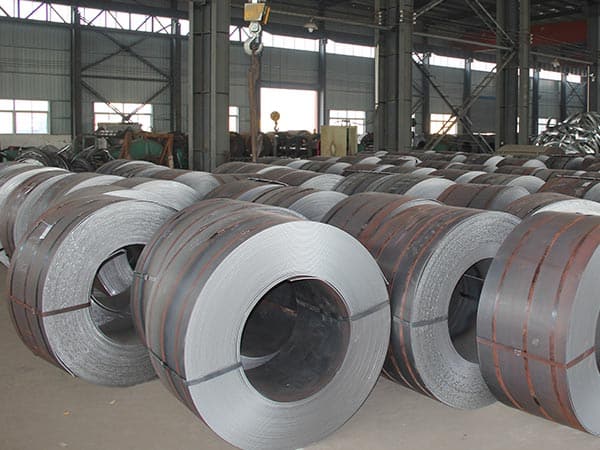
Understanding S700MCE: The Intersection of High Strength and Advanced Coating
S700MCE galvannealed coil represents a sophisticated category of High-Strength Low-Alloy (HSLA) steel that has been thermomechanically rolled and subsequently treated with a zinc-iron alloy coating. While the term mild steel is often used colloquially in purchasing circles, S700MCE technically sits far above traditional mild steel (like S235 or DC01) in terms of mechanical performance. The 'S' denotes structural steel, '700' signifies a minimum yield strength of 700 MPa, 'MC' indicates it is thermomechanically rolled for cold forming, and the 'E' often refers to specific impact energy requirements or enhanced surface qualities depending on the mill standard. The addition of a galvannealed (ZF) coating elevates this material by providing a matte, paint-ready surface with exceptional weldability and corrosion resistance.
The Chemistry of Strength: Micro-Alloying Elements
The exceptional strength-to-weight ratio of S700MCE is achieved through precise chemical composition and grain refinement. Unlike traditional carbon steels that rely on high carbon content for strength—which often compromises weldability—S700MCE maintains a low carbon equivalent. This is made possible by micro-alloying elements such as Niobium (Nb), Vanadium (V), and Titanium (Ti). These elements facilitate grain refinement during the thermomechanical rolling process, creating a fine-grained microstructure that resists deformation while maintaining ductility.
- Carbon (C): Kept at low levels (typically <0.12%) to ensure excellent weldability and prevent brittleness.
- Manganese (Mn): Enhances hardenability and contributes to solid solution strengthening.
- Silicon (Si): Acts as a deoxidizer and improves yield strength.
- Niobium and Titanium: Form carbides and nitrides that pin grain boundaries, preventing grain growth during processing.
Mechanical Properties and Performance Benchmarks
The primary reason engineers specify S700MCE is its remarkable mechanical profile. With a yield strength nearly three times that of standard structural steel, it allows for significant 'lightweighting' in design. This means thinner gauges can be used to achieve the same structural integrity, reducing the overall weight of vehicles or machinery, which in turn improves fuel efficiency and payload capacity.
| Property | Value (Typical) |
|---|---|
| Minimum Yield Strength (ReH) | 700 MPa |
| Tensile Strength (Rm) | 750 - 950 MPa |
| Minimum Elongation (A80mm) | 10% - 12% |
| Bending Radius (90°) | 1.5t to 2.0t (depending on thickness) |
The Galvannealing Process: Why Zinc-Iron Alloy Matters
The galvannealed coating (often designated as ZF) is what distinguishes this material from standard galvanized (Z) steel. After the steel is dipped in a molten zinc bath, it undergoes an additional annealing process. This causes the iron from the steel substrate to diffuse into the zinc coating, creating a zinc-iron alloy layer (typically 8-12% iron). The resulting surface is matte grey, harder than pure zinc, and has a very different microscopic topography.
Superior Paint Adhesion: The matte, slightly porous surface of the galvannealed layer provides an excellent mechanical bond for primers and paints. This eliminates the need for complex pre-treatments required by standard galvanized surfaces. Enhanced Weldability: Because the coating contains iron, it has a higher melting point and lower electrical resistance than pure zinc. This results in significantly improved spot welding performance, longer electrode life, and more stable weld pools compared to traditional galvanized coils.
Processing and Fabrication: Bending, Cutting, and Welding
Despite its high strength, S700MCE is specifically designed for cold forming. The thermomechanical rolling process ensures that the material remains ductile enough for complex bending and folding. However, due to the high yield strength, fabricators must account for springback. When bending S700MCE, the material tends to return toward its original shape more than mild steel, requiring over-bending techniques and high-precision tooling.
Laser Cutting: S700MCE is highly compatible with modern fiber and CO2 laser cutting systems. The clean chemical composition ensures minimal slag and high-quality cut edges. Welding: Due to the low carbon equivalent (CEV), S700MCE exhibits excellent weldability using MIG, TIG, and laser welding methods. It is crucial to use appropriate filler metals that match the high strength of the base material to maintain the structural integrity of the joint.
Environmental Adaptability and Corrosion Protection
The zinc-iron alloy coating of S700MCE provides robust protection in diverse environments. While standard galvanizing offers sacrificial protection, the galvannealed layer adds a layer of barrier protection that is less prone to 'white rust' during storage. In automotive and heavy equipment applications, this coating prevents cosmetic corrosion and maintains structural safety over the lifespan of the product. Furthermore, the ability to apply high-quality powder coatings or automotive paints directly to the ZF surface creates a secondary defense against salt, moisture, and industrial pollutants.
Strategic Applications in Modern Engineering
The shift toward S700MCE is driven by the demand for efficiency and durability. In the transportation industry, it is used extensively for truck chassis, trailer frames, and cross members. By using S700MCE, manufacturers can reduce the dead weight of a trailer by hundreds of kilograms, directly increasing the profit-per-mile for logistics operators. In the lifting and construction sector, crane booms and telescopic arms utilize the high strength of S700MCE to reach greater heights and lift heavier loads without increasing the machine's footprint.
Automotive Safety Components: Modern passenger vehicles incorporate S700MCE in crumple zones, bumper beams, and seat frames. The material's ability to absorb energy during an impact while remaining lightweight makes it indispensable for meeting modern safety and emission standards. Agricultural Machinery: Plows, harvesters, and seeders benefit from the abrasion resistance and structural toughness of this steel grade, ensuring they can withstand the rigors of heavy soil work and outdoor exposure.
Technical Comparison: S700MCE vs. Traditional Grades
To fully appreciate the value of S700MCE, it is helpful to compare it against more common grades. While S355 is a staple in construction, it lacks the weight-saving potential of S700. Conversely, while some ultra-high-strength steels (UHSS) offer even higher yield points, they often sacrifice the formability and weldability that S700MCE retains.
| Feature | S355 (Structural) | S700MCE (HSLA) | Advantages of S700MCE |
|---|---|---|---|
| Yield Strength | 355 MPa | 700 MPa | 97% higher strength |
| Weight for same load | 100% | ~55-60% | Significant weight reduction |
| Weldability | Excellent | Excellent | Comparable despite higher strength |
| Coating Type | Often Z (Galvanized) | ZF (Galvannealed) | Better paintability and welding |
Procurement and Quality Standards
When sourcing S700MCE galvannealed coils, it is vital to ensure compliance with international standards such as EN 10149-2 for the base metal and EN 10346 for the galvannealed coating. Quality certificates (MTC) should be scrutinized for actual yield and tensile values, as well as the coating mass (e.g., ZF100 or ZF140). Proper storage is also essential; although the galvannealed surface is resilient, coils should be kept in dry, temperature-controlled environments to prevent moisture entrapment between wraps, which can lead to surface oxidation.
Leave a message