
What is the role of penetration testing in s700 high strength steel auto plate cutting
Explore how penetration testing ensures the structural integrity of S700 high-strength steel during automotive plate cutting, preventing micro-cracks and enhancing component longevity.
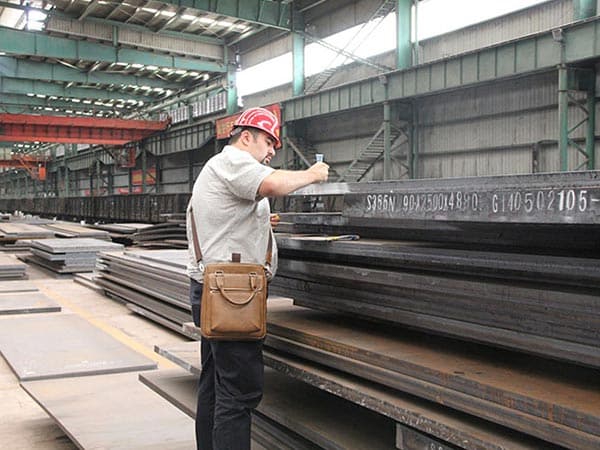
The Technical Evolution of S700 High Strength Steel in Automotive Engineering
S700 high-strength low-alloy (HSLA) steel represents a pinnacle of metallurgical engineering, specifically designed to meet the rigorous demands of the modern automotive industry. With a minimum yield strength of 700 MPa, this material allows manufacturers to reduce vehicle weight significantly without compromising structural safety. The shift toward lightweighting is driven by global emissions standards and the increasing energy density requirements of electric vehicles (EVs). However, the very properties that make S700 desirable—its high strength-to-weight ratio and refined grain structure—also make it sensitive to thermal and mechanical processing. Cutting these plates is not merely a separation process; it is a complex metallurgical event that can introduce latent defects. This is where penetration testing (PT) emerges as a non-negotiable quality control protocol.
The Thermal Dynamics of Cutting S700 Plates
Automotive plates made of S700 are typically processed using high-energy cutting methods such as fiber laser cutting, plasma cutting, or traditional flame cutting. Each of these methods generates a Heat Affected Zone (HAZ) along the cut edge. In S700 steel, the micro-alloying elements like vanadium, niobium, and titanium are distributed to maintain a fine-grained ferritic-bainitic structure. When the edge is heated to its melting point and then rapidly cooled by the surrounding mass of the plate (a self-quenching effect), the microstructure at the edge can transform into brittle martensite or develop micro-cracks due to thermal expansion and contraction cycles.
| Property Type | S700 Typical Values | Impact on Cutting Quality |
|---|---|---|
| Yield Strength (ReH) | ≥ 700 MPa | High residual stress after thermal cutting. |
| Tensile Strength (Rm) | 750 - 950 MPa | Requires precise energy input to avoid edge hardening. |
| Elongation (A5) | ≥ 12% | Edge ductility must be preserved for subsequent forming. |
| Carbon Equivalent (CEV) | ≤ 0.48 | Determines the susceptibility to cold cracking. |
Defining the Role of Penetration Testing (PT)
Penetration testing, often referred to as Liquid Penetrant Inspection (LPI), is a non-destructive testing (NDT) method utilized to detect surface-breaking discontinuities. In the context of S700 auto plate cutting, PT serves as the primary defense against micro-fissures and edge laminations that are invisible to the naked eye. While visual inspection might confirm the absence of dross or major slag, it cannot identify the microscopic stress cracks that propagate from the cut face into the base metal. These cracks, if left undetected, act as stress concentrators during the vehicle's operational life, leading to catastrophic fatigue failure under cyclic loading conditions.
Identifying Surface-Breaking Defects in the HAZ
The primary role of penetration testing in S700 cutting is the validation of edge integrity. During laser or plasma cutting, the rapid solidification of the molten pool can lead to "hot cracking" or "solidification cracking." Furthermore, if the S700 plate has any internal inclusions or segregations, the thermal shock of cutting can cause these to open up at the surface. PT utilizes capillary action to draw a visible or fluorescent dye into these tiny openings. Once the excess penetrant is removed and a developer is applied, the dye bleeds out, providing a high-contrast indication of the defect's location and orientation. This allows engineers to determine if the cut edge requires grinding or if the entire part must be scrapped before it reaches the welding or assembly stage.
The Process of Penetration Testing for S700 Components
Executing an effective PT on S700 steel requires a disciplined approach to ensure sensitivity and accuracy. The high density of the steel means that even the smallest crack can be a major structural risk.
- Surface Preparation: The cut edge must be cleaned of scale, oil, and oxides. For S700, mechanical cleaning is preferred to ensure the penetrant can enter the tightest cracks.
- Application of Penetrant: A high-sensitivity liquid penetrant is applied. The "dwell time" is critical; for high-strength steels, a longer dwell time is often necessary to allow the liquid to penetrate deep into narrow thermal cracks.
- Removal of Excess: Careful removal ensures that only the penetrant inside the defects remains. Over-washing can remove the penetrant from shallow cracks, leading to false negatives.
- Development: A developer (usually a white powder) is applied to draw the penetrant back to the surface, creating a visible "map" of the defects.
- Inspection and Interpretation: Under adequate lighting (or UV light for fluorescent penetrants), the edges are inspected for linear or rounded indications.
Environmental and Process Factors Influencing S700 Edge Quality
The performance of S700 in automotive applications is heavily dependent on its environment. Components like truck chassis, crane arms, and safety cages are exposed to vibration, corrosive road salts, and extreme temperature fluctuations. A cut edge with micro-cracks is highly susceptible to Stress Corrosion Cracking (SCC). Penetration testing ensures that the protective coatings applied later (such as galvanizing or e-coating) are not bridging over existing cracks that could expand underneath the coating. By ensuring a pristine edge through PT, manufacturers guarantee that the material's environmental adaptability is fully utilized.
Economic Impact and Risk Mitigation
Integrating penetration testing into the S700 cutting workflow is a strategic economic decision. While it adds a step to the production cycle, the cost of NDT is negligible compared to the cost of a product recall or a structural failure in a heavy-duty vehicle. In the high-stakes automotive market, where liability and brand reputation are paramount, PT provides a documented audit trail of quality. It allows for the optimization of cutting parameters; if PT consistently reveals cracks in a specific batch, engineers can adjust laser power, cutting speed, or gas pressure to mitigate the issue, thereby reducing long-term scrap rates and improving material yield.
Advancing Manufacturing Standards with PT
As the industry moves toward Industry 4.0, the role of penetration testing is evolving from manual application to automated inspection systems. However, the fundamental principle remains: the high-strength characteristics of S700 steel demand a level of scrutiny that exceeds standard mild steel processing. By identifying defects at the earliest possible stage—immediately after the plate is cut—manufacturers can ensure that the final automotive components possess the durability and safety required for next-generation transportation. Penetration testing is not just a check-box in the quality manual; it is an essential technological bridge that connects high-performance metallurgy with real-world structural reliability.
Leave a message